
We read your photo as:
What are the main functions of carbohydrates in the human body and in biological systems?
Biology
ScanSolve AI Answer
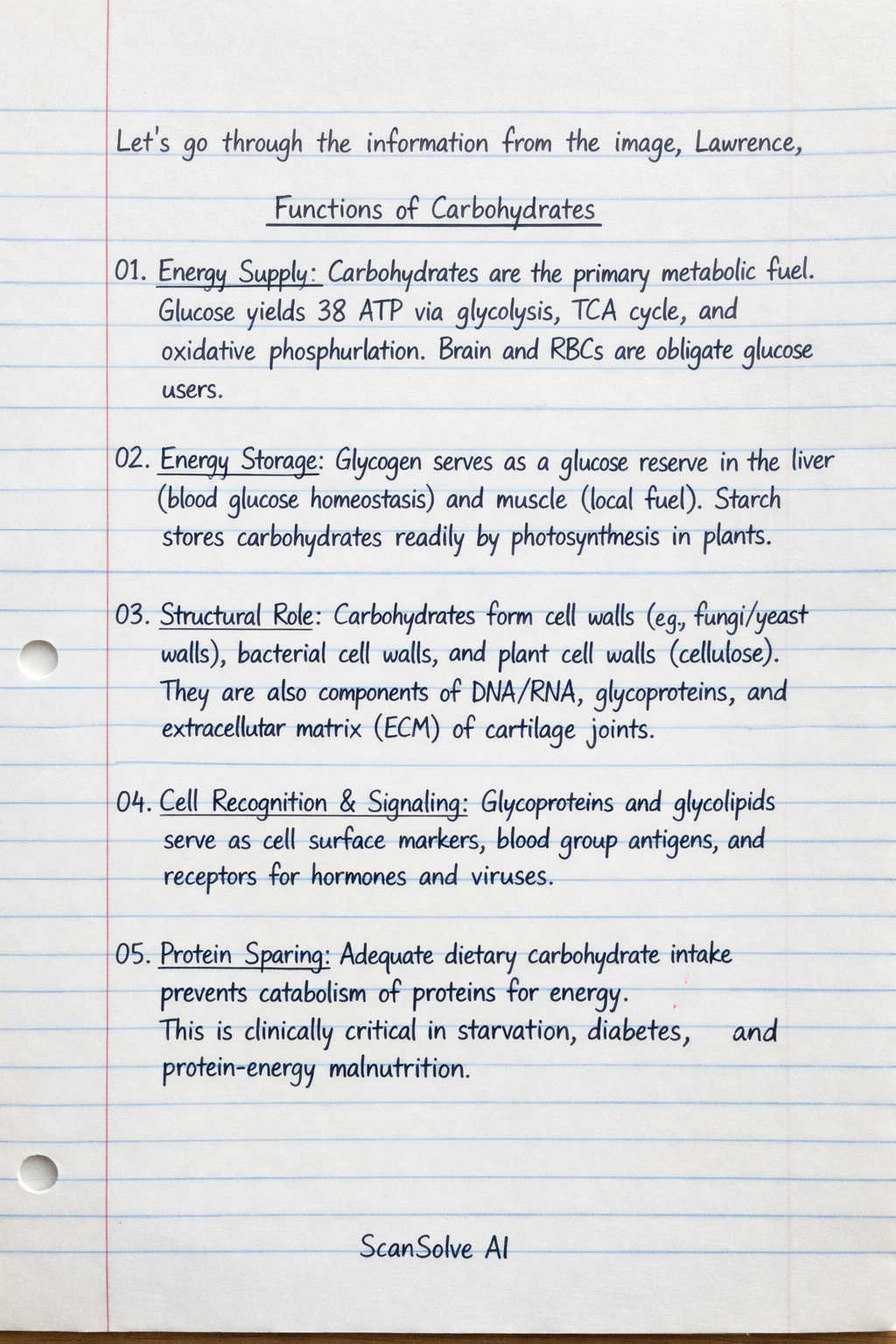
Let's go through the information from the image, Lawrence.
Functions of Carbohydrates
- 01 Energy Supply: Carbohydrates are the primary metabolic fuel. Glucose yields via glycolysis, TCA cycle, and oxidative phosphorylation. Brain and RBCs are obligate glucose users.
- 02 Energy Storage: Glycogen serves as a glucose reserve in the liver (blood glucose homeostasis) and muscle (local fuel). Starch stores carbohydrates readily by photosynthesis in plants.
- 03 Structural Role: Carbohydrates form cell walls (e.g., fungi/yeast walls), bacterial cell walls, and plant cell walls (cellulose). They are also components of DNA/RNA, glycoproteins, and extracellular matrix (ECM) of cartilage joints.
- 04 Cell Recognition & Signaling: Glycoproteins and glycolipids serve as cell surface markers, blood group antigens, and receptors for hormones and viruses.
- 05 Protein Sparing: Adequate dietary carbohydrate intake prevents catabolism of proteins for energy. This is clinically critical in starvation, diabetes, and protein-energy malnutrition.
- 06 Metabolic Intermediates: Carbohydrates are precursors for the Pentose Phosphate Pathway (NADH, NADPH, C-skeleton for fatty acid synthesis), glycolysis, and gluconeogenesis. They are also involved in drug detoxification and biotransformation.
- 07 Dietary Fibre: Soluble fiber (pectin, gum) slows glucose absorption, lowers LDL, and promotes gut motility. Insoluble fiber (cellulose, hemicellulose) is fermented to SCFA.
- 08 Lubrication: Hyaluronic acid in synovial fluid lubricates joints. Glycosaminoglycans (GAGs) and proteoglycans are important components of the extracellular matrix and act as lubricants in various systems.
Clinical Relevance of Carbohydrate Biochemistry
- Diabetes Mellitus:
- Mechanism: Absolute or relative deficiency of insulin, impaired cellular glucose uptake, or impaired glucose utilization.
- Features: Fasting blood glucose , glycosuria, and polyuria.
- Galactosemia:
- Mechanism: Deficiency of galactose-1-phosphate uridyltransferase, leading to accumulation of galactose-1-phosphate in tissues (liver, brain, eye, kidney).
- Features: Neonatal metabolic screening, cataracts, and mental retardation.
- Lactose Intolerance:
- Mechanism: Lactase deficiency, leading to undigested lactose reaching the large intestine and bacterial fermentation.
- Features: Hydrogen breath test, and abdominal pain/bloating.
- Glycogen Storage Diseases:
- Mechanism: Deficiency of glycogen enzymes (e.g., Von Gierke's, Pompe's, Cori's, McArdle's diseases), leading to abnormal glycogen accumulation.
- Features: Liver biopsy, enzyme assay, and genetic testing.
- Mucopolysaccharidoses:
- Mechanism: Deficiency of lysosomal enzymes for glycosaminoglycan degradation, leading to accumulation of GAGs in tissues (e.g., Hurler's, Hunter's syndromes).
- Features: Urine GAGs, enzyme assay, and genetic confirmation.
- Cancer Cell Glycosylation:
- Mechanism: Altered glycosylation patterns on cancer cell surfaces. These increase invasion and abnormal cell adhesion (Warburg effect: tumor cells rely on anaerobic glycolysis).
- Features: () are cancer biomarkers.
Was this helpful?
Still stuck on this one?
Ask a follow-up, and the answer starts from this question.
Got a different question?Ask your own question
More Biology Questions
QWhat are the main functions of blood in the human body?QCarbohydrates: Provide the body with its primary source of energy*. They are broken down into…QCarbohydrates: Play the role of providing energy needed for physical activity throughout the day…QState FIVE (5) functions of water in the human body and mention the THREE (3) types of carbohydrates…QWhich chemical elements are found in carbohydrates?
Handwritten Step-by-Step Solution
Get this as a handwritten image on WhatsApp — like a tutor wrote it for you.
Try on WhatsApp