
We read your photo as:
What are the properties of a lung that makes it a good respiratory surface and how oxygen is made available to cells for energy production?
ScanSolve AI Answer
Here are the answers to the questions from the image:
1) a) What are the properties of a lung that makes it a good respiratory surface?
A good respiratory surface, like the lungs, possesses the following properties:
- Large surface area: The numerous alveoli provide a vast area for gas exchange.
- Thin walls: The alveolar and capillary walls are very thin (one cell thick), allowing for rapid diffusion of gases.
- Moist surface: The inner surface of the alveoli is covered by a thin film of moisture, which helps dissolve gases for diffusion.
- Rich blood supply: A dense network of capillaries surrounds the alveoli, maintaining a steep concentration gradient for gases.
b) How is oxygen in the environment made available to the cells of the following organisms for energy production?
i. Bonyfish:
Oxygen is made available through gills. Water containing dissolved oxygen enters the mouth and flows over the gill filaments. The gill filaments have numerous lamellae with a rich blood supply. Oxygen diffuses from the water into the blood, and carbon dioxide diffuses from the blood into the water, often facilitated by a countercurrent exchange system. The oxygenated blood is then circulated to the body cells.
ii. Man:
Oxygen enters the lungs through the respiratory tract (nose/mouth, trachea, bronchi). In the alveoli of the lungs, oxygen diffuses across the thin alveolar and capillary walls into the bloodstream. Oxygen then binds to hemoglobin in red blood cells, which transport it via the circulatory system to all body cells. At the cells, oxygen diffuses from the blood into the cells for cellular respiration.
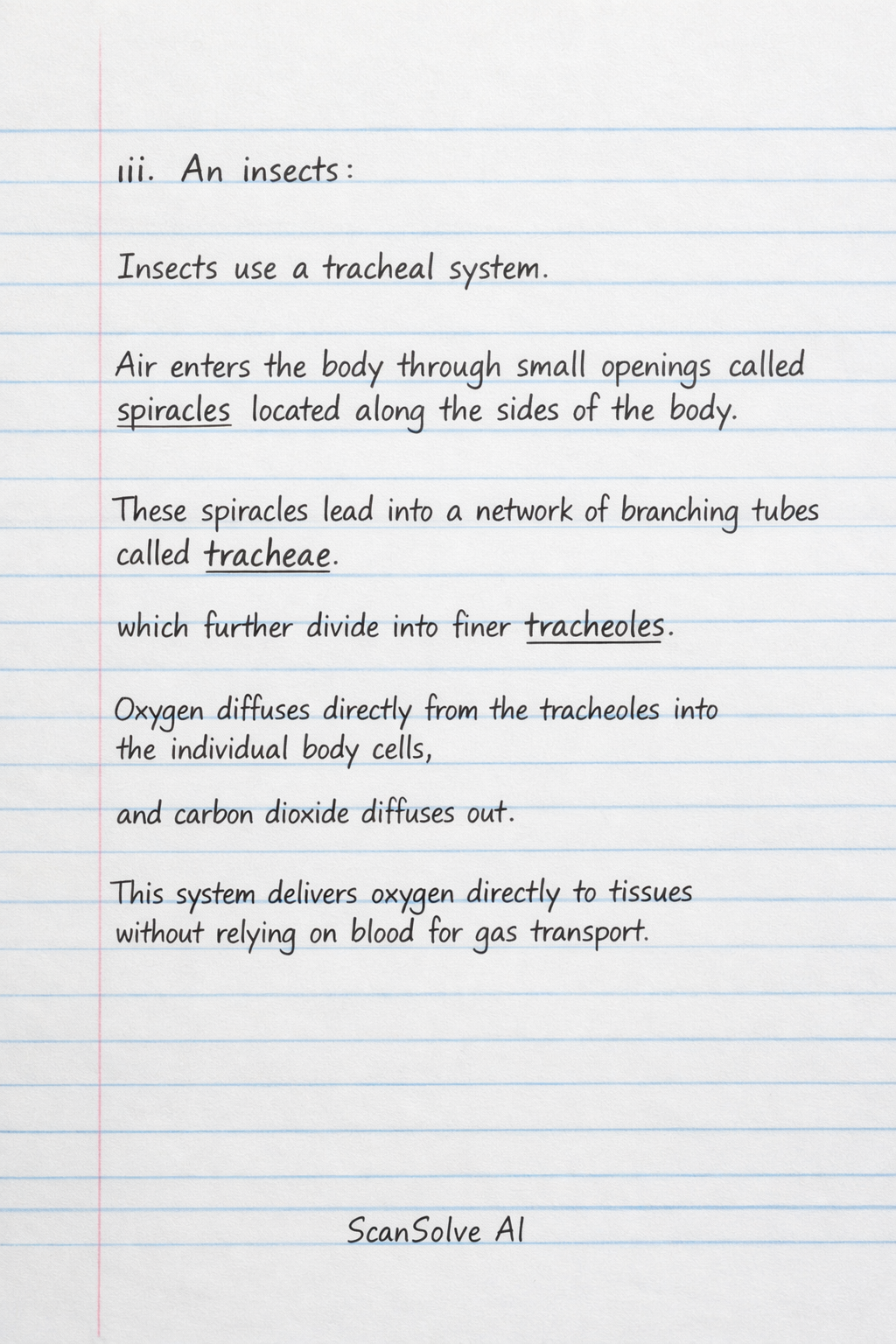
iii. An insects:
Insects use a tracheal system. Air enters the body through small openings called spiracles located along the sides of the body. These spiracles lead into a network of branching tubes called tracheae, which further divide into finer tracheoles. Oxygen diffuses directly from the tracheoles into the individual body cells, and carbon dioxide diffuses out. This system delivers oxygen directly to tissues without relying on blood for gas transport.
Still stuck on this one?
Ask a follow-up, and the answer starts from this question.
More Biology Questions
Handwritten Step-by-Step Solution
Get this as a handwritten image on WhatsApp — like a tutor wrote it for you.
Try on WhatsApp