
We read your photo as:
A natural disaster is a major adverse event resulting from natural processes of the Earth, such as floods, earthquakes, or hurricanes. These events can cause significant loss of life, property d
ScanSolve AI Answer
Here are the answers to your questionnaire:
-
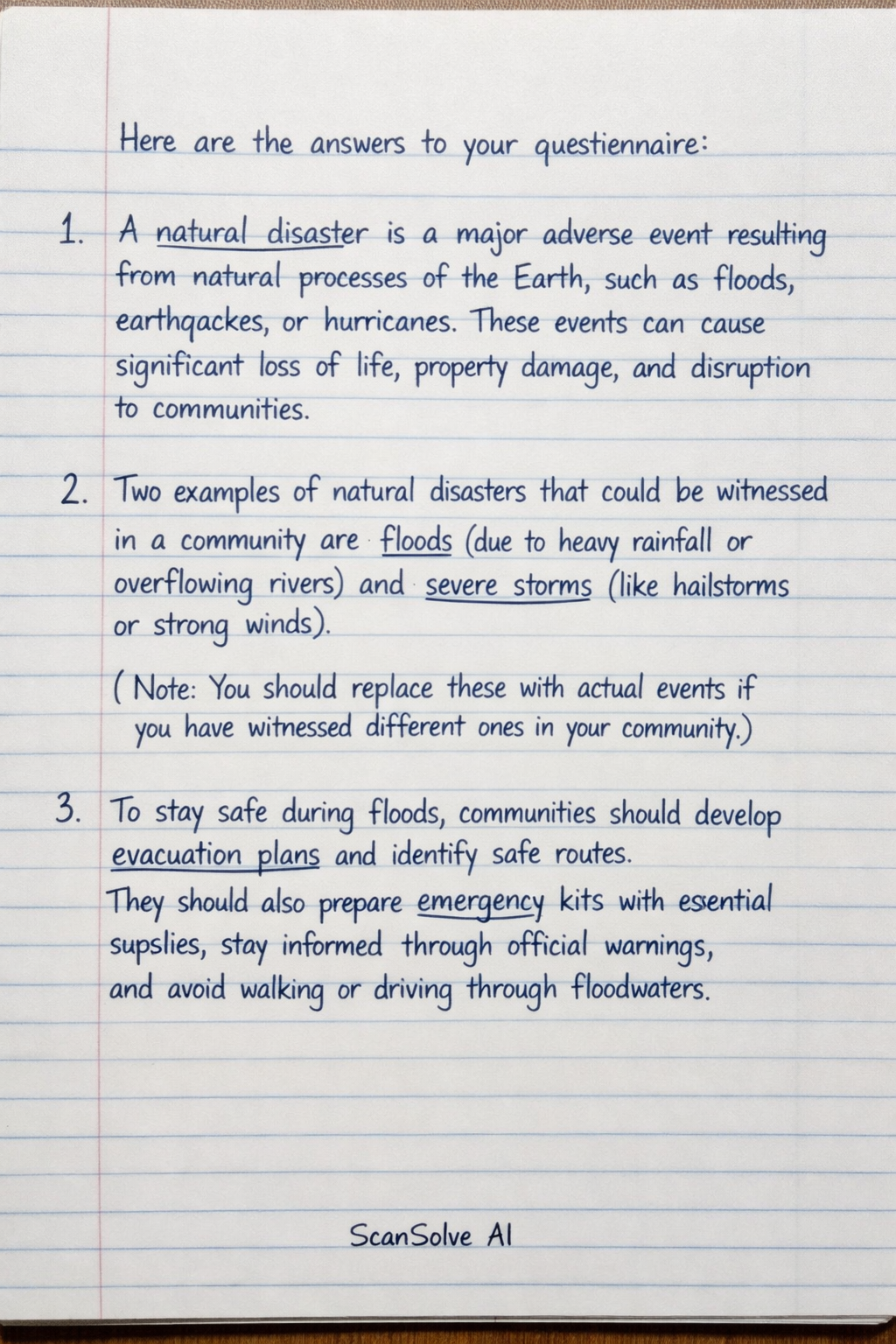
A natural disaster is a major adverse event resulting from natural processes of the Earth, such as floods, earthquakes, or hurricanes. These events can cause significant loss of life, property damage, and disruption to communities.
-
Two examples of natural disasters that could be witnessed in a community are floods (due to heavy rainfall or overflowing rivers) and severe storms (like hailstorms or strong winds). (Note: You should replace these with actual events if you have witnessed different ones in your community.)
-
To stay safe during floods, communities should develop evacuation plans and identify safe routes. They should also prepare emergency kits with essential supplies, stay informed through official warnings, and avoid walking or driving through floodwaters.
-
Flooding can affect community members in several ways, including loss of life or injury, extensive damage to homes and infrastructure, and displacement from their residences. It can also lead to economic losses, disruption of essential services, and significant psychological trauma.
-
Social media reporting can have a negative impact on flood victims by spreading misinformation or rumors, causing unnecessary panic or confusion. It can also lead to invasion of privacy by sharing sensitive images or personal details without consent, and contribute to psychological distress through sensationalized content or graphic visuals.
-
Social media reporting can have a positive impact on flood victims by facilitating the rapid dissemination of critical information and official warnings. It can help coordinate rescue efforts and aid distribution, enable people to locate missing loved ones, and provide a platform for emotional support and community solidarity.
Still stuck on this one?
Ask a follow-up, and the answer starts from this question.
More Business/Management Questions
Handwritten Step-by-Step Solution
Get this as a handwritten image on WhatsApp — like a tutor wrote it for you.
Try on WhatsApp