
A newly appointed Human Resource Manager wants to introduce a structured performance management cycle in a manufacturing company. However, supervisors only conduct annual appraisals and do not monitor employee performance throughout the year. a) With reference to the above scenario, evaluate the effectiveness of conducting performance reviews only once per year compared to continuous performance management. [6 Marks]
ScanSolve AI Answer
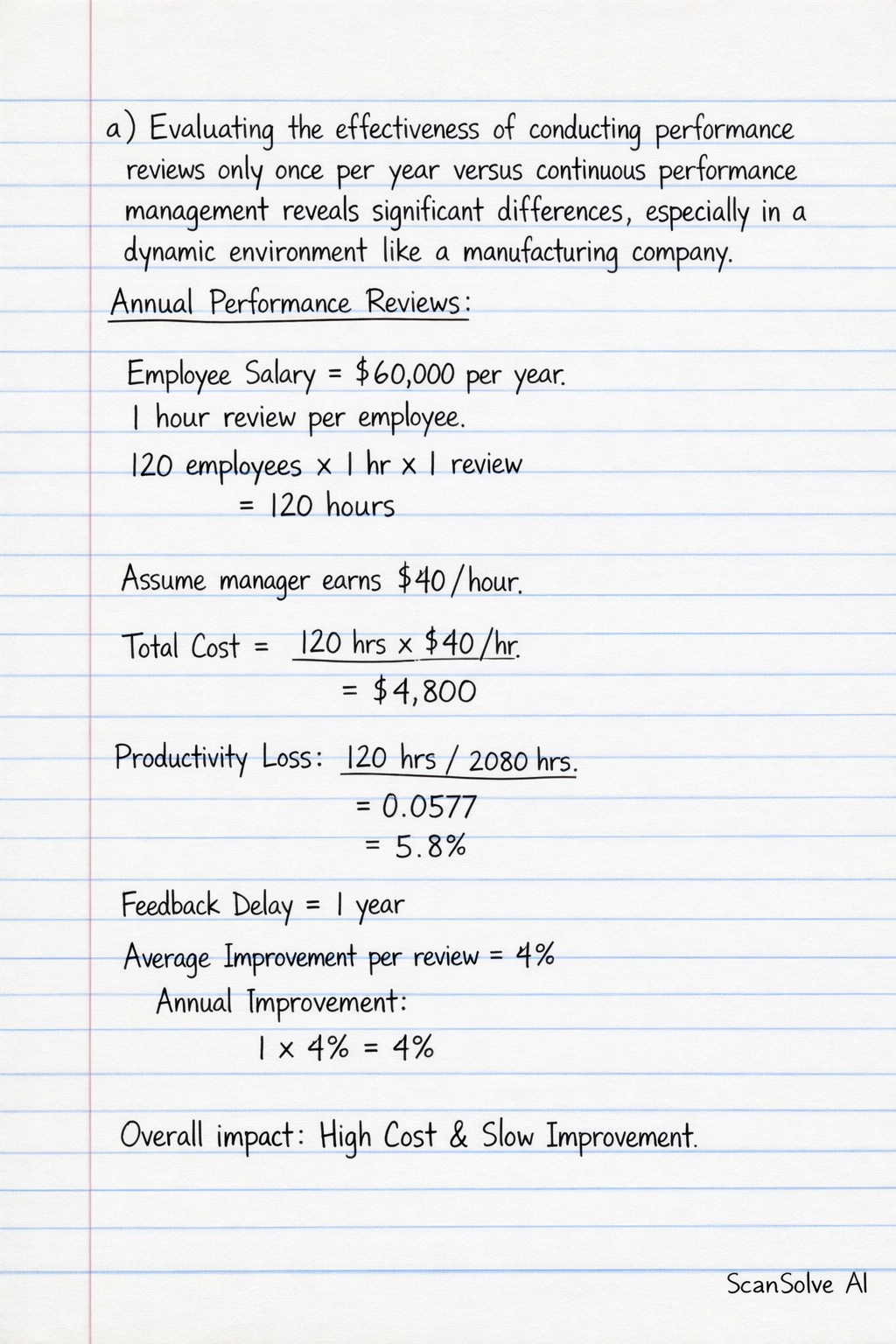
a) Evaluating the effectiveness of conducting performance reviews only once per year versus continuous performance management reveals significant differences, especially in a dynamic environment like a manufacturing company.
Annual Performance Reviews:
Conducting performance reviews only once per year, as currently practiced by the supervisors, offers limited effectiveness. While it provides a formal record of performance and can be useful for salary adjustments or promotions, its primary drawback is its retrospective nature. It focuses on past performance over a long period, making it difficult for employees to recall specific instances of success or areas needing improvement. Feedback is often delayed, meaning issues are not addressed promptly, and opportunities for real-time coaching are missed. This infrequent feedback can lead to employees feeling disconnected from their goals and lacking clear direction throughout the year, potentially causing performance to drift without intervention. In a manufacturing setting, where production targets and quality standards require constant monitoring, annual reviews are insufficient to maintain consistent high performance and address operational issues as they arise.
Continuous Performance Management:
In contrast, continuous performance management involves ongoing communication, regular check-ins, real-time feedback, and continuous goal alignment between managers and employees. This approach is significantly more effective. It allows for timely intervention when performance deviates, providing opportunities for immediate coaching and support. Employees receive frequent feedback, helping them understand their progress, adjust their efforts, and develop skills continuously. This fosters a culture of ongoing learning and improvement, keeping employees engaged and aligned with organisational objectives throughout the year. For a manufacturing company, continuous monitoring ensures that production processes are efficient, quality standards are met consistently, and any bottlenecks or performance issues are identified and resolved quickly, preventing minor problems from escalating into major disruptions.
Conclusion:
Therefore, conducting performance reviews only once per year is far less effective than continuous performance management. The annual appraisal system is reactive and often too late to impact performance positively, whereas continuous performance management is proactive, agile, and directly supports ongoing employee development and sustained organisational success.
Still stuck on this one?
Ask a follow-up, and the answer starts from this question.
More Business/Management Questions
Handwritten Step-by-Step Solution
Get this as a handwritten image on WhatsApp — like a tutor wrote it for you.
Try on WhatsApp