
We read your photo as:
A) Role of drugs in asthma management:
ScanSolve AI Answer
Here's the breakdown of the drugs and side effects:
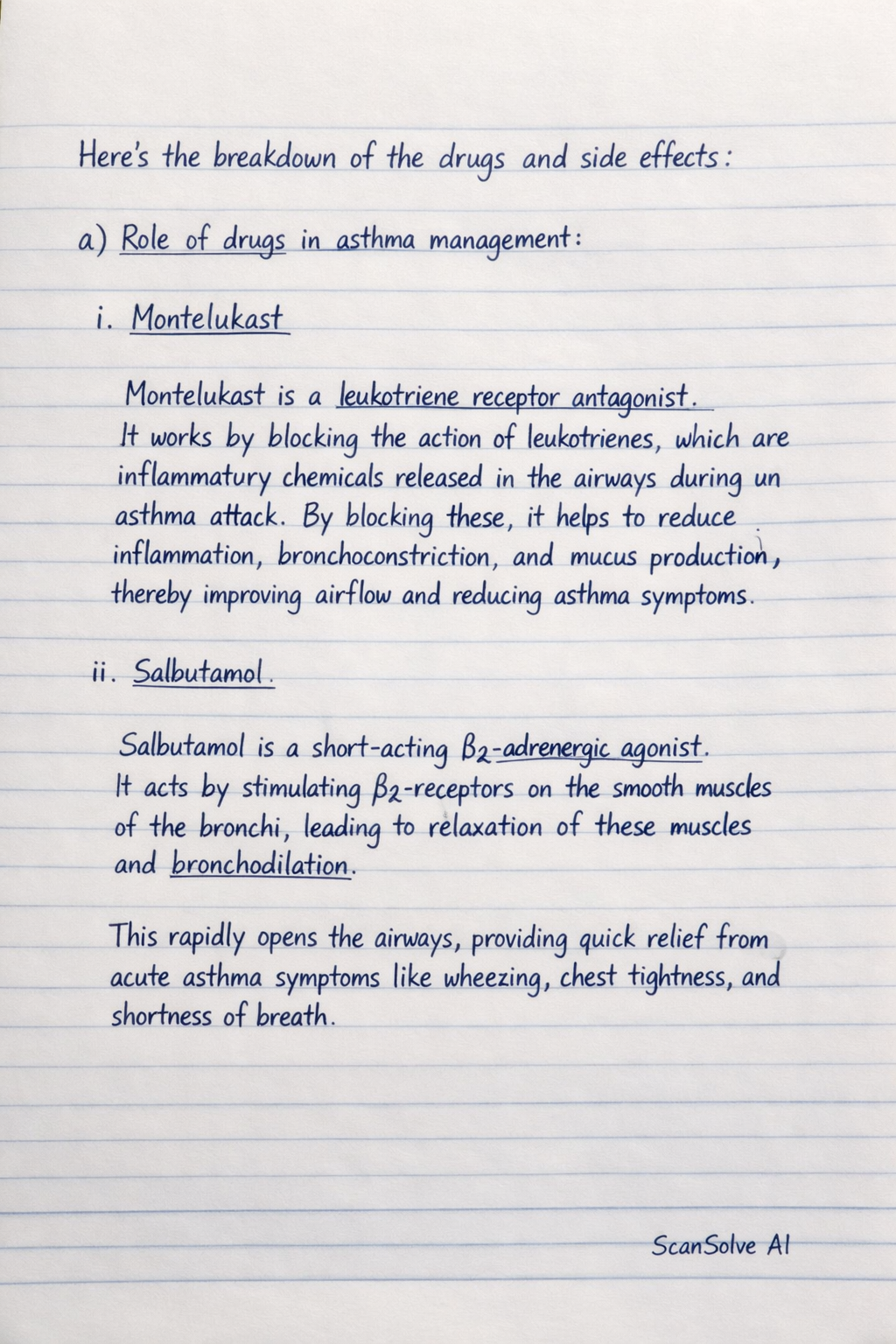
a) Role of drugs in asthma management:
i. Montelukast
Montelukast is a leukotriene receptor antagonist. It works by blocking the action of leukotrienes, which are inflammatory chemicals released in the airways during an asthma attack. By blocking these, it helps to reduce inflammation, bronchoconstriction, and mucus production, thereby improving airflow and reducing asthma symptoms.
ii. Salbutamol
Salbutamol is a short-acting -adrenergic agonist. It acts by stimulating -receptors on the smooth muscles of the bronchi, leading to relaxation of these muscles and bronchodilation. This rapidly opens the airways, providing quick relief from acute asthma symptoms like wheezing, chest tightness, and shortness of breath.
iii. Sodium cromoglycate
Sodium cromoglycate is a mast cell stabilizer. It works by preventing the release of inflammatory mediators (such as histamine and leukotrienes) from mast cells in the airways. This helps to prevent the onset of asthma symptoms, particularly those triggered by allergens or exercise, and is used as a prophylactic treatment.
iv. Theophylline
Theophylline is a methylxanthine. Its primary action in asthma is to cause bronchodilation by inhibiting phosphodiesterase enzymes, which leads to an increase in cyclic AMP (cAMP) in bronchial smooth muscle cells. It also has some anti-inflammatory effects and can improve diaphragmatic contractility.
v. Ipratropium bromide
Ipratropium bromide is a short-acting muscarinic antagonist (anticholinergic). It works by blocking muscarinic acetylcholine receptors in the airways, which prevents the bronchoconstrictive effects of acetylcholine. This leads to bronchodilation and is particularly useful for patients who cannot tolerate -agonists or in combination with them.
b) Side effects of glucocorticoids on different body systems:
- Endocrine/Metabolic System: Can lead to hyperglycemia (increased blood sugar), adrenal suppression (reduced natural cortisol production), Cushing's syndrome features (e.g., moon face, buffalo hump, central obesity), and growth retardation in children.
- Musculoskeletal System: May cause osteoporosis (bone thinning) and increased risk of fractures, as well as muscle weakness (myopathy).
- Gastrointestinal System: Can increase the risk of peptic ulcers and gastrointestinal bleeding.
- Cardiovascular System: Can contribute to hypertension (high blood pressure) and fluid retention.
- Dermatological System: May cause skin thinning, easy bruising, impaired wound healing, and acne.
- Ocular System: Can increase the risk of cataracts and glaucoma.
- Immune System: Leads to immunosuppression, increasing susceptibility to infections.
- Neuropsychiatric System: Can cause mood changes (e.g., euphoria, depression), insomnia, and in severe cases, psychosis.
Still stuck on this one?
Ask a follow-up, and the answer starts from this question.
More Business/Management Questions
Handwritten Step-by-Step Solution
Get this as a handwritten image on WhatsApp — like a tutor wrote it for you.
Try on WhatsApp