
We read your photo as:
Discuss the common reasons why people change jobs and suggest strategies employers can use to retain their staff.
Business/Management
ScanSolve AI Answer
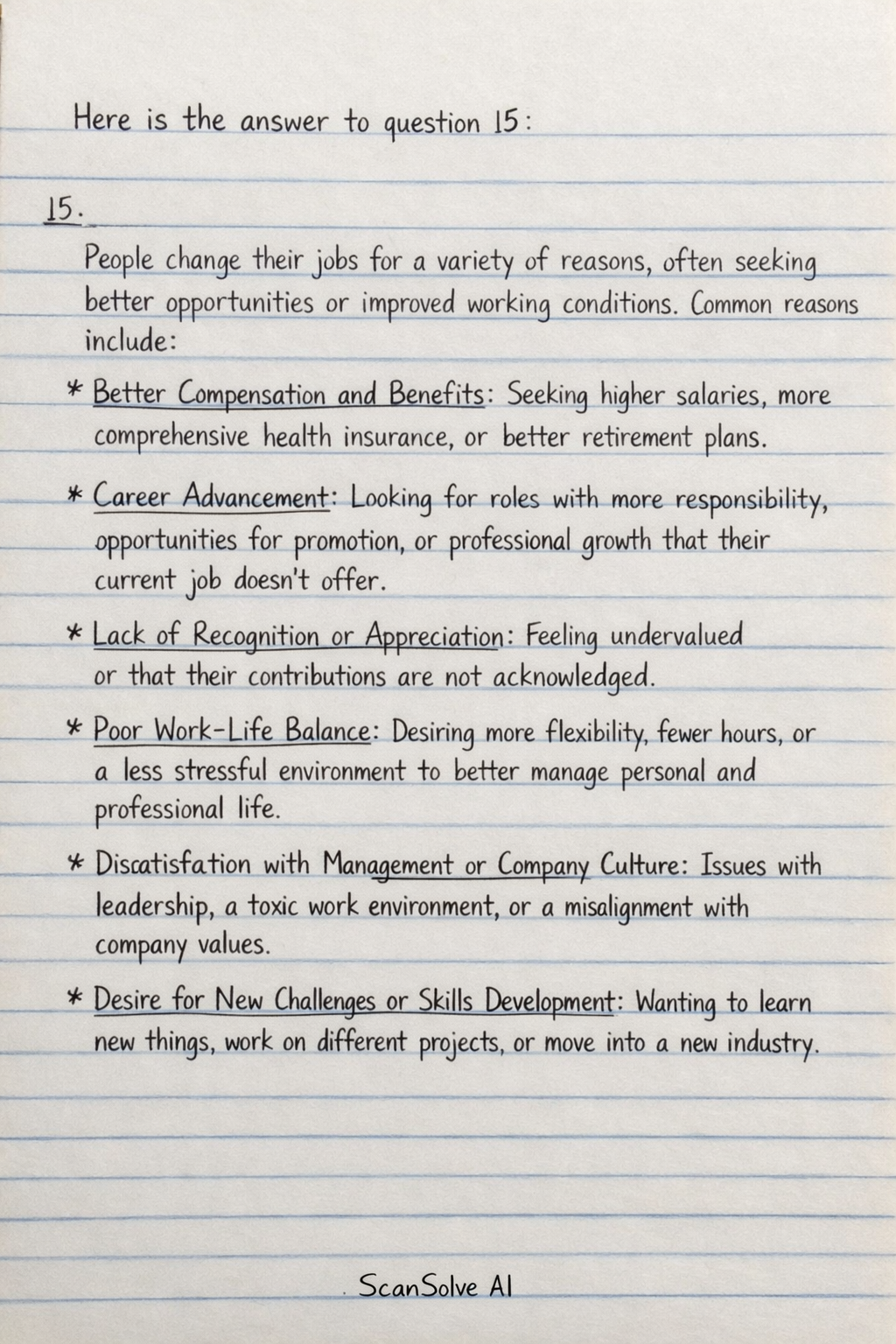
Here is the answer to question 15:
-
People change their jobs for a variety of reasons, often seeking better opportunities or improved working conditions. Common reasons include:
- Better Compensation and Benefits: Seeking higher salaries, more comprehensive health insurance, or better retirement plans.
- Career Advancement: Looking for roles with more responsibility, opportunities for promotion, or professional growth that their current job doesn't offer.
- Lack of Recognition or Appreciation: Feeling undervalued or that their contributions are not acknowledged.
- Poor Work-Life Balance: Desiring more flexibility, fewer hours, or a less stressful environment to better manage personal and professional life.
- Dissatisfaction with Management or Company Culture: Issues with leadership, a toxic work environment, or a misalignment with company values.
- Desire for New Challenges or Skills Development: Wanting to learn new things, work on different projects, or move into a new industry.
- Commute or Location: Seeking a shorter commute or a job in a more desirable location.
As an employer, strategies to retain staff would include:
- Competitive Compensation and Benefits: Regularly reviewing and adjusting salaries and benefits to remain competitive in the market.
- Career Development Opportunities: Providing clear paths for advancement, training programs, and opportunities for skill enhancement.
- Recognition and Rewards: Implementing systems to acknowledge and reward employees for their hard work and achievements, both formally and informally.
- Promoting Work-Life Balance: Offering flexible work arrangements (e.g., remote work, flexible hours), generous leave policies, and encouraging employees to take breaks.
- Fostering a Positive Work Culture: Creating an inclusive, supportive, and respectful environment where employees feel valued and heard.
- Effective Leadership and Communication: Ensuring managers are well-trained, provide constructive feedback, and maintain open lines of communication with their teams.
- Employee Engagement: Involving employees in decision-making, soliciting their feedback, and acting on their suggestions to make them feel invested in the company's success.
Was this helpful?
Still stuck on this one?
Ask a follow-up, and the answer starts from this question.
Got a different question?Ask your own question
More Business/Management Questions
Q1×12=12 15. Why do people change their jobs? As an employer, what strategies would you adopt to…QOutline how a business can align with national policy, and suggest two HRM factors that may…QSuggest two effective strategies that organizations or employees can use to manage or reduce…QDiscuss two (2) ways in which organizations can maintain good employee relations. [4 Marks]QJustify the HR manager's proposal to retrain and redeploy employees instead of retrenching them from…
Handwritten Step-by-Step Solution
Get this as a handwritten image on WhatsApp — like a tutor wrote it for you.
Try on WhatsApp