
We read your photo as:
Examine the role of stakeholder engagement and communication in the development and acceptance of the proposed transformation at AfriHarvest Logistics Ltd.
ScanSolve AI Answer
Answer
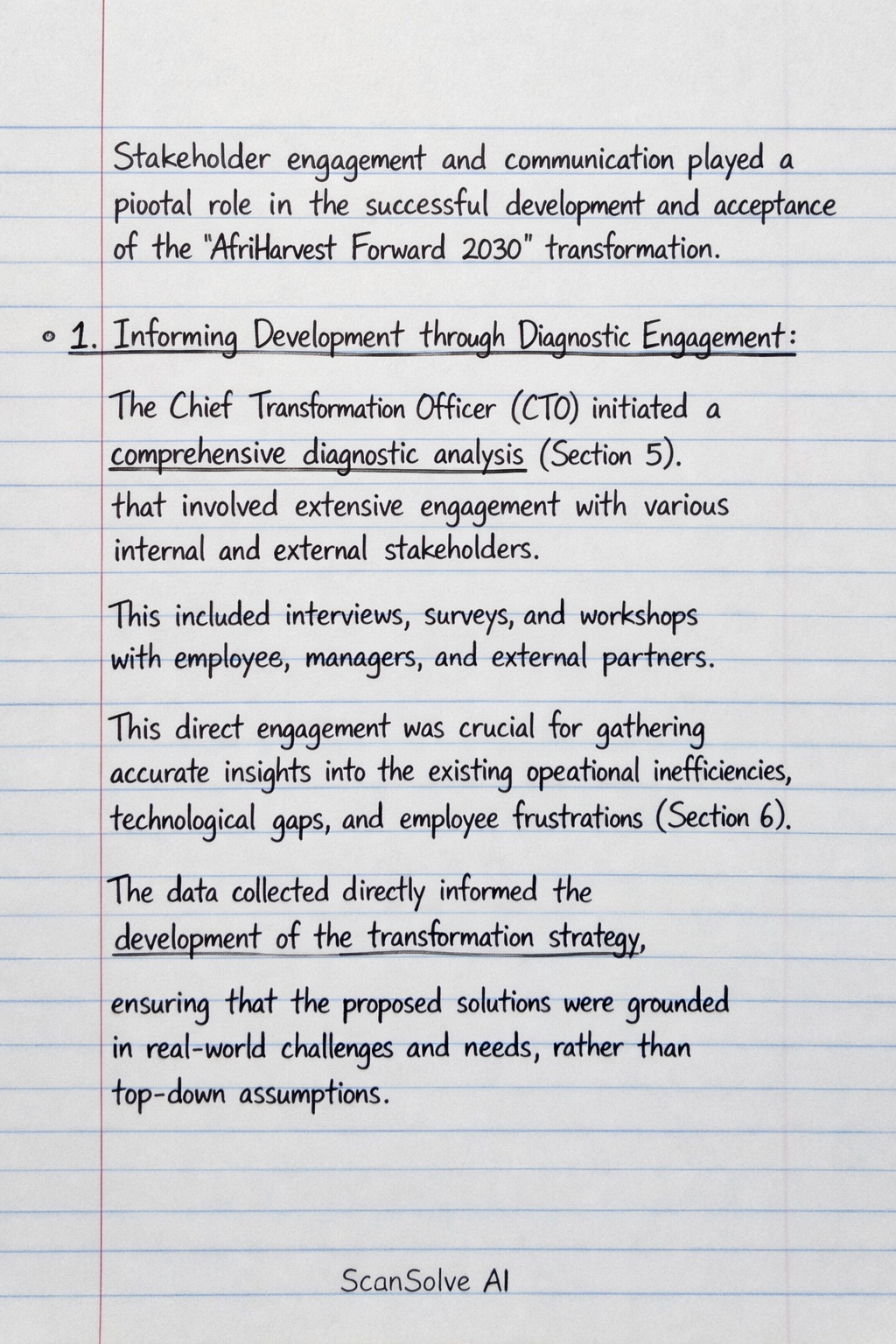
Stakeholder engagement and communication played a pivotal role in the successful development and acceptance of the "AfriHarvest Forward 2030" transformation.
-
1. Informing Development through Diagnostic Engagement: The Chief Transformation Officer (CTO) initiated a comprehensive diagnostic analysis (Section 5) that involved extensive engagement with various internal and external stakeholders. This included interviews, surveys, and workshops with employees, managers, and external partners. This direct engagement was crucial for gathering accurate insights into the existing operational inefficiencies, technological gaps, and employee frustrations (Section 6). The data collected directly informed the development of the transformation strategy, ensuring that the proposed solutions were grounded in real-world challenges and needs, rather than top-down assumptions.
-
2. Building a Shared Vision and Co-creating Solutions: Early in the process, the CTO facilitated the co-creation of solutions and the development of a shared vision for the transformation (Section 5). This involved bringing together diverse perspectives, including those of senior executives who initially had disagreements (Section 4). By actively involving stakeholders in defining the future state, AfriHarvest fostered a sense of ownership and commitment, which is fundamental for the acceptance of significant change.
-
3. Fostering Acceptance through Transparency and Continuous Feedback: The CTO emphasized transparency and continuous feedback throughout the initiative (Section 6). This open communication strategy helped to demystify the transformation, address concerns proactively, and manage expectations. Establishing feedback channels (Section 8) allowed employees and other stakeholders to voice their opinions and contribute to ongoing adjustments, significantly increasing their acceptance of the changes.
-
4. Mitigating Resistance through Targeted Communication and Training: A clear communication strategy was developed to articulate the benefits of the transformation and address potential concerns (Section 7). This was vital for overcoming resistance to change, especially among staff accustomed to manual processes. Furthermore, the implementation of training programs (Section 7) directly engaged employees, equipping them with the necessary skills for the new digital systems and processes, thereby facilitating their acceptance and effective adoption.
-
5. Securing External Buy-in and Compliance: Beyond internal stakeholders, AfriHarvest maintained ongoing engagement with regulatory bodies and community representatives, such as farmer cooperatives (Section 8). This external communication ensured that the transformation aligned with food safety, environmental standards, and fair procurement practices. Gaining the acceptance of these external groups was critical for maintaining the company's license to operate and its social legitimacy.
-
6. Validation and Iteration through Pilot Programs: The use of pilot programs (Section 6) served as a practical form of engagement. It allowed for testing new systems and processes in a controlled environment with direct user involvement. Feedback from these pilots enabled iterative improvements, ensuring that the final solutions were robust and user-friendly, which further contributed to their acceptance across the organization.
Still stuck on this one?
Ask a follow-up, and the answer starts from this question.
More Business/Management Questions
Handwritten Step-by-Step Solution
Get this as a handwritten image on WhatsApp — like a tutor wrote it for you.
Try on WhatsApp