
We read your photo as:
Define goal setting, list and explain three types of goals, and explain the importance of perseverance and persistence in achieving goals.
ScanSolve AI Answer
Here are the answers to Question 4:
Goal setting is the process of defining specific, measurable, achievable, relevant, and time-bound objectives that an individual or organization plans to achieve. It provides direction and a clear roadmap for future actions. Three different types of goals include short-term goals, which are objectives to be achieved in the near future, such as completing a daily task; long-term goals, which are significant objectives that require extended effort over months or years, like earning a degree; and performance goals, which focus on improving a specific skill or aspect of one's abilities, such as running a faster mile.
Perseverance and persistence are vital life skills that involve continuing to work towards a goal despite difficulties, obstacles, or setbacks. Perseverance is the ability to endure through challenges, while persistence is the consistent effort applied over time. It is crucial to acknowledge these skills when setting goals because the path to achieving any significant objective is rarely linear; it often involves failures, frustrations, and the need to adapt. Embracing perseverance and persistence ensures that individuals remain committed, learn from mistakes, and continue striving forward, significantly increasing their chances of success.
Setting goals offers numerous advantages, including providing clear direction, increasing motivation, and enhancing focus on what truly matters. Goals help individuals prioritize tasks, track progress, and develop a sense of accomplishment, which boosts self-confidence. Conversely, failing to set goals can lead to a lack of purpose, aimless wandering, and reduced productivity. Without clear objectives, individuals may struggle with decision-making, feel overwhelmed by choices, and miss opportunities for personal and professional growth, ultimately leading to a sense of stagnation or unfulfillment.
Still stuck on this one?
Ask a follow-up, and the answer starts from this question.
More Business/Management Questions
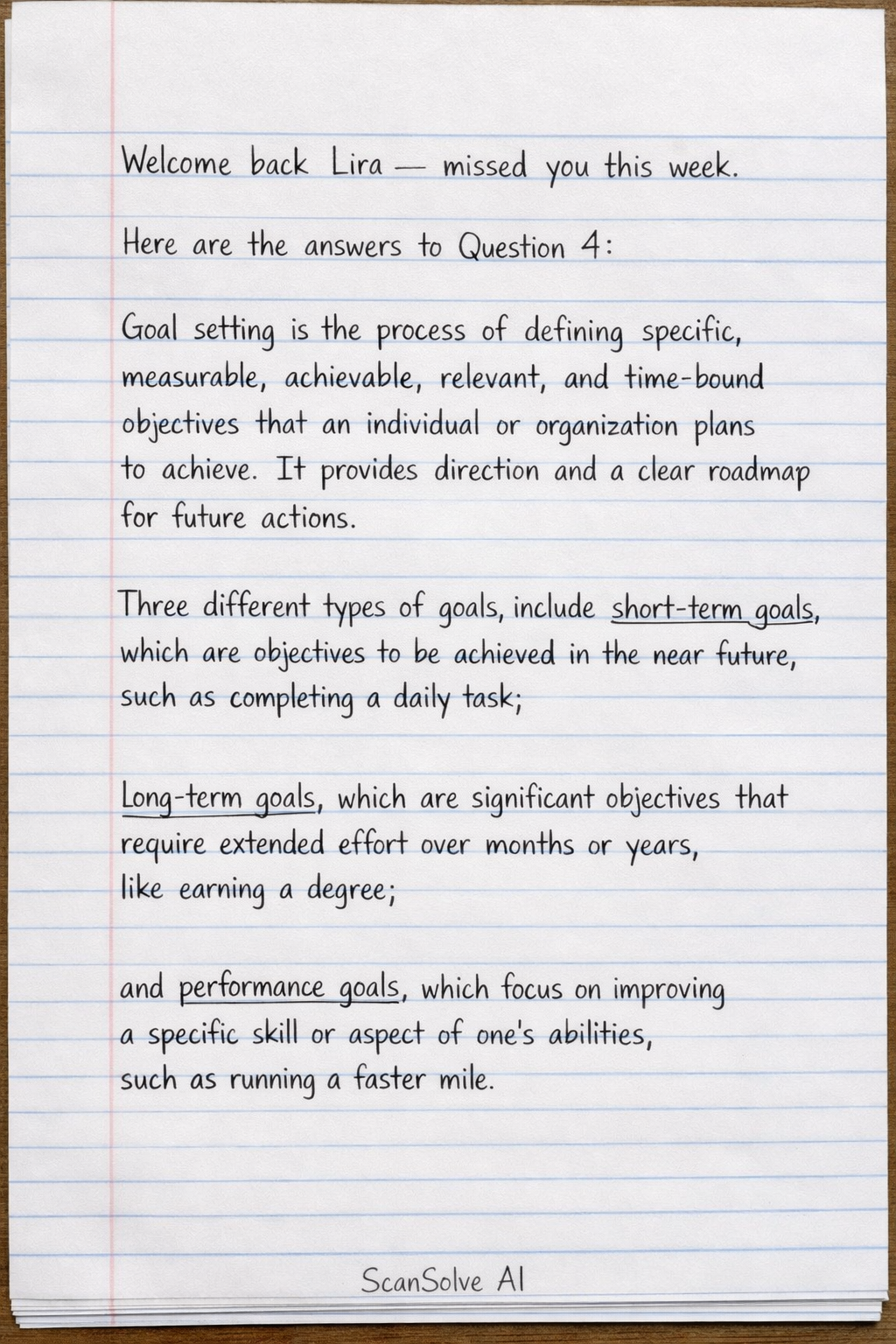
Handwritten Step-by-Step Solution
Get this as a handwritten image on WhatsApp — like a tutor wrote it for you.
Try on WhatsApp