
We read your photo as:
Write an essay (600-800 words) advising a contemporary artist in Uganda on how to capitalize on the challenges in the local art scene.
Business/Management
ScanSolve AI Answer
Here is an outline and key points to help you write an essay (600-800 words) advising a contemporary artist in Uganda on how to capitalize on the challenges in the local art scene.
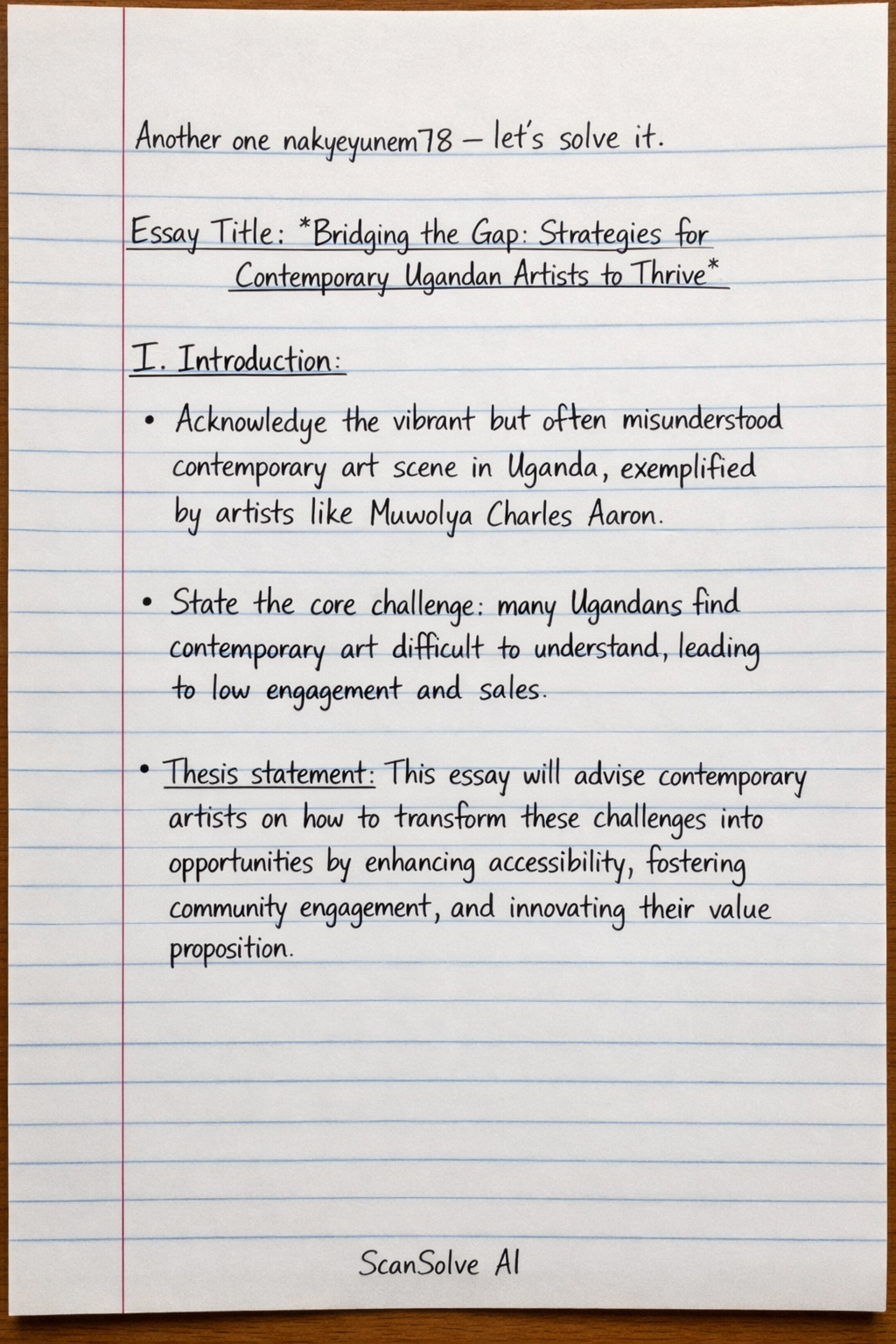
Essay Title: Bridging the Gap: Strategies for Contemporary Ugandan Artists to Thrive
I. Introduction
- Acknowledge the vibrant but often misunderstood contemporary art scene in Uganda, exemplified by artists like Muwolya Charles Aaron.
- State the core challenge: many Ugandans find contemporary art difficult to understand, leading to low engagement and sales.
- Thesis statement: This essay will advise contemporary artists on how to transform these challenges into opportunities by enhancing accessibility, fostering community engagement, and innovating their value proposition.
II. Enhancing Accessibility and Understanding
- Challenge: Public perception that contemporary art is complex and inaccessible.
- Opportunity: Educate and engage the audience directly.
- Advice:
- Artist Talks and Workshops: Regularly host sessions where artists explain their creative process, inspirations, and the themes behind their work. This demystifies the art and builds a personal connection.
- Contextual Explanations: Provide clear, concise, and engaging explanatory texts alongside artworks in exhibitions. Use simple language to articulate the message, techniques, and cultural relevance.
- Digital Storytelling: Utilize social media, blogs, and short videos to share the narrative behind each piece. Show behind-the-scenes glimpses, artist interviews, and discussions about the art's meaning.
- Relatable Themes: While maintaining artistic integrity, explore themes that resonate with local experiences, social issues, and cultural heritage in Uganda. Present these themes in a contemporary yet understandable manner.
III. Strategic Marketing and Community Engagement
- Challenge: Limited reach beyond traditional art circles and perceived elitism of galleries.
- Opportunity: Broaden the audience and cultivate a supportive community.
- Advice:
- Alternative Exhibition Spaces: Move beyond conventional galleries. Exhibit in public spaces, cafes, community centers, markets, or pop-up venues to reach a diverse, non-traditional audience.
- Collaborations: Partner with local businesses, cultural institutions, educational bodies, and even other artists for joint events, workshops, or projects. This expands reach and creates cross-promotional opportunities.
- Strong Online Presence: Develop a professional website and active social media profiles (e.g., Instagram, Facebook, TikTok). Use these platforms to showcase work, announce events, and interact directly with followers and potential buyers.
- Interactive Events: Organize open studio days, live painting demonstrations, or participatory art projects that invite public involvement and foster a sense of ownership and connection.
IV. Innovating the Value Proposition and Sales Strategy
- Challenge: Low sales due to lack of understanding of value and perceived high cost.
- Opportunity: Create diverse offerings and communicate value effectively.
- Advice:
- Tiered Pricing and Offerings: Offer a range of products beyond original large-scale artworks. Include affordable prints, smaller studies, art merchandise (e.g., postcards, t-shirts with art designs), or digital art to cater to different budgets.
- Emphasize Narrative and Cultural Significance: Clearly articulate how each artwork connects to Ugandan culture, history, or contemporary life. This adds depth and intrinsic value beyond aesthetics.
- Commissions and Patronage: Actively seek commissions for personalized artworks. Explore models for art patronage or subscription services where supporters can contribute regularly in exchange for exclusive content or early access to new works.
- Build Relationships with Collectors: Focus on long-term engagement with buyers. Offer personalized experiences, studio visits, or updates on new work to foster loyalty and repeat purchases.
V. Conclusion
- Summarize the main arguments: contemporary Ugandan artists can overcome challenges by prioritizing accessibility, engaging the community, and diversifying their market approach.
- Reiterate that by proactively addressing public perception and market dynamics, artists can not only sustain their practice but also cultivate a more vibrant, appreciative, and economically viable local art scene in Uganda.
- End with a forward-looking statement about the potential for contemporary Ugandan art to flourish.
Was this helpful?
Still stuck on this one?
Ask a follow-up, and the answer starts from this question.
Got a different question?Ask your own question
More Business/Management Questions
QHow can a contemporary artist in Uganda effectively engage the public and address challenges in…QHow can a contemporary artist in Uganda navigate public misunderstanding and engagement challenges?QPrepare a document to convince the youth to appreciate Uganda's current economy and explain why they…QWrite an article for a role model person in kenyaQWrite an essay in Zulu titled "Ukukhanya Ekujuleni Kobumnyama" (Light in the Depths of Darkness)…
Handwritten Step-by-Step Solution
Get this as a handwritten image on WhatsApp — like a tutor wrote it for you.
Try on WhatsApp