
We read your photo as:
What are the key responsibilities of a ward in-charge and the essential skills for a supervisor in this role?
Business/Management
ScanSolve AI Answer
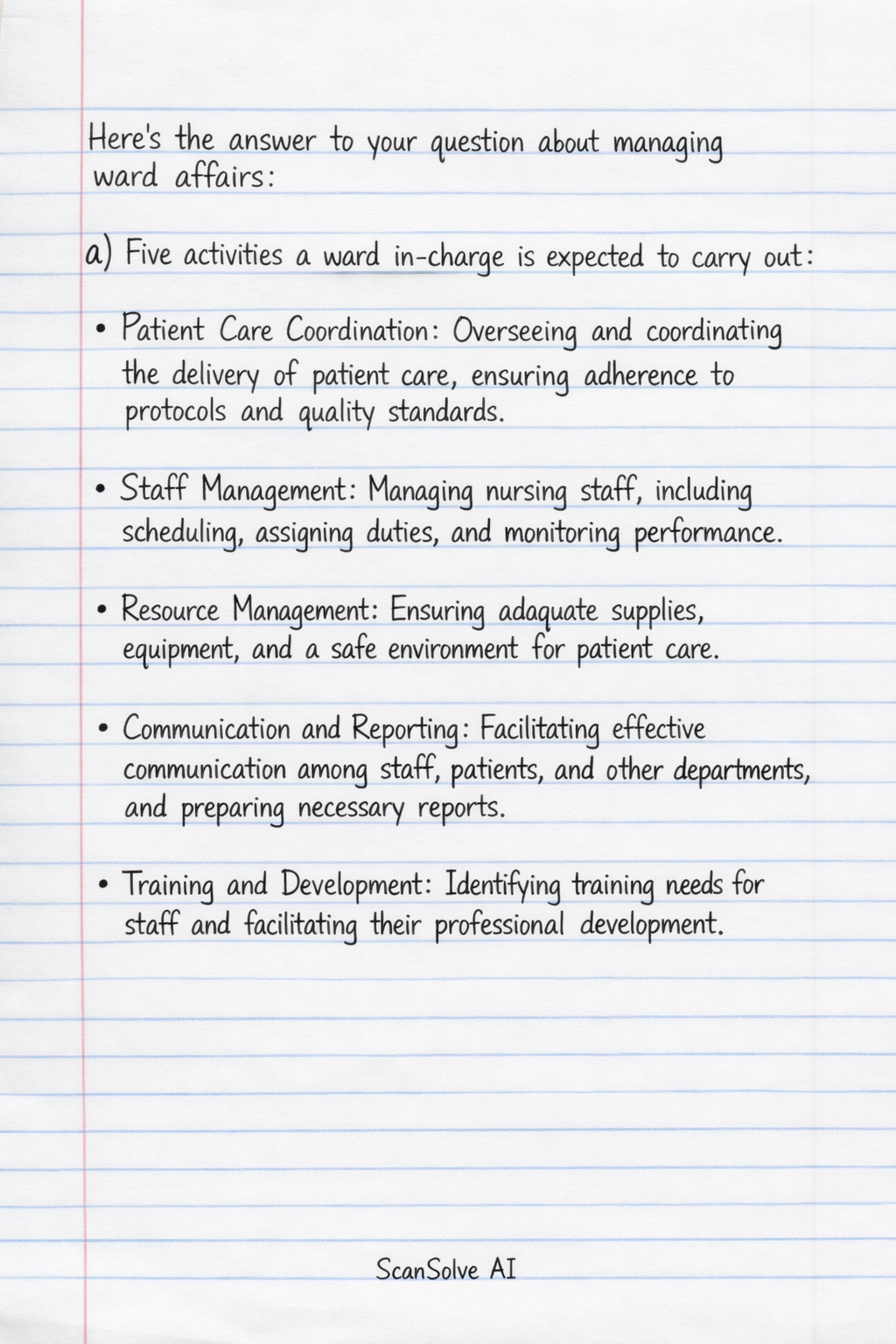
Here's the answer to your question about managing ward affairs:
a) Five activities a ward in-charge is expected to carry out:
- Patient Care Coordination: Overseeing and coordinating the delivery of patient care, ensuring adherence to protocols and quality standards.
- Staff Management: Managing nursing staff, including scheduling, assigning duties, and monitoring performance.
- Resource Management: Ensuring adequate supplies, equipment, and a safe environment for patient care.
- Communication and Reporting: Facilitating effective communication among staff, patients, and other departments, and preparing necessary reports.
- Training and Development: Identifying training needs for staff and facilitating their professional development.
b) Ten skills and traits of a good supervisor:
- Strong Communication Skills: Clearly conveying expectations, feedback, and information.
- Leadership Abilities: Guiding and motivating the team towards common goals.
- Problem-Solving Skills: Effectively addressing issues and making sound decisions.
- Organizational Skills: Managing tasks, resources, and time efficiently.
- Empathy: Understanding and responding to the needs and concerns of subordinates.
- Fairness and Impartiality: Treating all team members equitably.
- Delegation Skills: Assigning tasks appropriately to team members.
- Conflict Resolution: Mediating disputes and fostering a harmonious work environment.
- Technical Competence: Possessing the necessary knowledge and skills related to the ward's operations.
- Accountability: Taking responsibility for team performance and outcomes.
c) Five factors that should be avoided by a supervisor:
- Favoritism: Showing preferential treatment to certain subordinates.
- Micromanagement: Excessive control over subordinates' work, stifling autonomy.
- Poor Communication: Lack of clarity, transparency, or regular feedback.
- Lack of Accountability: Failing to take responsibility for mistakes or poor outcomes.
- Inconsistency: Applying rules and standards unevenly or changing expectations frequently.
d) Five responsibilities of a supervisor to the organization and five to the individual (subordinate):
To the Organization:
- Achieving Departmental Goals: Ensuring the ward meets its operational and patient care objectives.
- Resource Optimization: Managing the ward's budget, supplies, and equipment efficiently.
- Policy Enforcement: Upholding and implementing organizational policies and procedures.
- Quality Assurance: Maintaining high standards of care and contributing to quality improvement initiatives.
- Reporting and Documentation: Providing accurate and timely reports on ward activities and performance.
To the Individual (Subordinate):
- Providing Clear Direction: Setting clear expectations and job responsibilities.
- Offering Support and Guidance: Assisting subordinates with challenges and providing necessary resources.
- Facilitating Professional Development: Identifying training needs and opportunities for growth.
- Giving Constructive Feedback: Providing regular, fair, and actionable feedback on performance.
- Ensuring a Safe Work Environment: Protecting subordinates from harm and promoting their well-being.
Was this helpful?
Still stuck on this one?
Ask a follow-up, and the answer starts from this question.
Got a different question?Ask your own question
More Business/Management Questions
QIdentify and explain the type of supervision the headteacher should adopt in the given situation.QWhat are your responsibilities in relation to infection prevention and control?QWith references and in not less than 500 ward discuss the roles and approaches of professional…QWhat are the answers to questions 7, 8, 9, and 10 regarding departmental communication and…QWhat are the key points and instructions regarding the supervisor's report and practical…
Handwritten Step-by-Step Solution
Get this as a handwritten image on WhatsApp — like a tutor wrote it for you.
Try on WhatsApp