
We read your photo as:
What are the key safety considerations and procedures for entering confined spaces?
ScanSolve AI Answer
Here are the answers to your worksheet on confined spaces:
1. Multiple Choice
Which of the following is an example of a confined space?
- Ans is = Manholes ✅ Correct. Manholes are a common example of confined spaces.
2. True or False
Oxygen levels in confined spaces can vary and may lead to hazardous conditions.
- Ans is = True ✅ Correct. Oxygen levels can be too low (deficient) or too high (enriched), both of which are hazardous.
3. Fill-in-the-blank
A ________________________________ plan must be in place before entering a confined space to ensure worker safety.
- Ans is = Rescue A rescue plan must be in place before entering a confined space to ensure worker safety. ✅ Correct. A comprehensive rescue plan is crucial for confined space entry.
4. Short Answer
Why is it essential to test the atmosphere before entering a confined space?
It is essential to test the atmosphere before entering a confined space to identify and evaluate potential hazards such as oxygen deficiency or enrichment, flammable gases or vapors, and toxic contaminants. This ensures that the air is safe to breathe and that there are no immediate risks of explosion or poisoning, protecting the health and safety of the entrants.
5. Read and explain (Scenario-Based)
You are preparing to enter a Storage Tank that has not been inspected for months. What steps will you take to ensure your safety before entering the tank?
Before entering a storage tank that has not been inspected for months, I would take the following steps to ensure safety:
- Permit-Required Confined Space Entry: Obtain a valid entry permit outlining all necessary precautions, procedures, and personnel involved.
- Isolation: Ensure the tank is completely isolated from all energy sources (e.g., pipelines, electrical, mechanical) using lockout/tagout procedures to prevent accidental activation or introduction of hazardous materials.
- Purging/Ventilation: Purge and ventilate the tank to remove any hazardous gases, vapors, or residues and introduce fresh air.
- Atmospheric Testing: Conduct thorough atmospheric testing from outside the tank, checking for oxygen levels (19.5% to 23.5%), flammable gases (below 10% LEL), and toxic substances (e.g., H₂S, CO) before and continuously during entry.
- Entry Supervisor, Attendant, and Entrant Roles: Ensure all personnel involved (entry supervisor, attendant, and entrant) are trained and understand their roles and responsibilities.
- Rescue Plan: Confirm that a rescue plan is in place, and rescue equipment is readily available and functional.
- Personal Protective Equipment (PPE): Ensure all entrants are equipped with appropriate PPE, including respiratory protection if necessary, safety harnesses, and lifelines.
- Communication: Establish reliable communication methods between the entrant and the attendant.
Still stuck on this one?
Ask a follow-up, and the answer starts from this question.
More Business/Management Questions
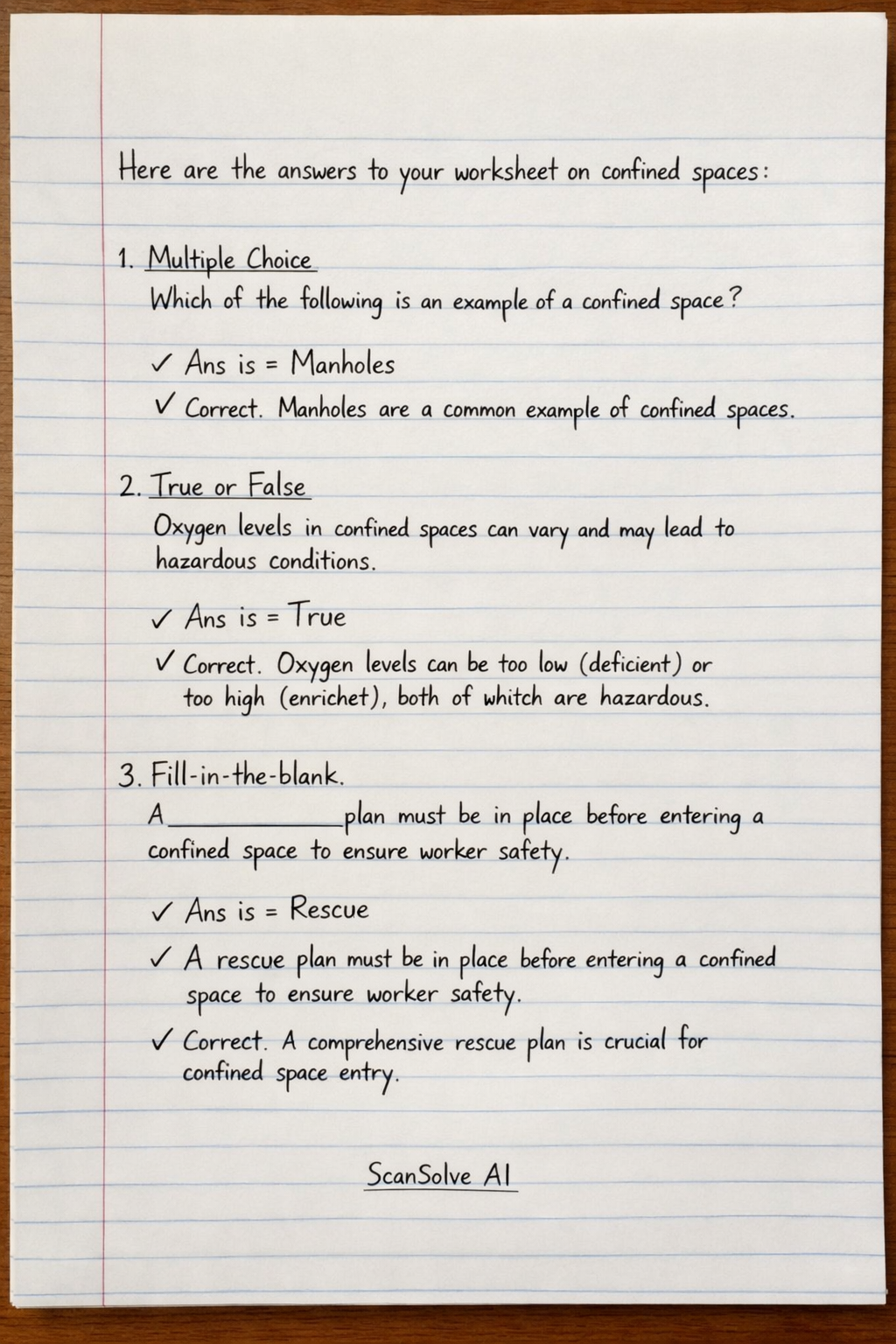
Handwritten Step-by-Step Solution
Get this as a handwritten image on WhatsApp — like a tutor wrote it for you.
Try on WhatsApp