
We read your photo as:
The patient presents with classic symptoms of pulmonary tuberculosis: persistent cough, low-grade fever, weight loss, night sweats, and haemoptysis. Risk factors include living in a poorly ventilated,
ScanSolve AI Answer
Step-by-step solution
2 stepsAnalyze the clinical presentation and investigation findings.
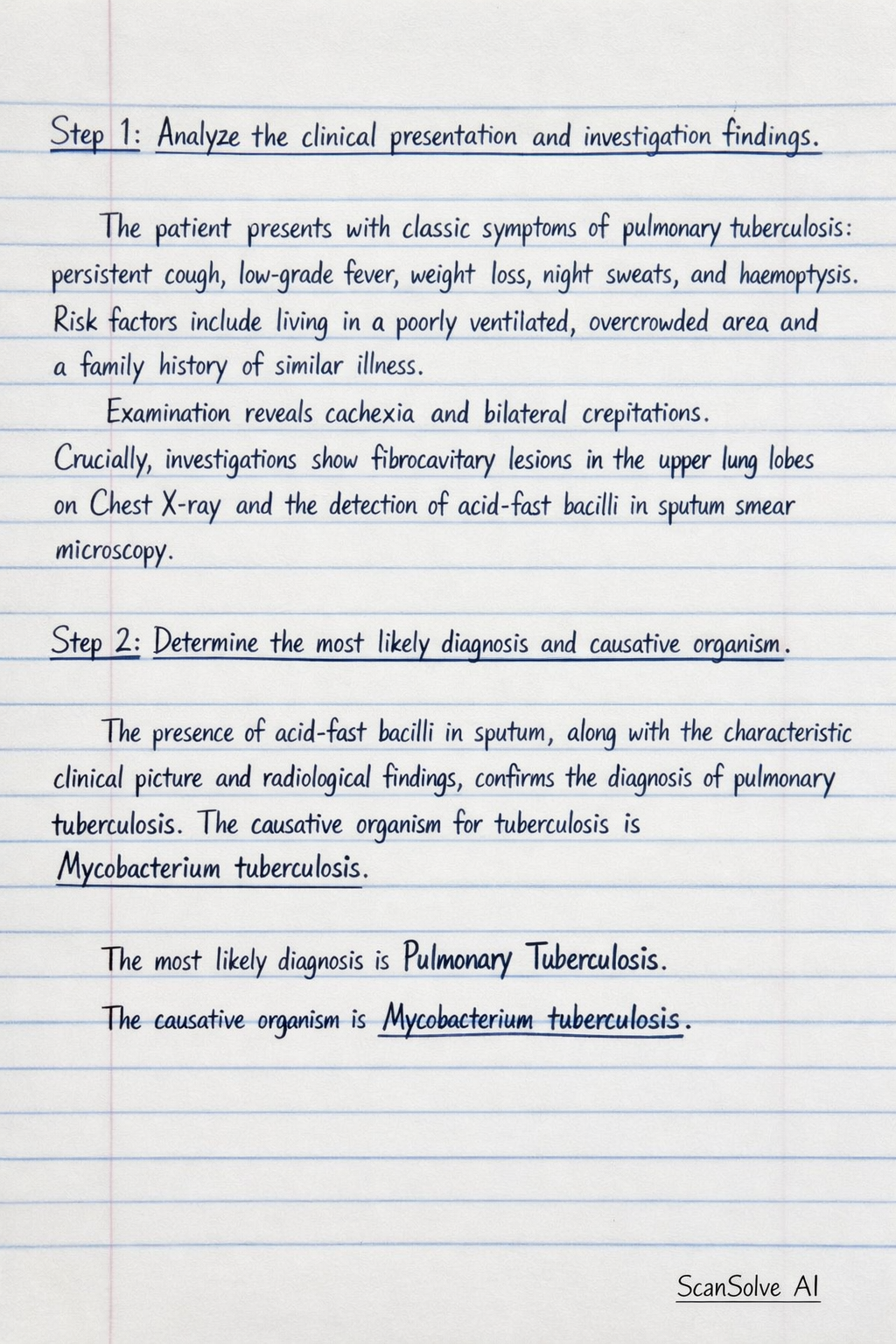
The patient presents with classic symptoms of pulmonary tuberculosis: persistent cough, low-grade fever, weight loss, night sweats, and haemoptysis. Risk factors include living in a poorly ventilated, overcrowded area and a family history of similar illness. Examination reveals cachexia and bilateral crepitations. Crucially, investigations show fibrocavitary lesions in the upper lung lobes on Chest X-ray and the detection of acid-fast bacilli in sputum smear microscopy.
Determine the most likely diagnosis and causative organism.
The presence of acid-fast bacilli in sputum, along with the characteristic clinical picture and radiological findings, confirms the diagnosis of pulmonary tuberculosis. The causative organism for tuberculosis is Mycobacterium tuberculosis.
The most likely diagnosis is Pulmonary Tuberculosis.
The causative organism is Mycobacterium tuberculosis.
Still stuck on this one?
Ask a follow-up, and the answer starts from this question.
More Business/Management Questions
Handwritten Step-by-Step Solution
Get this as a handwritten image on WhatsApp — like a tutor wrote it for you.
Try on WhatsApp