
We read your photo as:
Explain three preparations for freehand fabric cutting, and two factors influencing school uniform fabric choices, and differentiate food commodities from food.
Business/Management
ScanSolve AI Answer
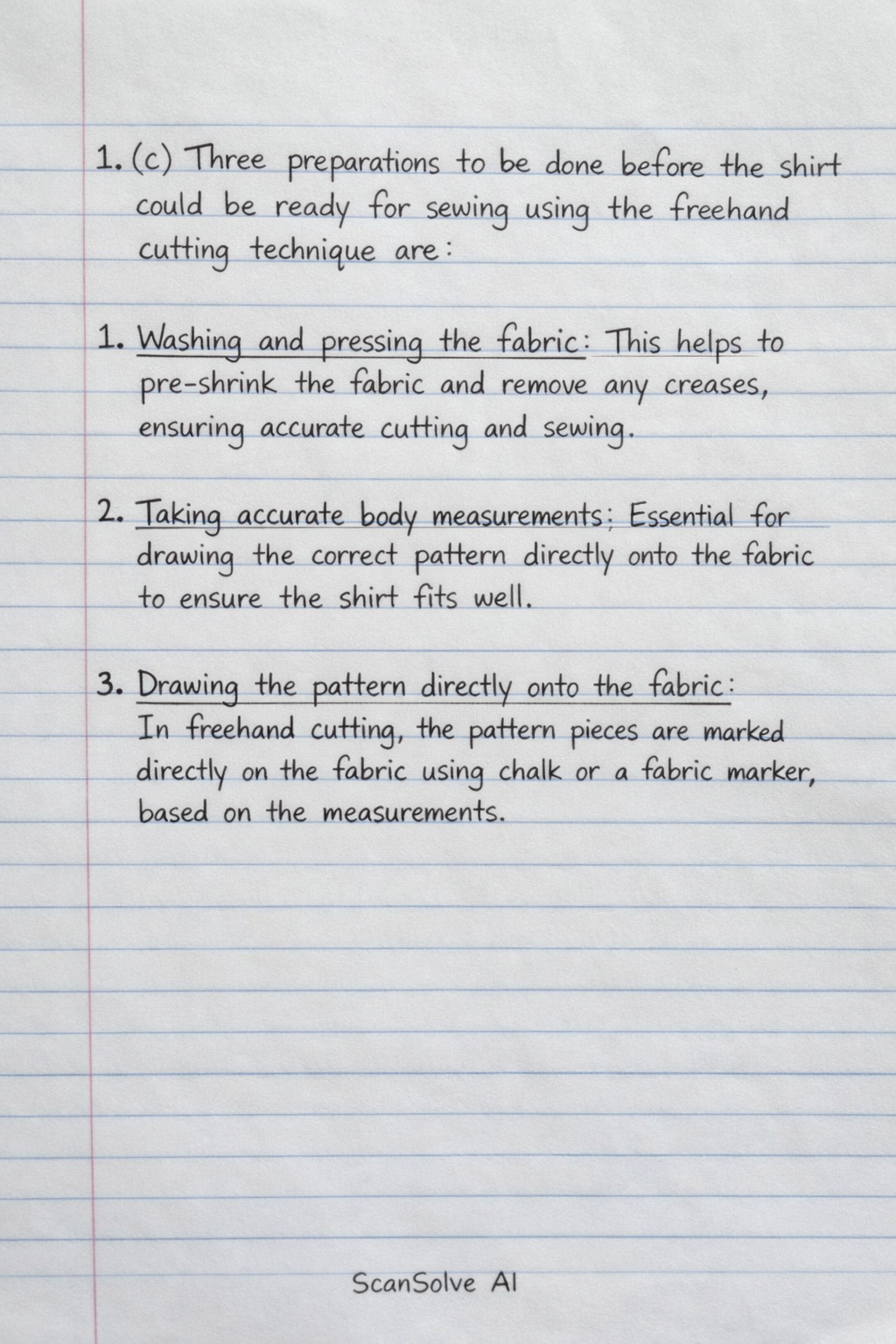
1. (c) Three preparations to be done before the shirt could be ready for sewing using the freehand cutting technique are:
- Washing and pressing the fabric: This helps to pre-shrink the fabric and remove any creases, ensuring accurate cutting and sewing.
- Taking accurate body measurements: Essential for drawing the correct pattern directly onto the fabric to ensure the shirt fits well.
- Drawing the pattern directly onto the fabric: In freehand cutting, the pattern pieces are marked directly on the fabric using chalk or a fabric marker, based on the measurements.
2. (a) Two factors that can influence a school's choice of fabric for their school uniform are:
- Durability and ease of care: School uniforms need to withstand frequent washing and daily wear by active students. Fabrics like polyester blends are often chosen for their resistance to wrinkles, fading, and shrinking, making them durable and easy to maintain.
- Cost and comfort: Schools often operate within a budget, so the cost of the fabric is a significant factor. Additionally, the fabric must be comfortable for students to wear for long hours in varying weather conditions, influencing choices towards breathable and soft materials.
2. (b) To differentiate between food commodities and food, the maidservant would consider their state and purpose:
- Food is a general term for any edible substance consumed to provide nutritional support for the body. It includes a wide range of items, from raw ingredients to fully prepared meals.
- Food commodities are raw or primary agricultural products that are bought and sold in bulk, often on a market. They are typically unprocessed or minimally processed ingredients that serve as the basic building blocks for various food products. Examples include grains (like rice or wheat), sugar, coffee beans, or raw meat. The key difference is that food commodities are the raw materials, while "food" encompasses these raw materials as well as processed and prepared items.
2. (c) Two reasons why it is important to set the table are:
- Enhances the dining experience and presentation: A properly set table creates an inviting and organized atmosphere, making the meal more enjoyable for guests and showing attention to detail.
- Ensures convenience and proper etiquette: Setting the table provides guests with all the necessary utensils, glassware, and plates within easy reach, facilitating a smooth dining experience and adhering to established dining customs and manners.
Was this helpful?
Still stuck on this one?
Ask a follow-up, and the answer starts from this question.
Got a different question?Ask your own question
More Business/Management Questions
QExplain four properties of cotton suitable for school uniforms and discuss four laundry equipment.QWhat are the answers to questions 36-40 concerning fabric, body shapes, garment making, and…QGood morning, students. I believe everyone is doing well. This is your second assignment. Q1. In a…QWhat are the answers to questions 12-16 concerning fashion design and sewing?QWhat are the answers to questions 28-32 regarding garment making?
Handwritten Step-by-Step Solution
Get this as a handwritten image on WhatsApp — like a tutor wrote it for you.
Try on WhatsApp