
We read your photo as:
Define vertical and horizontal communication. List four forms of written communication, three advantages of formal communication, and explain market segmentation with four bases.
Business/Management
ScanSolve AI Answer
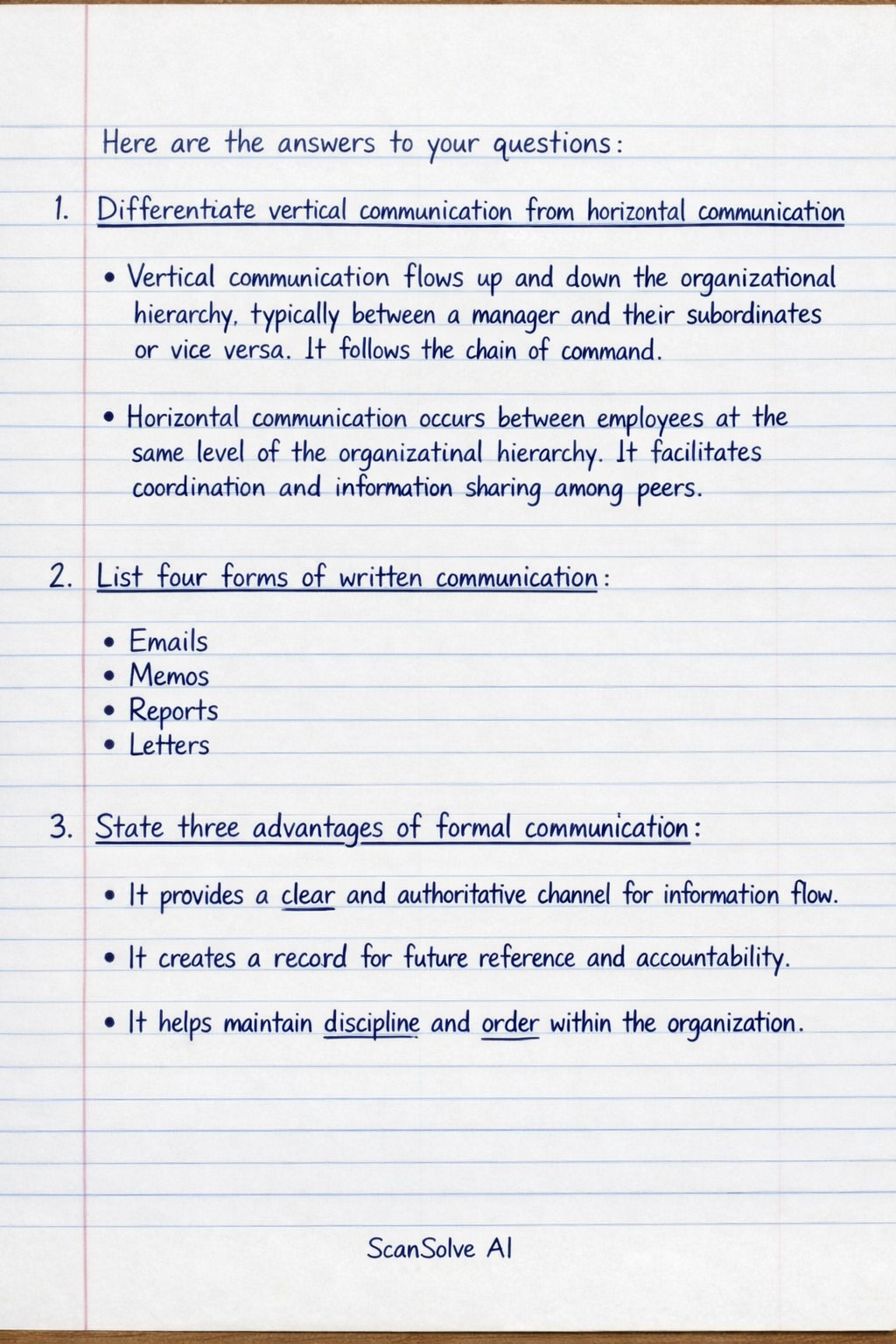
Here are the answers to your questions:
-
Differentiate vertical communication from horizontal communication
- Vertical communication flows up and down the organizational hierarchy, typically between a manager and their subordinates or vice versa. It follows the chain of command.
- Horizontal communication occurs between employees at the same level of the organizational hierarchy. It facilitates coordination and information sharing among peers.
-
List four forms of written communication
- Emails
- Memos
- Reports
- Letters
-
State three advantages of formal communication
- It provides a clear and authoritative channel for information flow.
- It creates a record for future reference and accountability.
- It helps maintain discipline and order within the organization.
-
What is market segmentation? Explain four bases of market segmentation
- Market segmentation is the process of dividing a broad consumer market into smaller, more defined segments based on shared characteristics.
- Four bases of market segmentation are:
- Demographic segmentation: Dividing the market based on variables such as age, gender, income, education, and family size.
- Geographic segmentation: Dividing the market based on location, such as country, region, city, or climate.
- Psychographic segmentation: Dividing the market based on lifestyle, personality traits, values, opinions, and interests.
- Behavioral segmentation: Dividing the market based on consumer behavior, such as purchasing habits, usage rate, brand loyalty, and benefits sought.
-
State three circumstances which will cause an employee to be dismissed.
- Gross misconduct (e.g., theft, fraud, violence).
- Persistent poor performance despite warnings and support.
- Serious breach of company policy or contract terms.
-
Explain three factors to be considered when paying wages and salaries
- Job evaluation: Assessing the relative worth of a job within the organization based on factors like skill, effort, responsibility, and working conditions.
- Market rates: Comparing the pay for similar jobs in other companies within the same industry and geographic area to ensure competitiveness.
- Company's ability to pay: Considering the financial health and profitability of the organization to ensure that wage and salary structures are sustainable.
-
Distinguish between delegation and decentralisation
- Delegation is the assignment of authority to a subordinate to perform a specific task. It is a process where a manager assigns a portion of their authority to an individual.
- Decentralisation is the systematic dispersal of authority throughout the organization, typically to lower levels of management. It is a policy decision that affects the entire organizational structure, not just individual tasks.
-
State five reasons a manager would not delegate his authority
- Fear of losing control or authority.
- Lack of trust in subordinates' abilities.
- Belief that they can do the job better or faster themselves.
- Fear of being blamed for subordinates' mistakes.
- Lack of time to train subordinates or explain tasks.
Was this helpful?
Still stuck on this one?
Ask a follow-up, and the answer starts from this question.
Got a different question?Ask your own question
More Business/Management Questions
QBriefly explain on the following communication terms: a. Vertical communication b. Horizontal…QList four functions of feedback and four types of formal communication.QWhat are four disadvantages of written communication?QExplain the functions of feedback, types of formal communication, methods of storing info, and…QExplain the different communication contexts in an organization: formal, informal, internal, and…
Browse by topic:Marketing
Handwritten Step-by-Step Solution
Get this as a handwritten image on WhatsApp — like a tutor wrote it for you.
Try on WhatsApp