
We read your photo as:
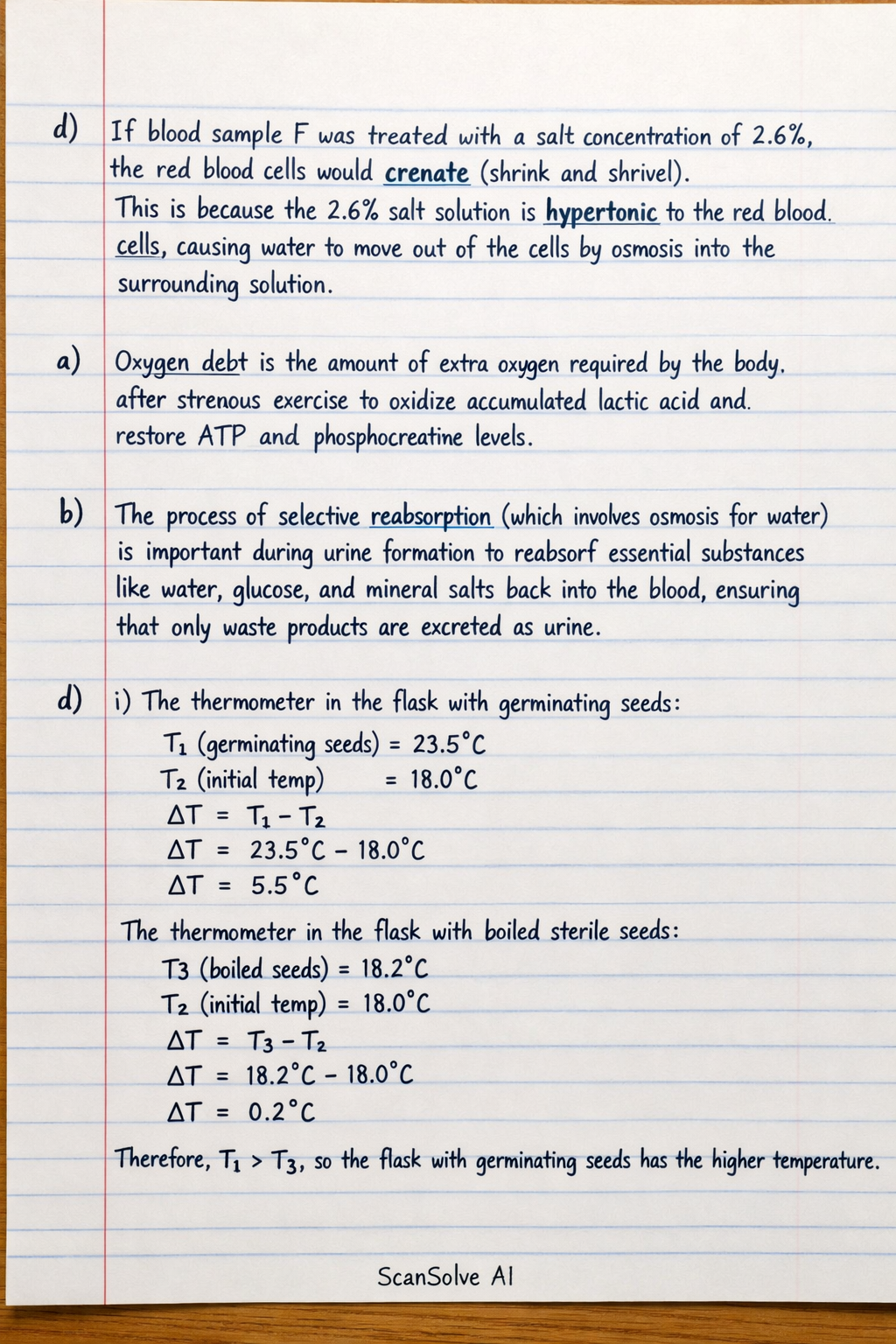
If blood sample F was treated with a salt concentration of 2.6%, the red blood cells would crenate (shrink and shrivel). This is because the 2.6% salt solution is hypertonic to the red blood cells
ScanSolve AI Answer
d)
If blood sample F was treated with a salt concentration of 2.6%, the red blood cells would crenate (shrink and shrivel). This is because the 2.6% salt solution is hypertonic to the red blood cells, causing water to move out of the cells by osmosis into the surrounding solution.
a)
Oxygen debt is the amount of extra oxygen required by the body after strenuous exercise to oxidize accumulated lactic acid and restore ATP and phosphocreatine levels.
b)
The process of selective reabsorption (which involves osmosis for water) is important during urine formation to reabsorb essential substances like water, glucose, and mineral salts back into the blood, ensuring that only waste products are excreted as urine.
d)
i) The thermometer in the flask with germinating seeds will show a higher temperature reading than the thermometer in the flask with boiled sterile seeds.
ii) Germinating seeds are metabolically active and carry out cellular respiration. During this process, stored food is oxidized to release energy, a significant portion of which is dissipated as heat. This heat causes the temperature inside the flask with germinating seeds to rise. The boiled sterile seeds are dead and cannot respire, so no heat is generated in their flask, and the temperature remains constant, serving as a control.
Still stuck on this one?
Ask a follow-up, and the answer starts from this question.
More Chemistry Questions
Handwritten Step-by-Step Solution
Get this as a handwritten image on WhatsApp — like a tutor wrote it for you.
Try on WhatsApp