
We read your photo as:
Describe the industrial extraction of sodium by electrolysis of molten sodium chloride, including materials, uses, and observations.
ScanSolve AI Answer
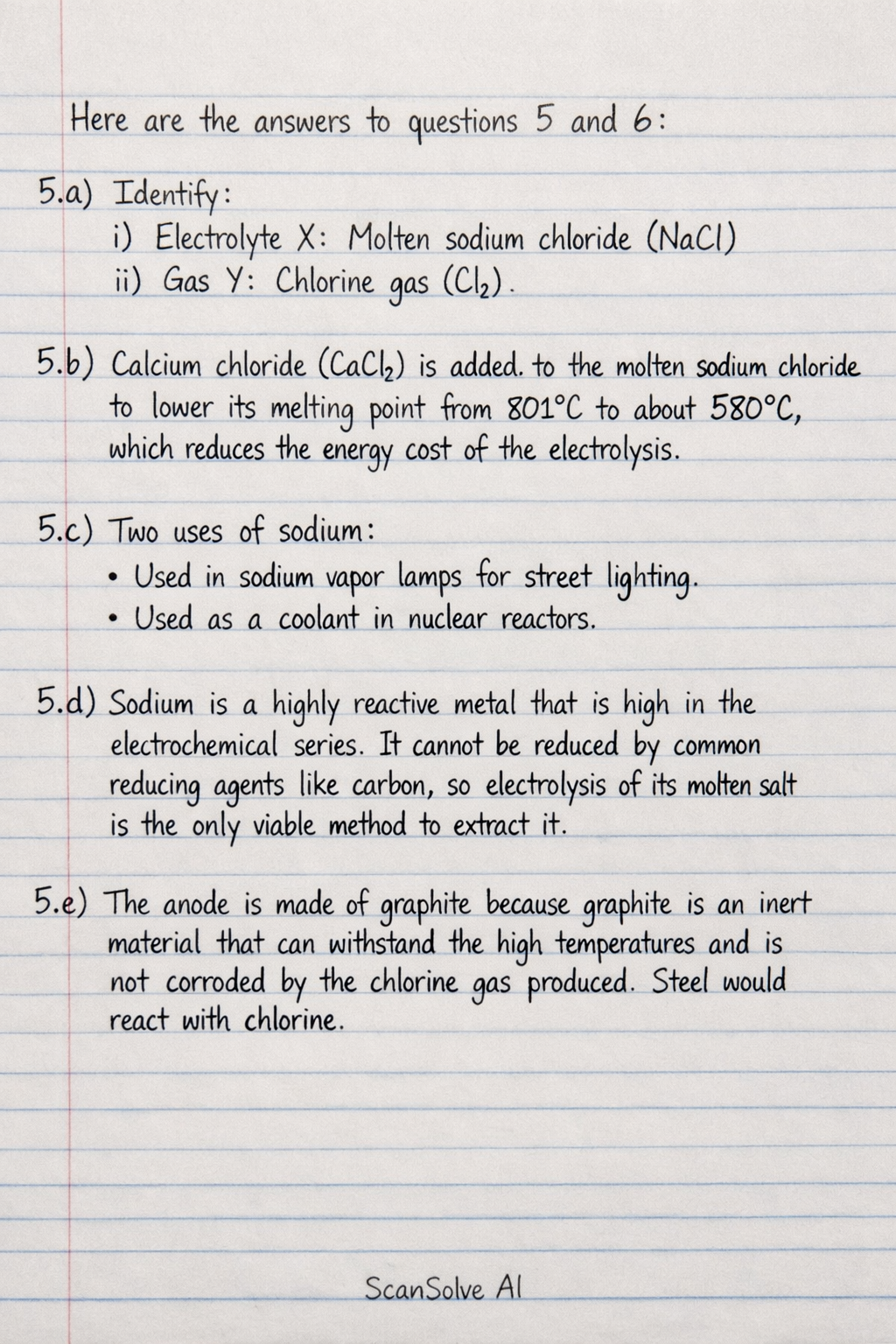
Here are the answers to questions 5 and 6:
5.a) Identify:
i) Electrolyte X: Molten sodium chloride ()
ii) Gas Y: Chlorine gas ()
5.b) Calcium chloride () is added to the molten sodium chloride to lower its melting point from to about , which reduces the energy cost of the electrolysis.
5.c) Two uses of sodium:
- Used in sodium vapor lamps for street lighting.
- Used as a coolant in nuclear reactors.
5.d) Sodium is a highly reactive metal that is high in the electrochemical series. It cannot be reduced by common reducing agents like carbon, so electrolysis of its molten salt is the only viable method to extract it.
5.e) The anode is made of graphite because graphite is an inert material that can withstand the high temperatures and is not corroded by the chlorine gas produced. Steel would react with chlorine.
5.f) The steel diaphragm is the perforated steel mesh that separates the anode compartment from the cathode compartment, preventing the products from mixing. It is the dotted line structure in the middle of the cell.
5.g) The role of the steel diaphragm is to prevent the mixing of molten sodium and chlorine gas. This is crucial because they would react explosively if allowed to come into contact.
5.h) Two observations made when sodium metal is placed in a trough of cold water:
- The sodium metal floats and melts into a silvery ball, moving rapidly on the surface. This is because sodium is less dense than water and the reaction is highly exothermic, melting the sodium.
- The sodium fizzes vigorously and may catch fire with a yellow flame. This indicates the production of hydrogen gas, which is ignited by the heat of the reaction, and the yellow flame is characteristic of sodium burning.
5.i) Two oxides of sodium:
- Sodium oxide ()
- Sodium peroxide ()
6.a) It is not advisable to use wood ash for cleaning aluminium utensils because wood ash is alkaline (contains potassium carbonate/hydroxide). Aluminium is an amphoteric metal and reacts with strong alkalis, leading to the corrosion and pitting of the utensil.
6.b) Two other properties that make aluminium suitable for overhead cables:
- Low density: Aluminium is lightweight, which reduces the stress on supporting structures and makes installation easier.
- Ductility: It can be easily drawn into thin wires without breaking.
Still stuck on this one?
Ask a follow-up, and the answer starts from this question.
More Chemistry Questions
Handwritten Step-by-Step Solution
Get this as a handwritten image on WhatsApp — like a tutor wrote it for you.
Try on WhatsApp