

This chemistry question involves key chemical concepts and calculations. The detailed solution below walks through each step, from identifying the reaction type to computing the final answer.
ScanSolve AI Answer
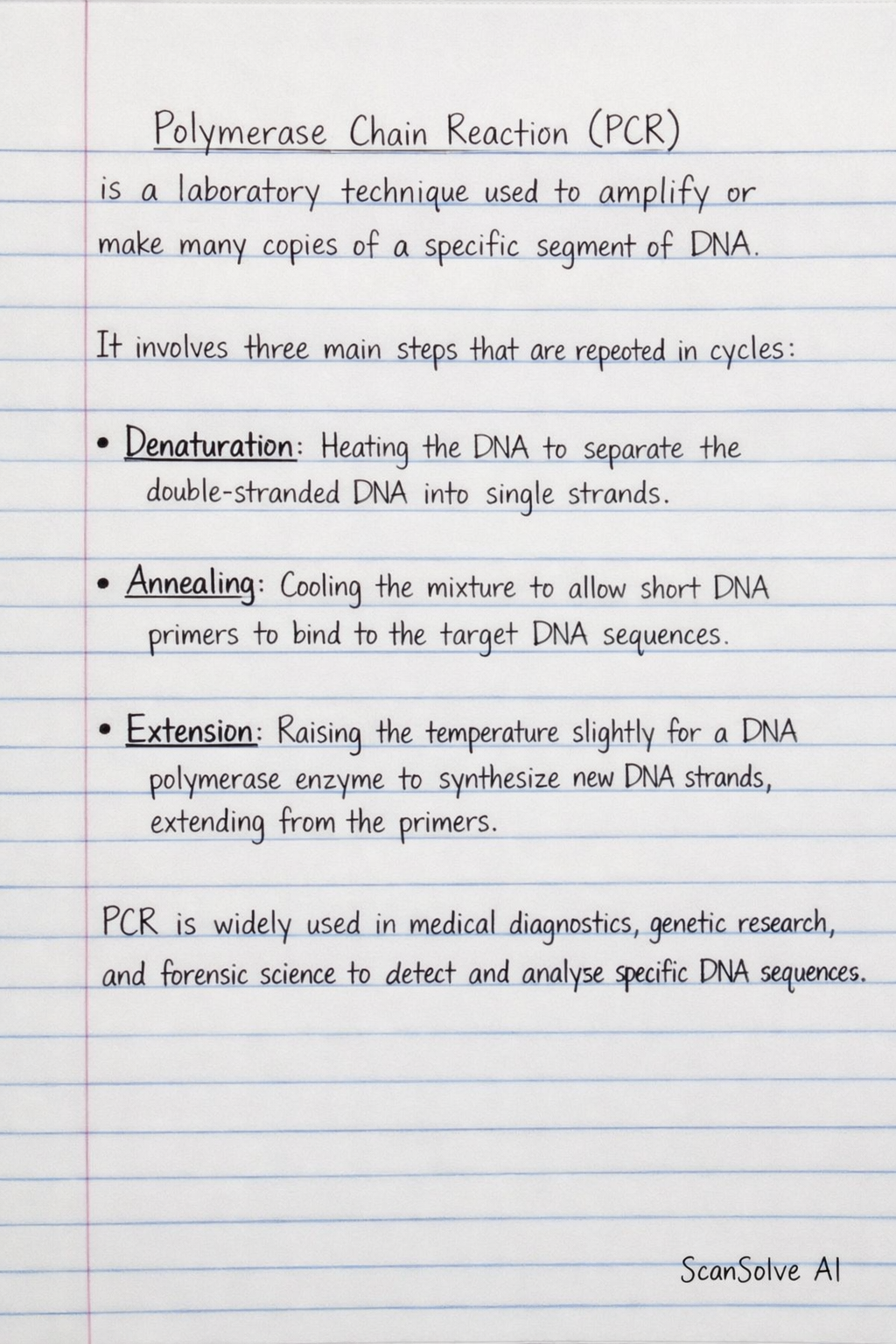
Polymerase Chain Reaction (PCR) is a laboratory technique used to amplify or make many copies of a specific segment of DNA. It involves three main steps that are repeated in cycles: • Denaturation: Heating the DNA to separate the double-stranded DNA into single strands. • Annealing: Cooling the mixture to allow short DNA primers to bind to the target DNA sequences. • Extension: Raising the temperature slightly for a DNA polymerase enzyme to synthesize new DNA strands, extending from the primers. PCR is widely used in medical diagnostics, genetic research, and forensic science to detect and analyze specific DNA sequences.