
We read your photo as:
The energy conversion process in a thermal power plant typically starts with chemical energy stored in fuel (like coal or natural gas). This fuel is burned to produce thermal energy (heat), wh
ScanSolve AI Answer
Here are the solutions to Section A: Conceptual Questions:
-
The energy conversion process in a thermal power plant typically starts with chemical energy stored in fuel (like coal or natural gas). This fuel is burned to produce thermal energy (heat), which boils water to create high-pressure steam. The steam's kinetic energy then drives a turbine, converting it into mechanical energy. Finally, the turbine spins a generator, converting mechanical energy into electrical energy.
-
Primary energy refers to energy sources found directly in nature, such as crude oil, natural gas, coal, sunlight, wind, and hydropower. Secondary energy is derived from the conversion of primary energy sources into a more usable form, with electricity being the most common example, generated from primary sources like coal or solar.
-
Renewable energy sources are considered sustainable because they are naturally replenished on a human timescale, meaning they will not run out. They also generally have a lower environmental impact, producing fewer greenhouse gas emissions and pollutants compared to fossil fuels, thus supporting long-term ecological balance and energy security.
Still stuck on this one?
Ask a follow-up, and the answer starts from this question.
More Computer Science Questions
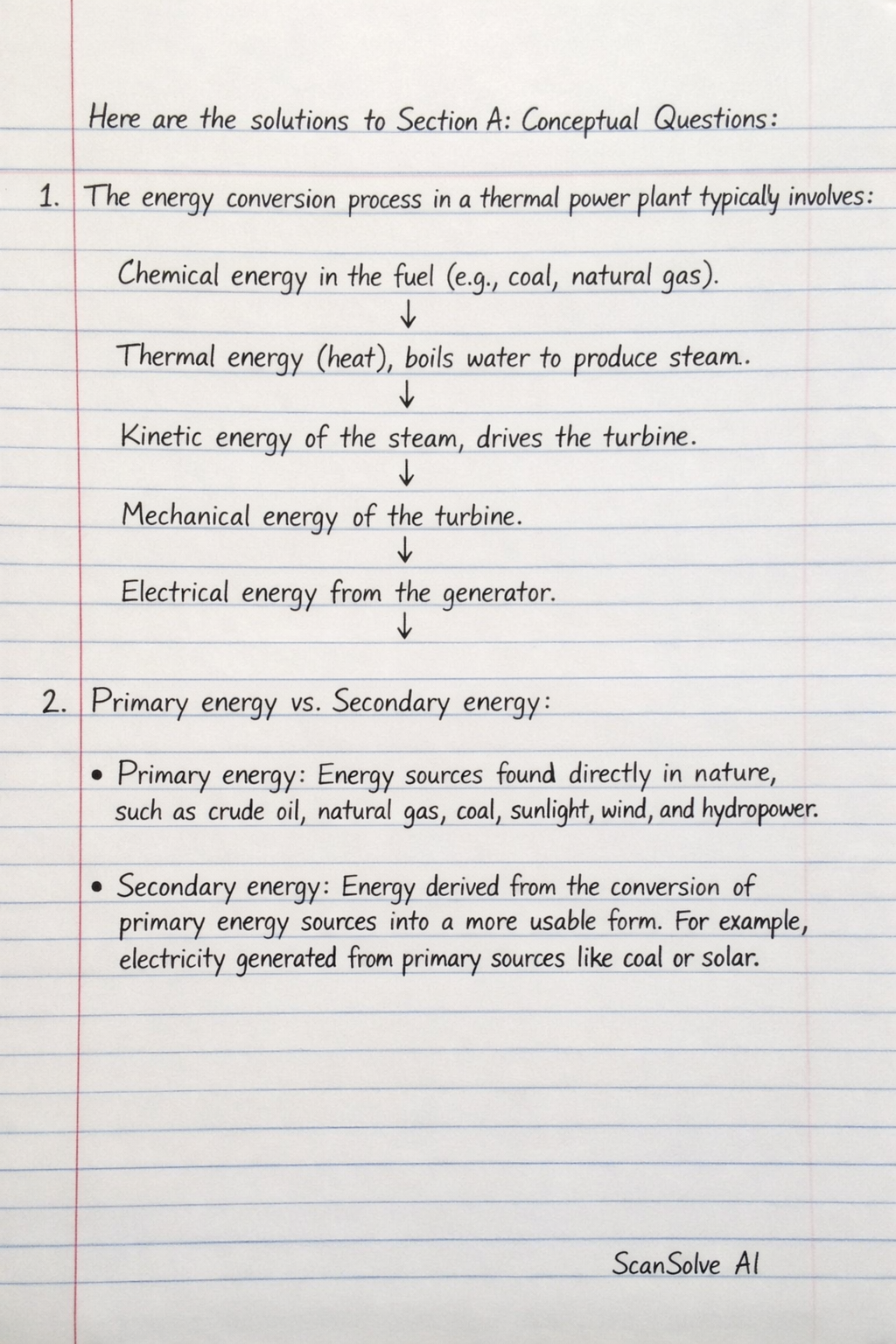
Handwritten Step-by-Step Solution
Get this as a handwritten image on WhatsApp — like a tutor wrote it for you.
Try on WhatsApp