

This computer science problem involves algorithmic thinking and programming concepts. The solution below explains the approach, logic, and implementation step by step.
ScanSolve AI Answer
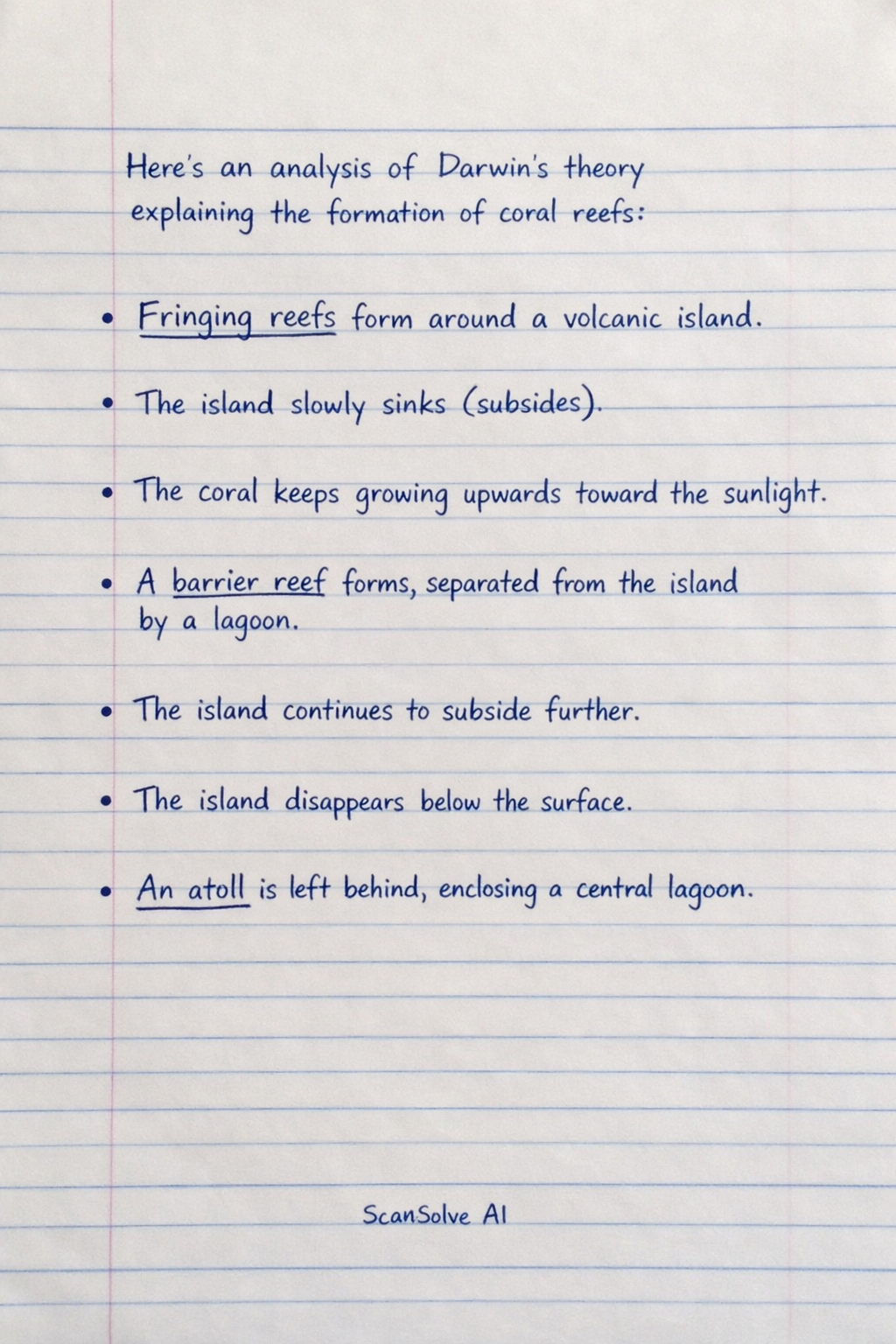
a) Darwin's theory explains the formation of coral reefs, which are the underwater rock-like structures, through a process of subsidence. It proposes that reefs begin as fringing reefs growing around a volcanic island. As the island slowly sinks (subsides), the coral continues to grow upwards towards the sunlight, forming a barrier reef separated from the island by a lagoon. With continued subsidence, the island eventually disappears below the surface, leaving a ring-shaped atoll enclosing a central lagoon. b) These underwater rock-like structures (coral reefs) are crucial to the people of East Africa for several reasons. They are biodiversity hotspots, providing essential habitats for a vast array of marine life, including fish, which are a primary source of food and income for local communities through fisheries. The reefs also support a significant tourism industry, attracting divers and snorkelers, thereby creating jobs and economic opportunities. Additionally, they serve as natural coastal protection, buffering shorelines from erosion, storm surges, and strong waves.