
We read your photo as:
Discuss the various steps you would undertake in setting up an Electronic Health Information System (EHIS) for a hospital.
ScanSolve AI Answer
Step-by-step solution
7 stepsPart a· 7 steps
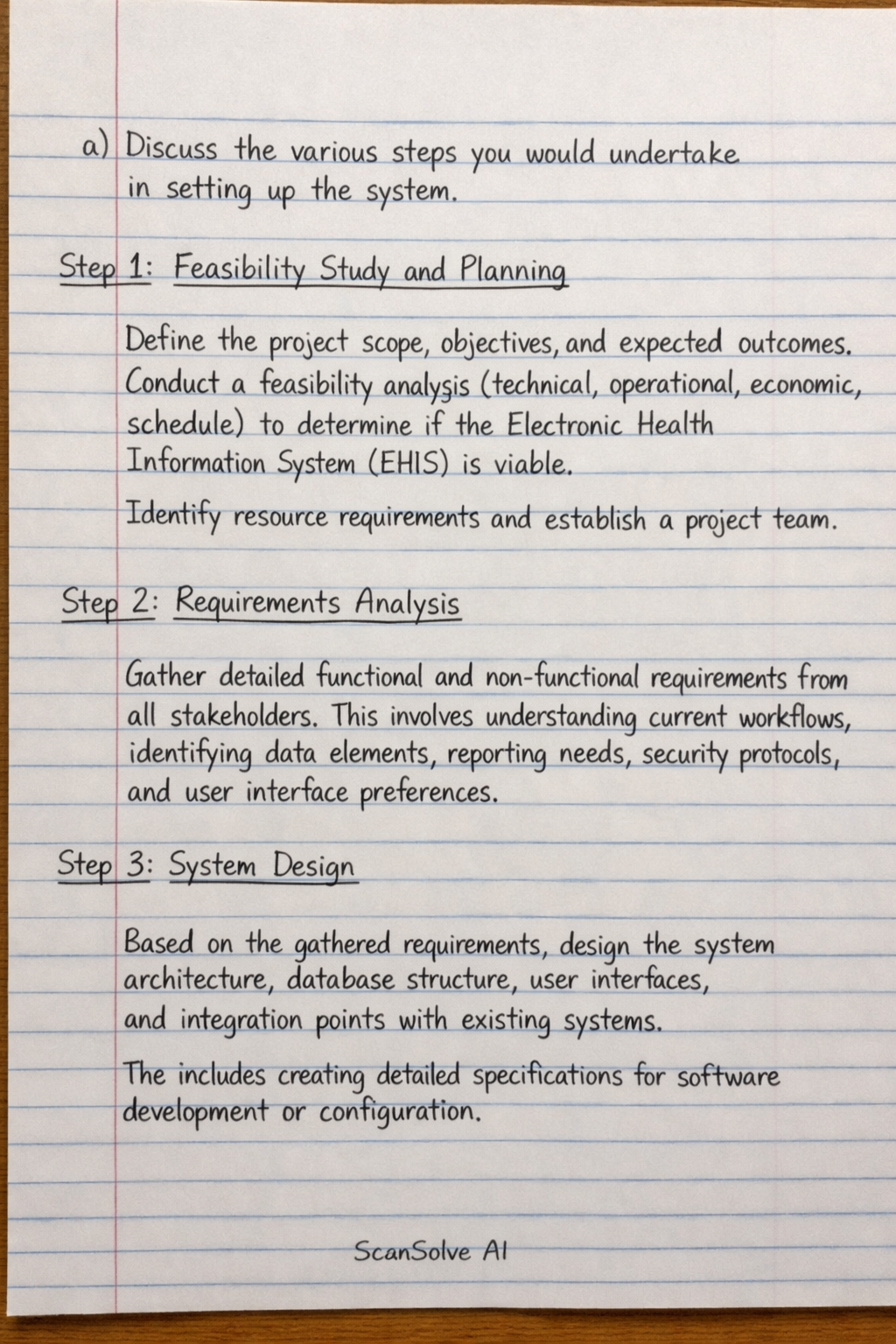
Discuss the various steps you would undertake in setting up the system.
Feasibility Study and Planning
Define the project scope, objectives, and expected outcomes. Conduct a feasibility analysis (technical, operational, economic, schedule) to determine if the Electronic Health Information System (EHIS) is viable. Identify resource requirements and establish a project team.
Requirements Analysis
Gather detailed functional and non-functional requirements from all stakeholders. This involves understanding current workflows, identifying data elements, reporting needs, security protocols, and user interface preferences.
System Design
Based on the gathered requirements, design the system architecture, database structure, user interfaces, and integration points with existing systems. This includes creating detailed specifications for software development or configuration.
Development and Configuration
If building a custom system, this involves coding and database creation. If using an off-the-shelf solution, it involves configuring the software to meet the specific needs of the Marani Sub-County hospital.
Testing
Conduct various levels of testing, including unit testing, integration testing, system testing, and user acceptance testing (UAT). This ensures the system functions correctly, meets all requirements, and is free of errors.
Implementation and Deployment
Install the EHIS hardware and software, migrate existing data (if applicable), and deploy the system. This step also includes comprehensive training for all end-users on how to operate and utilize the new system.
Monitoring, Evaluation, and Maintenance
Continuously monitor the system's performance, address any bugs or issues, and provide ongoing technical support. Regularly evaluate the system's effectiveness against its objectives and make necessary updates or enhancements.
Part b
Provide a list all the stakeholders whom you would engage and their possible roles.
- Hospital Management/Administration: Provide strategic direction, allocate resources, ensure policy alignment, and champion the project.
- Clinical Staff (Doctors, Nurses, Clinicians): Provide clinical requirements, participate in testing, and use the system for patient care, data entry, and retrieval.
- IT Department/Personnel: Responsible for technical infrastructure, system development/configuration, implementation, maintenance, and support.
- Health Records Officers/Data Entry Clerks: Primary users for data entry, data quality assurance, and managing patient records within the system.
- Disease Surveillance Officers (like yourself): Utilize the system for public health surveillance, reporting, and data analysis. Provide input on surveillance requirements.
- Patients/Community Representatives: Provide feedback on patient experience, ensure data privacy concerns are addressed, and benefit from improved care.
- Government Health Ministry/Regulatory Bodies: Set national health information standards, policies, and provide regulatory oversight.
- Donors/Funding Agencies: Provide financial support and may have specific reporting or evaluation requirements for the system.
- System Vendors/Suppliers (if applicable): Provide the software, hardware, technical expertise, and ongoing support for commercial systems.
Part c
Explain the possible reasons of objecting the idea and how you would address the situation.
Possible Reasons for Objection:
- Fear of Job Displacement: Staff may worry that automation will lead to job losses or changes in their roles that they are unprepared for.
- Resistance to Change: Individuals are often comfortable with existing manual processes and may be reluctant to learn new technologies or adapt to new workflows.
- Lack of Skills or Training: Staff may feel they lack the necessary computer literacy or technical skills to effectively use an electronic system, leading to anxiety.
- Increased Workload (Initial Phase): The initial period of data entry, learning new procedures, and troubleshooting can be perceived as an added burden.
- Concerns about Data Security and Privacy: Staff may worry about the confidentiality and integrity of patient data in an electronic format.
- Perceived Complexity: The new system might be seen as overly complicated or difficult to navigate, leading to frustration.
- Past Negative Experiences: Previous failed IT projects or inadequate system implementations can foster skepticism and distrust.
How to Address the Situation:
- Transparent Communication: Clearly articulate the benefits of the EHIS, such as improved patient care, enhanced data accuracy, and increased efficiency, while addressing concerns directly and honestly.
- Early and Continuous Engagement: Involve staff in the planning, design, and testing phases to foster ownership and gather valuable input, making them part of the solution.
- Comprehensive Training and Support: Provide tailored, hands-on training sessions for all user groups, coupled with ongoing technical support and easily accessible resources.
- Address Job Security Concerns: Reassure staff about job security, explaining how roles might evolve to focus on higher-value tasks rather than being eliminated.
- Pilot Implementation: Start with a pilot program in a specific department or unit to demonstrate success, identify issues early, and build confidence before a full rollout.
- Highlight Champions: Identify and empower early adopters or influential staff members to become system champions, advocating for the system and assisting peers.
- Feedback Mechanisms: Establish clear channels for staff to provide feedback, report issues, and suggest improvements, ensuring their voices are heard and acted upon.
Still stuck on this one?
Ask a follow-up, and the answer starts from this question.
More Computer Science Questions
Handwritten Step-by-Step Solution
Get this as a handwritten image on WhatsApp — like a tutor wrote it for you.
Try on WhatsApp