
We read your photo as:
Identify the specific iPhone model shown in the image based on its physical characteristics.
ScanSolve AI Answer
Answer
Step-by-step solution
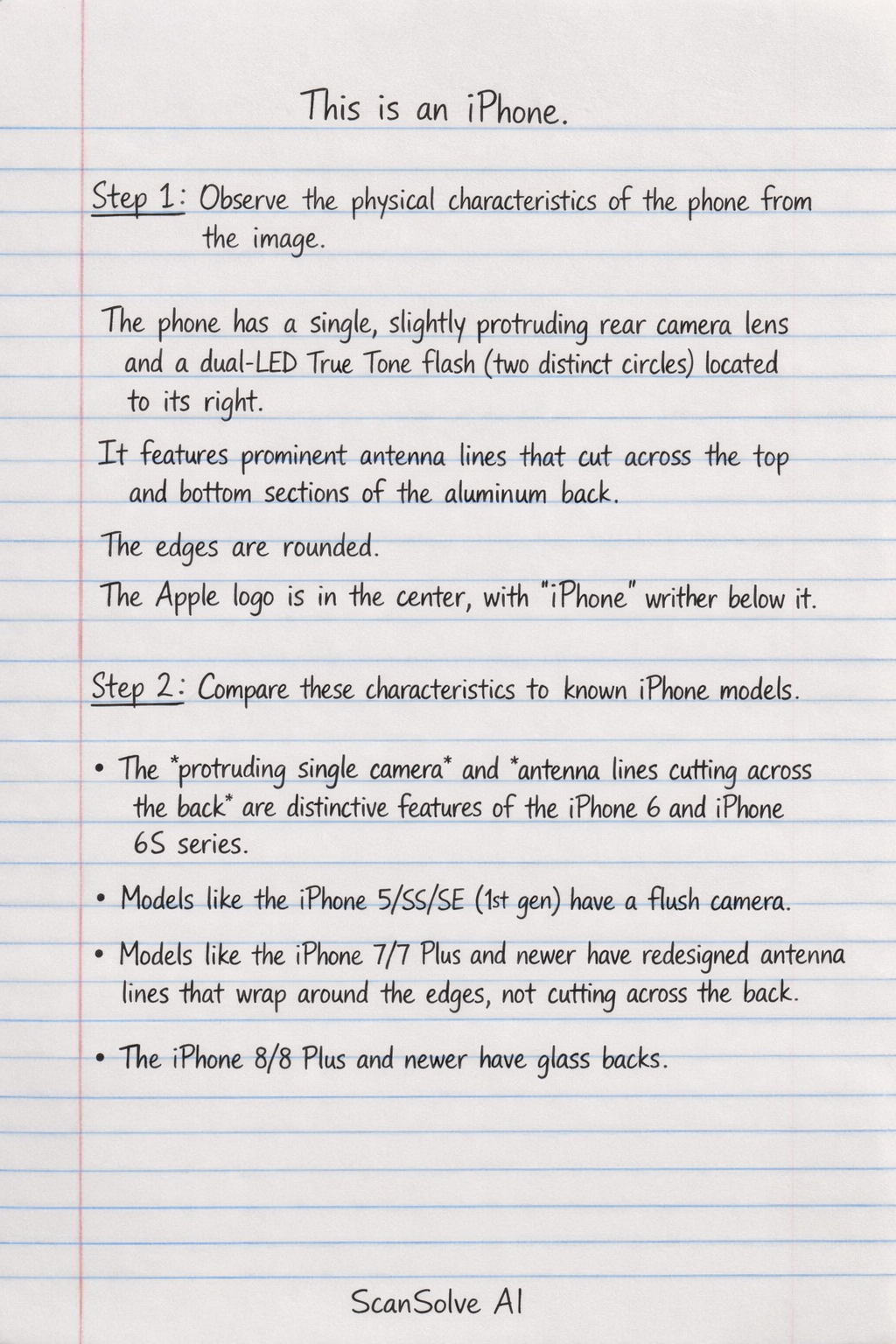
3 stepsThis is an iPhone.
Observe the physical characteristics of the phone from the image.
The phone has a single, slightly protruding rear camera lens and a dual-LED True Tone flash (two distinct circles) located to its right. It features prominent antenna lines that cut across the top and bottom sections of the aluminum back. The edges are rounded. The Apple logo is in the center, with "iPhone" written below it.
Compare these characteristics to known iPhone models.
- The protruding single camera and antenna lines cutting across the back are distinctive features of the iPhone 6 and iPhone 6S series.
- Models like the iPhone 5/5S/SE (1st gen) have a flush camera.
- Models like the iPhone 7/7 Plus and newer have redesigned antenna lines that wrap around the edges, not cutting across the back.
- The iPhone 8/8 Plus and newer have glass backs.
Differentiate between iPhone 6 and iPhone 6S.
Visually, the iPhone 6 and iPhone 6S are very similar. The iPhone 6S typically has a small "S" printed below the "iPhone" text on the back. This "S" is not visible in the provided image, and the regulatory text is too blurry to read a model number. However, the camera bump on the iPhone 6 is slightly less pronounced than on the 6S. Based on the visible details and the absence of the "S" marking, it is most likely an iPhone 6.
The iPhone model is an:
Try one yourself
A new problem that tests the same skill.
Still stuck on this one?
Ask a follow-up, and the answer starts from this question.
More Computer Science Questions
Handwritten Step-by-Step Solution
Get this as a handwritten image on WhatsApp — like a tutor wrote it for you.
Try on WhatsApp