
This computer science problem involves algorithmic thinking and programming concepts. The solution below explains the approach, logic, and implementation step by step.
ScanSolve AI Answer
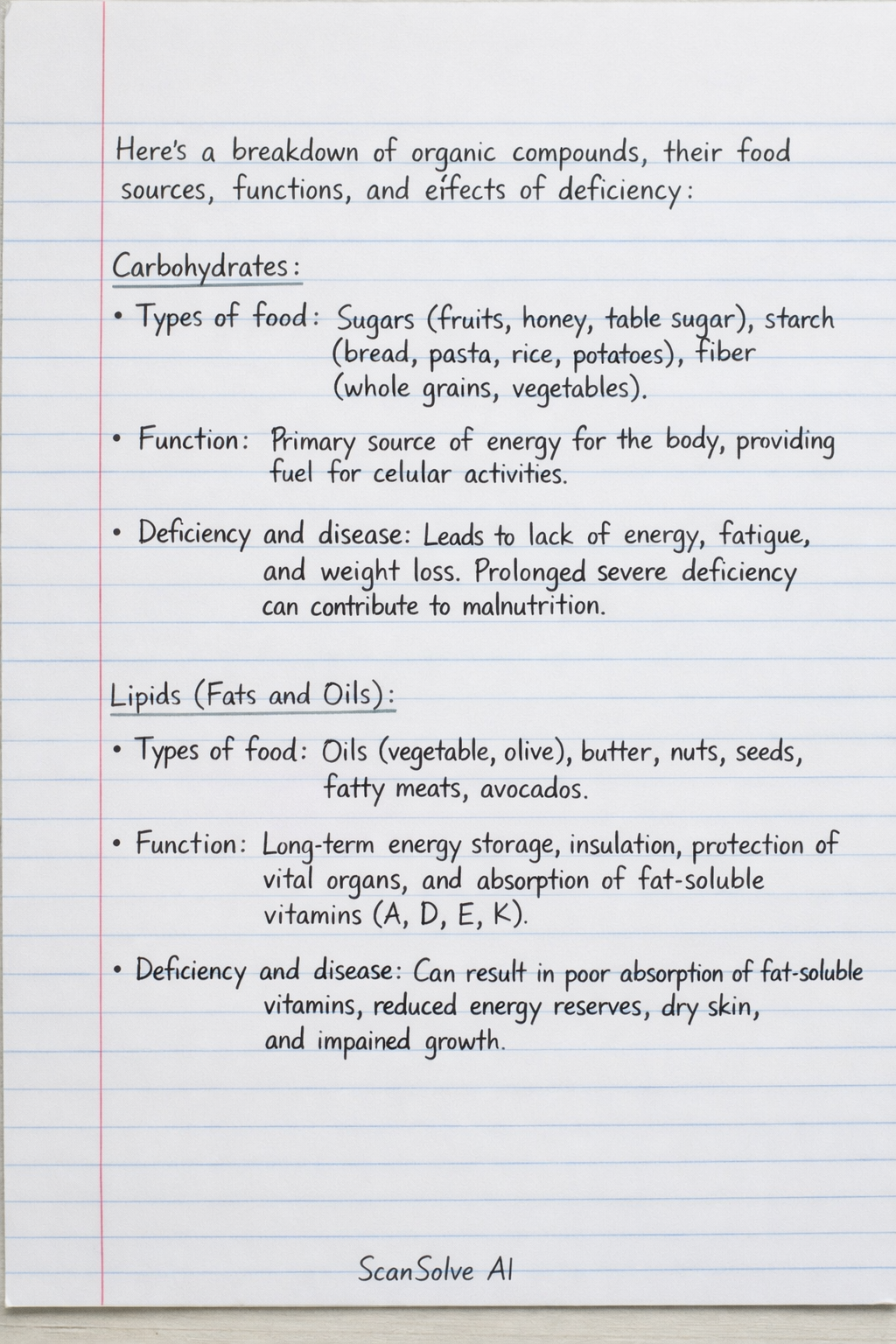
Here's a breakdown of organic compounds, their food sources, functions, and effects of deficiency: Carbohydrates Types of food*: Sugars (fruits, honey, table sugar), starch (bread, pasta, rice, potatoes), fiber (whole grains, vegetables). Function*: Primary source of energy for the body, providing fuel for cellular activities. Deficiency and disease*: Leads to lack of energy, fatigue, and weight loss. Prolonged severe deficiency can contribute to malnutrition. Lipids (Fats and Oils) Types of food*: Oils (vegetable, olive), butter, nuts, seeds, fatty meats, avocados. Function*: Long-term energy storage, insulation, protection of vital organs, and absorption of fat-soluble vitamins (A, D, E, K). Deficiency and disease*: Can result in poor absorption of fat-soluble vitamins, reduced energy reserves, dry skin, and impaired growth. Proteins Types of food*: Meat, fish, eggs, dairy products (milk, cheese), legumes (beans, lentils), nuts, soy products. Function*: Essential for building and repairing tissues, making enzymes, hormones, and other body chemicals, and supporting the immune system. Deficiency and disease*: Leads to muscle wasting, stunted growth, weakened immune response, and conditions like Kwashiorkor (severe protein malnutrition) characterized by edema and enlarged liver. Vitamins Types of food*: Found in various fruits, vegetables, dairy, meats, and grains, depending on the specific vitamin. Function*: Act as coenzymes or cofactors in metabolic reactions, regulating various bodily processes for normal growth and health. Deficiency and disease: Each vitamin deficiency causes specific diseases; for example, Vitamin C deficiency causes scurvy, Vitamin D deficiency causes rickets, and Vitamin A deficiency causes night blindness*. Nucleic Acids (DNA and RNA) Types of food*: Present in all living cells, so consumed in any plant or animal food. Function*: Carry genetic information, essential for heredity and protein synthesis. Deficiency and disease*: The body synthesizes its own nucleic acids from precursors; direct dietary deficiency diseases are not typically associated with nucleic acids as a food type. What's next?