
We read your photo as:
The South African retail sector is best described as an oligopoly. This market structure is characterized by a few large firms dominating the market.
ScanSolve AI Answer
Answer
The South African retail sector is best described as an oligopoly. The market is dominated by a small number of large firms — Shoprite, Pick n Pay, Woolworths, SPAR, and Massmart — that hold significant control over prices, supply chains, and consumer access across the formal food, clothing, and grocery segments.
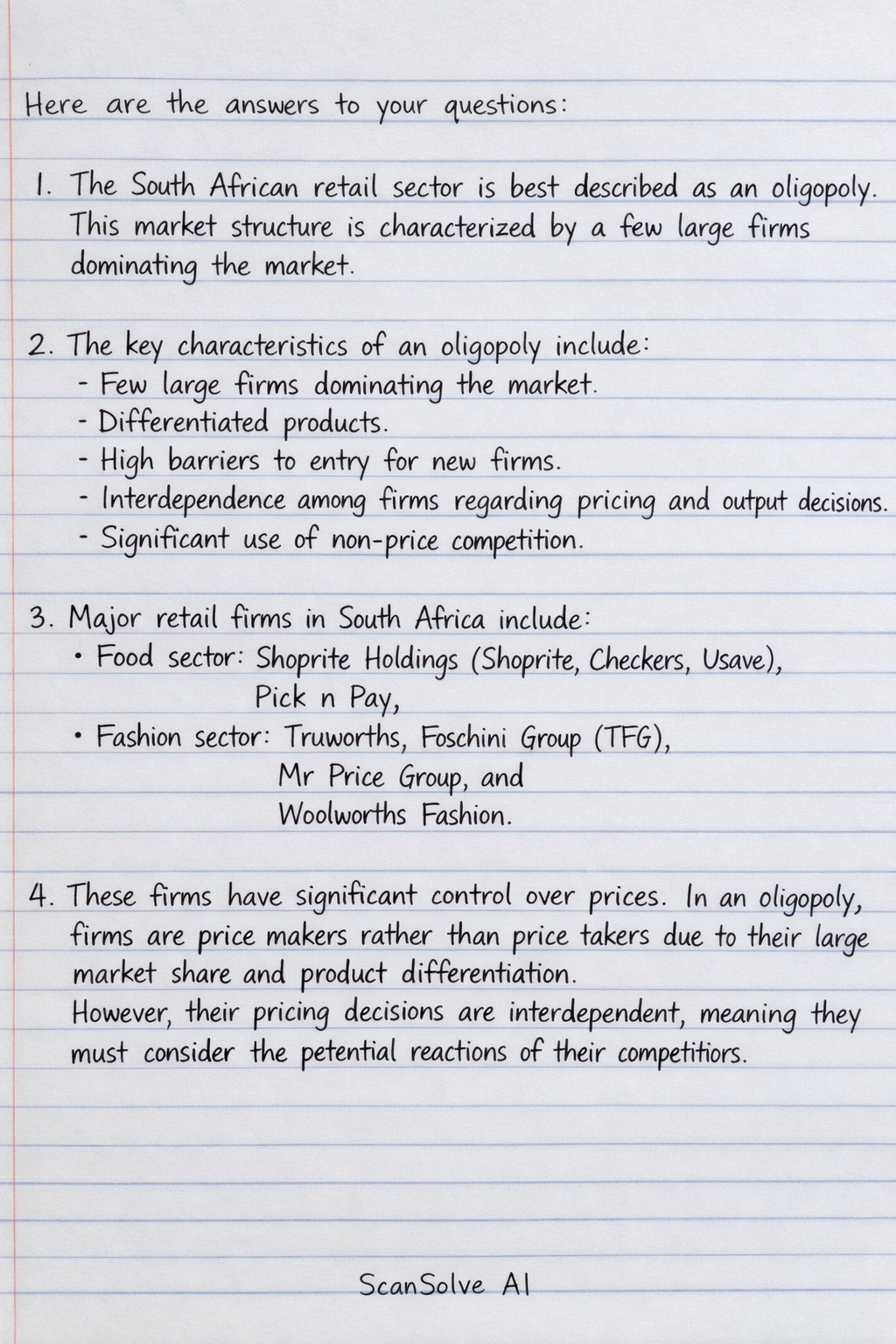
Here are the answers to your questions:
-
The South African retail sector is best described as an oligopoly. This market structure is characterized by a few large firms dominating the market.
-
The key characteristics of an oligopoly include: few large firms dominating the market, differentiated products, high barriers to entry for new firms, interdependence among firms regarding pricing and output decisions, and significant use of non-price competition.
-
Major retail firms in South Africa include:
- Food sector: Shoprite Holdings (Shoprite, Checkers, Usave), Pick n Pay, Woolworths Food, and Spar.
- Fashion sector: Truworths, Foschini Group (TFG), Mr Price Group, and Woolworths Fashion.
-
These firms have significant control over prices. In an oligopoly, firms are price makers rather than price takers due to their large market share and product differentiation. However, their pricing decisions are interdependent, meaning they must consider the potential reactions of their competitors.
-
Retail firms increase their market share through various strategies, including expanding their store footprint into new areas, mergers and acquisitions of smaller competitors, product differentiation by offering unique brands or services, extensive marketing and advertising campaigns to build brand loyalty, and implementing competitive pricing strategies such as loyalty programs and promotions.
-
The South African retail sector faces several threats, such as economic downturns leading to reduced consumer spending, intense competition from both local and international players including e-commerce, rising operating costs (e.g., rent, utilities, labor), and supply chain disruptions. Load shedding (electricity cuts) also significantly impacts operations and increases costs. These threats can lead to higher prices for consumers due to increased costs or reduced competition, reduced choice if firms exit the market, and inconvenience from operational disruptions.
Still stuck on this one?
Ask a follow-up, and the answer starts from this question.
More Economics Questions
Handwritten Step-by-Step Solution
Get this as a handwritten image on WhatsApp — like a tutor wrote it for you.
Try on WhatsApp