
We read your photo as:
2a. Explain the term capital formation. b. Account for the methods of measuring the adequacy of capital and the problems associated with capital formation in Sierra Leone. c. Distinguish between Cash and Cash budget. d. State three (3) objectives of Cash budget.
ScanSolve AI Answer
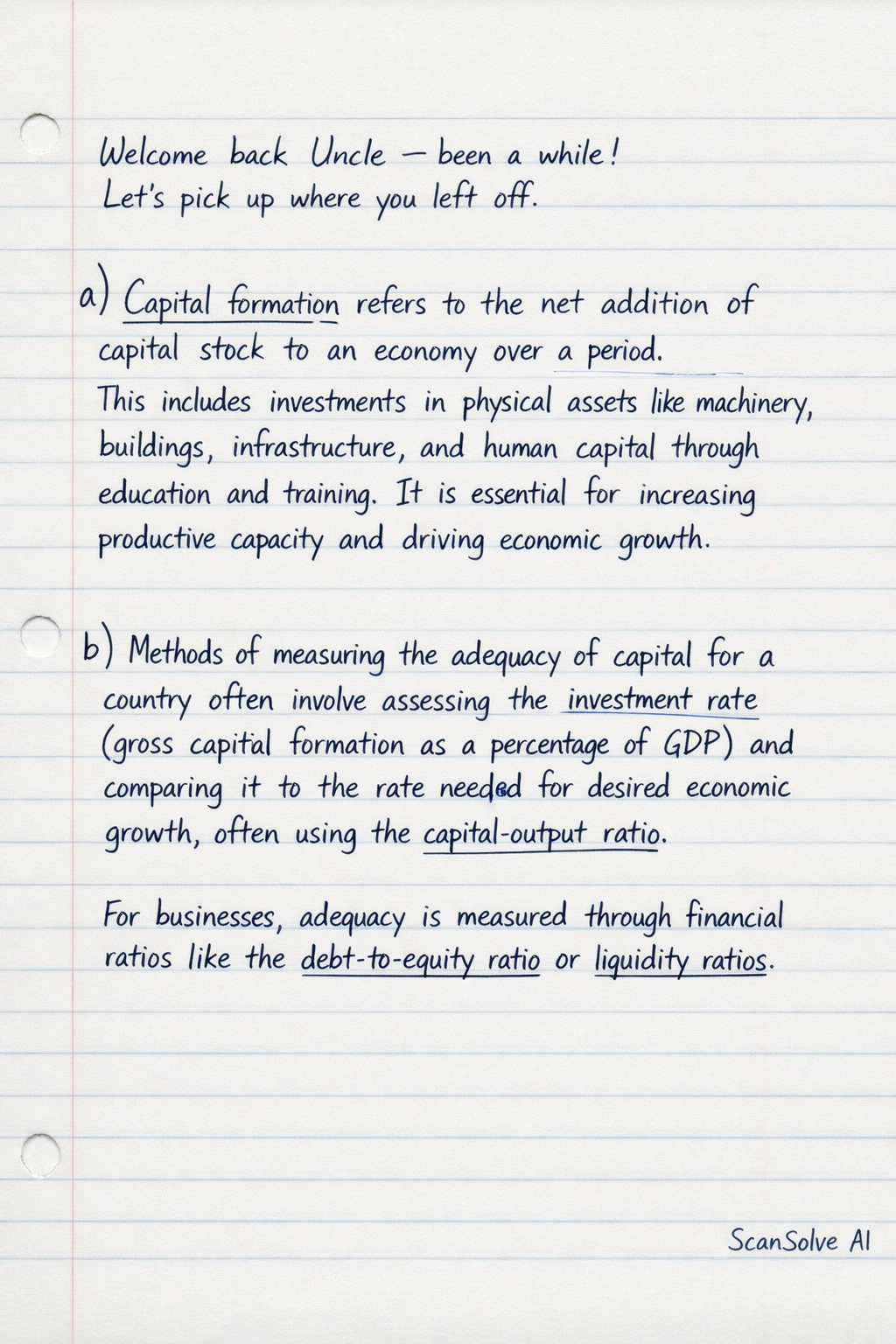
a) Capital formation refers to the net addition of capital stock to an economy over a period. This includes investments in physical assets like machinery, buildings, infrastructure, and human capital through education and training. It is essential for increasing productive capacity and driving economic growth.
b)
Methods of measuring the adequacy of capital for a country often involve assessing the investment rate (gross capital formation as a percentage of GDP) and comparing it to the rate needed for desired economic growth, often using the capital-output ratio. For businesses, adequacy is measured through financial ratios like the debt-to-equity ratio or liquidity ratios.
Problems associated with capital formation in Sierra Leone include:
- Low domestic savings: A significant portion of the population has limited disposable income, leading to low rates of personal and national savings available for investment.
- Inadequate infrastructure: Poor transportation networks, unreliable power supply, and limited access to modern technology deter both local and foreign investment.
- Institutional weaknesses and governance issues: Challenges such as corruption, weak legal frameworks, and political instability create an unfavorable environment for long-term capital investment.
c)
Cash refers to the actual liquid funds available to an entity, including physical currency and balances in bank accounts that can be accessed immediately. It represents a current asset. A Cash budget, on the other hand, is a financial plan that projects the expected cash inflows and outflows over a specific future period, forecasting the cash position at different points in time.
d) Three objectives of a Cash budget are:
- To ensure the business maintains sufficient liquidity to meet its short-term obligations and operational expenses.
- To identify potential cash surpluses or deficits in advance, allowing management to plan for investing excess cash or securing financing for shortfalls.
- To provide a tool for controlling cash expenditure by setting limits and monitoring actual cash flows against budgeted figures.
Still stuck on this one?
Ask a follow-up, and the answer starts from this question.
More Economics Questions
Handwritten Step-by-Step Solution
Get this as a handwritten image on WhatsApp — like a tutor wrote it for you.
Try on WhatsApp