

This economics question tests your understanding of economic models and analysis. The step-by-step answer below applies the relevant framework and explains the reasoning.
ScanSolve AI Answer
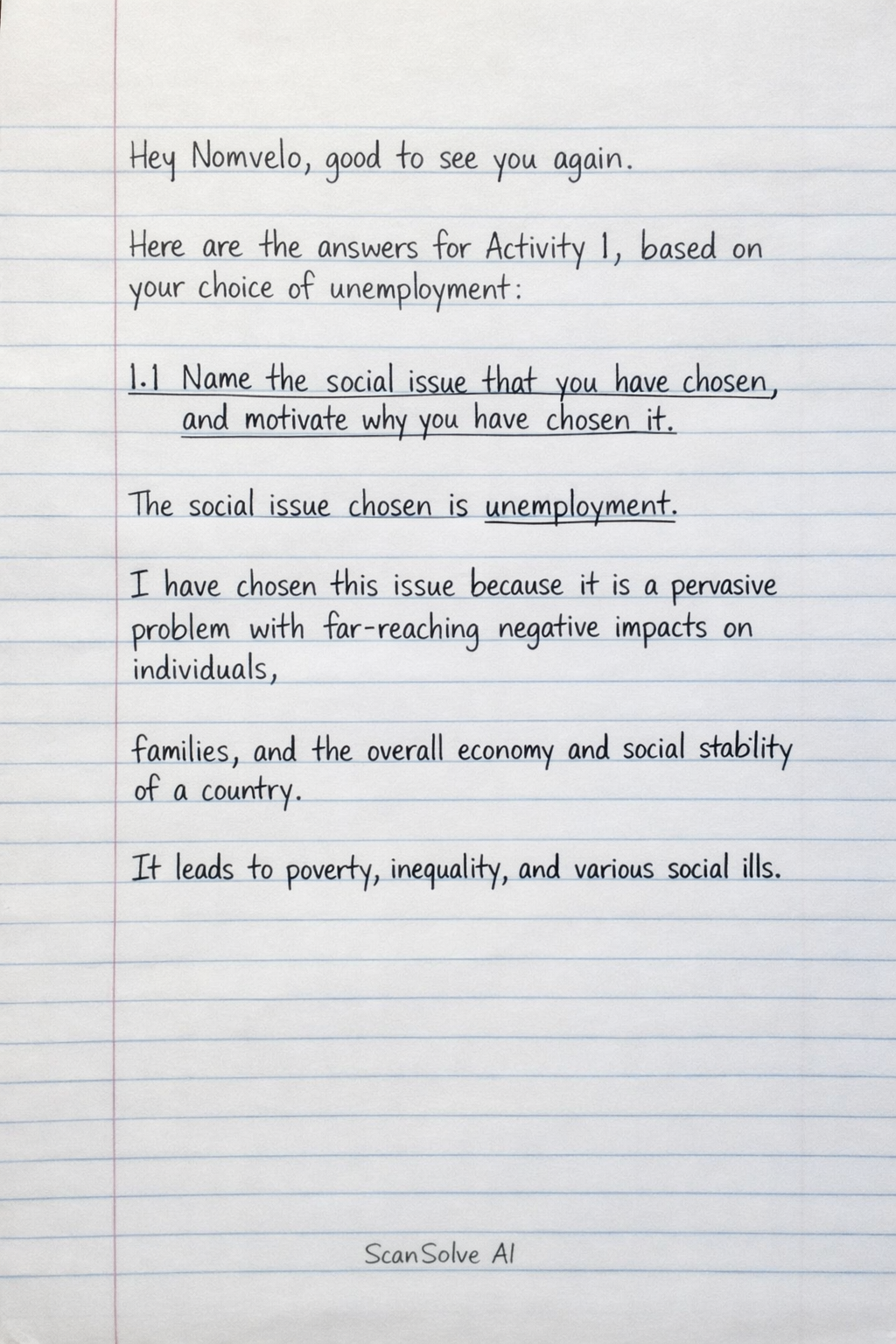
Here are the answers for Activity 1, based on your choice of unemployment: 1.1 Name the social issue that you have chosen, and motivate why you have chosen it. The social issue chosen is unemployment. I have chosen this issue because it is a pervasive problem with far-reaching negative impacts on individuals, families, and the overall economy and social stability of a country. It leads to poverty, inequality, and various social ills. 1.2 Explain FOUR contributory factors to the chosen social problem locally and globally. • Lack of economic growth (local and global): Slow economic growth limits job creation, as businesses are less likely to expand and hire new employees. • Skills mismatch (local): The education and training systems may not be producing graduates with the skills demanded by the current job market, leading to a gap between available jobs and qualified candidates. • Technological advancements and automation (global): Rapid technological changes and automation can displace workers in certain industries, requiring new skills that many existing workers may not possess. • Global economic downturns (global): International recessions or crises can reduce demand for goods and services, leading to job losses and reduced hiring across many countries. 1.3 Discuss THREE consequences of the social problem on: • The individual: Unemployment often leads to financial hardship, causing stress, debt, and an inability to meet basic needs. It can also result in psychological distress, such as depression, anxiety, and a loss of self-esteem. Furthermore, individuals may experience social isolation due to reduced participation in work-related social networks. • The community: High unemployment rates can lead to increased crime rates as individuals resort to illicit activities to survive. It also strains social services and welfare systems, requiring more resources to support the unemployed. Additionally, it can foster social instability and unrest as frustration and inequality grow within the community. 1.4 Describe how the following concepts could help to fight social challenges: • Social and environmental responsibility: Businesses can contribute by creating sustainable jobs, investing in local communities, and adopting environmentally friendly practices that foster long-term economic stability and job growth. • Ubuntu: This philosophy emphasizes interconnectedness and collective responsibility. It encourages communities to support unemployed individuals through shared resources, mentorship, and creating local initiatives to generate income and opportunities. • Social activism: Activism can raise awareness about unemployment, advocate for policy changes (e.g., job creation programs, improved education), and mobilize communities to demand action from government and private sectors. • Social justice: Promoting social justice involves ensuring fair access to education, training, and employment opportunities for all, regardless of background. It aims to address systemic inequalities that contribute to unemployment. 1.5 Evaluate the extent to which the Government has contributed to: • Social grants: The government provides social grants (e.g., unemployment benefits, child support grants) to alleviate poverty and provide a safety net for those unable to find work, significantly mitigating the immediate impact of unemployment. • Nutrition: Government programs like school feeding schemes and food parcels aim to improve nutrition, especially for vulnerable populations affected by unemployment, ensuring basic food security. • School fees: Policies on fee-free education or subsidies for school fees help ensure access to education for children from low-income households, which is crucial for long-term employability and breaking the cycle of unemployment. • Health care: Public healthcare services provide essential medical care to all citizens, including the unemployed, preventing health issues from becoming further barriers to employment or exacerbating financial strain. • Housing: Government housing initiatives, such as providing low-cost housing or subsidies, aim to ensure that even unemployed individuals have access to safe and dignified shelter, reducing homelessness and improving living conditions. Send me the next one 📸