In a labor market, buyers (employers) and sellers (workers) interact to determine wages and working conditions. In a perfectly competitive labor market, individual firms and workers are wage takers, m

Economics
In a labor market, buyers (employers) and sellers (workers) interact to determine wages and working conditions. In a perfectly competitive labor market, individual firms and workers are wage takers, m

ScanSolve AI Answer

In a labor market, buyers (employers) and sellers (workers) interact to determine wages and working conditions. In a perfectly competitive labor market, individual firms and workers are wage takers, meaning they accept the prevailing market wage.

Here are the factors that affect the demand for and supply of labor in such a market:

  • Factors Affecting the Demand for Labor:

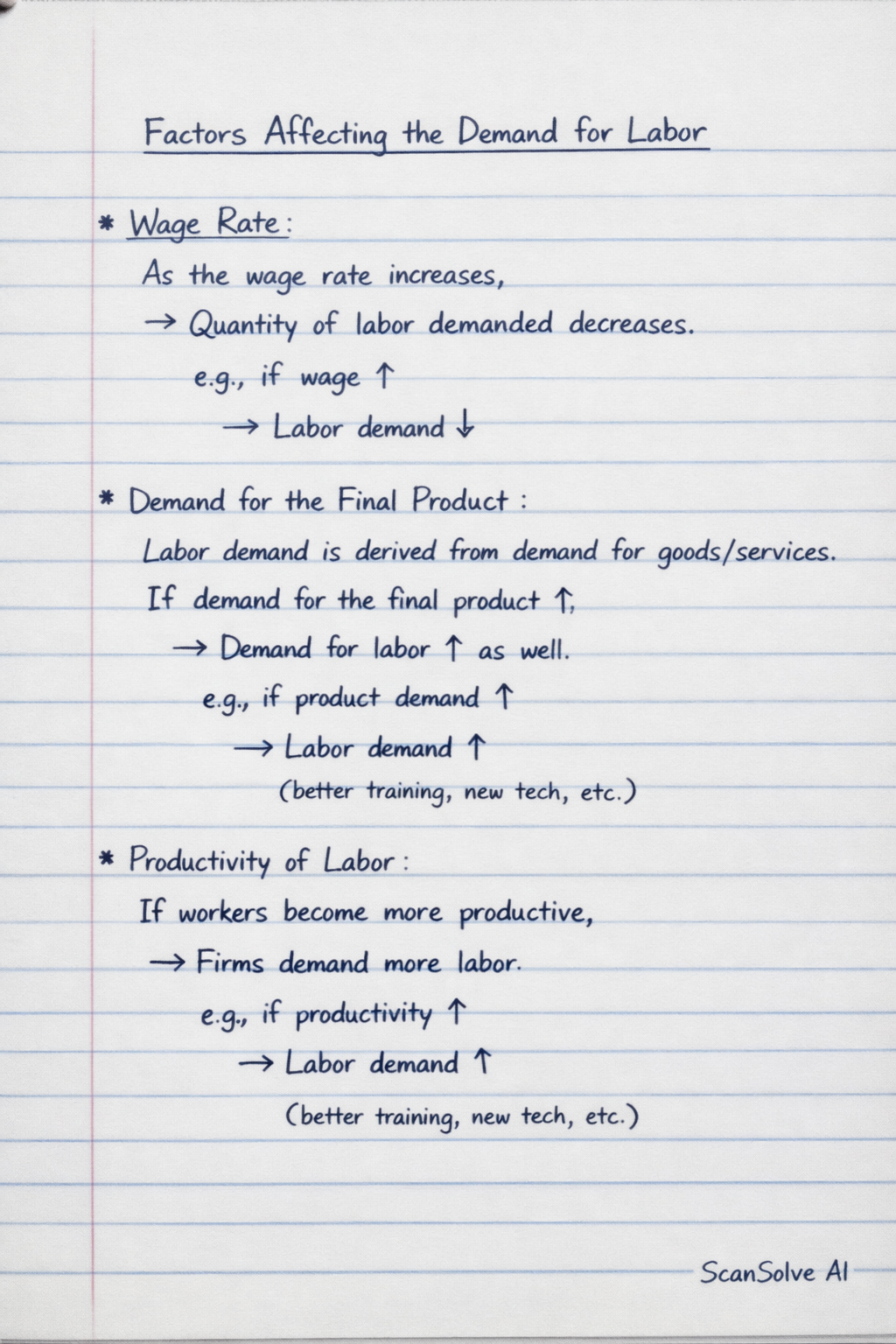
    • Wage Rate: The primary factor. As the wage rate increases, the quantity of labor demanded by firms generally decreases, and vice versa.
    • Demand for the Final Product: Labor demand is a derived demand. If the demand for the goods or services that labor produces increases, the demand for labor will also increase.
    • Productivity of Labor: If workers become more productive (e.g., through training or better technology), firms may demand more labor, as each unit of labor contributes more to output.
    • Price of Other Factors of Production: If the price of capital (a substitute for labor) falls, firms might substitute capital for labor, reducing labor demand. Conversely, if capital becomes more expensive, labor demand might increase.
    • Technology: New technology can either increase demand for skilled labor (complementary) or decrease demand for unskilled labor (substitute).
  • Factors Affecting the Supply of Labor:

    • Wage Rate: As the wage rate for a particular job increases, more individuals are generally willing and able to supply their labor, and vice versa.
    • Non-Monetary Benefits: Factors like good working conditions, job security, opportunities for advancement, and flexible hours can increase labor supply even without higher wages.
    • Population Size and Demographics: A larger working-age population or changes in age distribution can increase the overall supply of labor.
    • Education and Training: The availability and quality of education and training programs influence the supply of skilled labor for specific industries.
    • Mobility of Labor: The ease with which workers can move between jobs, industries, or geographical locations affects the responsiveness of labor supply.
    • Government Policies: Policies such as unemployment benefits, minimum wage laws, or immigration regulations can influence the supply of labor.
    • Leisure Preferences: Individuals' preferences for leisure versus work also impact the total hours of labor supplied.

Got more? Send 'em 📸

Was this helpful?

Need help with your own homework?

Get instant step-by-step solutions to any question. Free to start.

Ask Your Question
Handwritten step-by-step solution preview

Handwritten Step-by-Step Solution

Get this as a handwritten image on WhatsApp — like a tutor wrote it for you.

Try on WhatsApp

Still have questions?

Quick Answer

In a labor market, buyers (employers) and sellers (workers) interact to determine wages and working conditions.

In a labor market, buyers (employers) and sellers (workers) interact to determine wages and working conditions. In a perfectly competitive labor market, individual firms and workers are wage takers, m
Economics

This economics question tests your understanding of economic models and analysis. The step-by-step answer below applies the relevant framework and explains the reasoning.

ScanSolve AI Answer
In a labor market, buyers (employers) and sellers (workers) interact to determine wages and working conditions. In a perfectly competitive labor market, individual firms and workers are wage takers, meaning they accept the prevailing market wage. Here are the factors that affect the demand for and supply of labor in such a market: Factors Affecting the Demand for Labor: Wage Rate: The primary factor. As the wage rate increases, the quantity of labor demanded by firms generally decreases, and vice versa. Demand for the Final Product: Labor demand is a derived demand*. If the demand for the goods or services that labor produces increases, the demand for labor will also increase. Productivity of Labor: If workers become more productive (e.g., through training or better technology), firms may demand more labor, as each unit of labor contributes more to output. Price of Other Factors of Production: If the price of capital (a substitute for labor) falls, firms might substitute capital for labor, reducing labor demand. Conversely, if capital becomes more expensive, labor demand might increase. Technology: New technology can either increase demand for skilled labor (complementary) or decrease demand for unskilled labor (substitute). Factors Affecting the Supply of Labor: Wage Rate: As the wage rate for a particular job increases, more individuals are generally willing and able to supply their labor, and vice versa. Non-Monetary Benefits: Factors like good working conditions, job security, opportunities for advancement, and flexible hours can increase labor supply even without higher wages. Population Size and Demographics: A larger working-age population or changes in age distribution can increase the overall supply of labor. Education and Training: The availability and quality of education and training programs influence the supply of skilled labor for specific industries. Mobility of Labor: The ease with which workers can move between jobs, industries, or geographical locations affects the responsiveness of labor supply. Government Policies: Policies such as unemployment benefits, minimum wage laws, or immigration regulations can influence the supply of labor. Leisure Preferences: Individuals' preferences for leisure versus work also impact the total hours of labor supplied. Got more? Send 'em 📸