

This economics question tests your understanding of economic models and analysis. The step-by-step answer below applies the relevant framework and explains the reasoning.
ScanSolve AI Answer
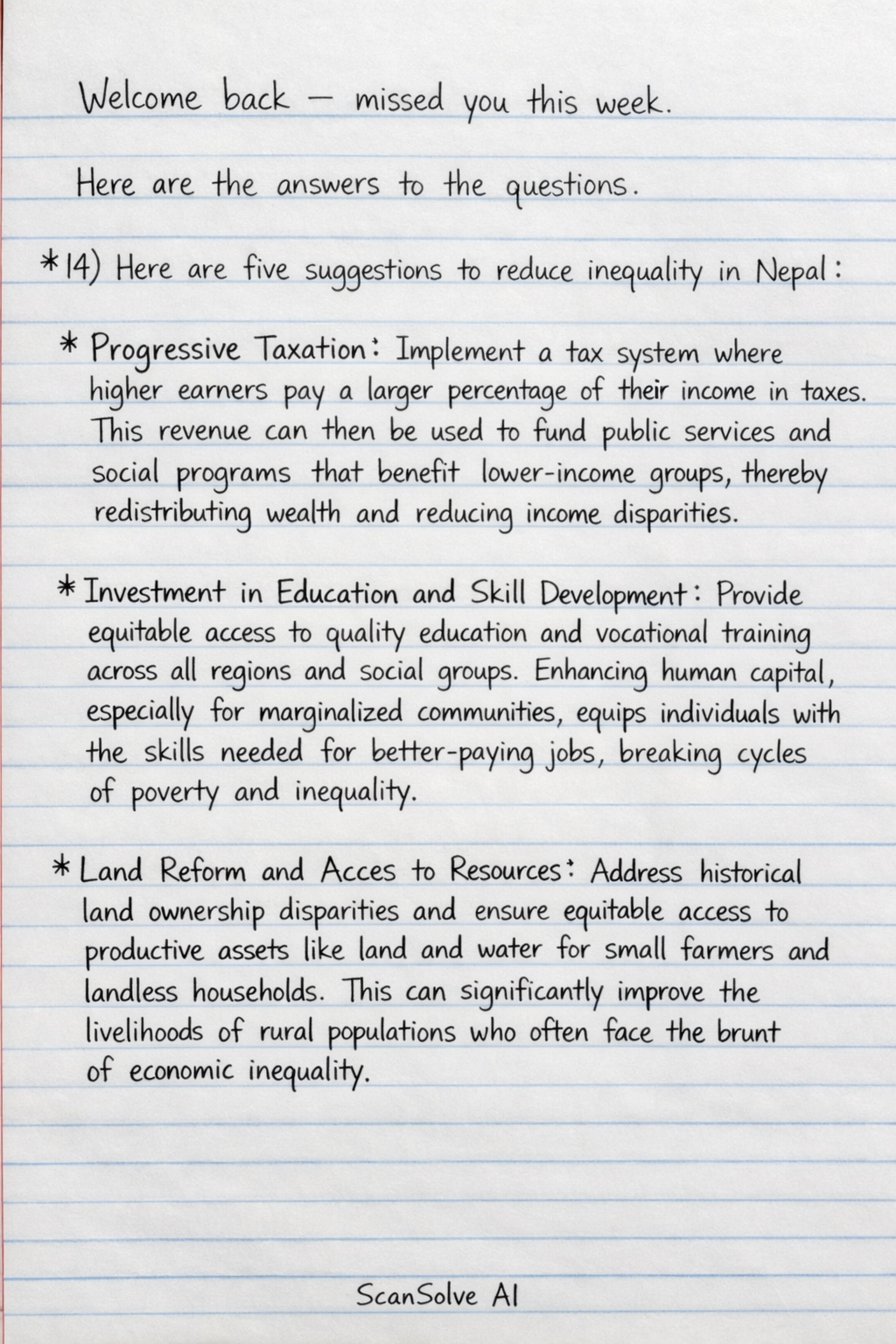
Welcome back — missed you this week. Here are the answers to the questions. 14) Here are five suggestions to reduce inequality in Nepal: • Progressive Taxation: Implement a tax system where higher earners pay a larger percentage of their income in taxes. This revenue can then be used to fund public services and social programs that benefit lower-income groups, thereby redistributing wealth and reducing income disparities. • Investment in Education and Skill Development: Provide equitable access to quality education and vocational training across all regions and social groups. Enhancing human capital, especially for marginalized communities, equips individuals with the skills needed for better-paying jobs, breaking cycles of poverty and inequality. • Land Reform and Access to Resources: Address historical land ownership disparities and ensure equitable access to productive assets like land and water for small farmers and landless households. This can significantly improve the livelihoods of rural populations who often face the brunt of economic inequality. • Strengthening Social Safety Nets: Expand and improve social protection programs such as unemployment benefits, old-age pensions, and targeted cash transfers for vulnerable populations. These programs provide a crucial buffer against economic shocks and ensure a basic standard of living, preventing extreme poverty and reducing the gap between the rich and poor. • Promoting Inclusive Economic Growth: Develop policies that encourage economic activities in rural areas and create employment opportunities for all, including women, youth, and marginalized groups. This involves supporting small and medium enterprises (SMEs), investing in local infrastructure, and ensuring that economic benefits are widely distributed rather than concentrated in urban centers or specific sectors. 15) Here are five causes of increasing unemployment in Nepal: • Rapid Population Growth and Labor Force Expansion: Nepal's population has been growing steadily, leading to a continuous increase in the number of people entering the labor market each year. The economy struggles to create enough jobs to absorb this growing workforce, resulting in a surplus of labor and higher unemployment rates. • Lack of Industrialization and Diversification: The Nepali economy remains heavily reliant on agriculture, which often provides seasonal and underpaid employment. There is insufficient growth in the industrial and manufacturing sectors, which are typically major job creators, leading to a limited number of formal sector jobs for a large, young population. • Inadequate Vocational and Technical Training: The education system often produces graduates with theoretical knowledge but lacks practical skills demanded by the job market. There is a mismatch between the skills possessed by job seekers and the requirements of available jobs, particularly in technical and specialized fields, contributing to structural unemployment. • Political Instability and Lack of Investment: Frequent changes in government, policy inconsistencies, and a challenging business environment deter both domestic and foreign investment. This lack of investment hinders the establishment of new industries and expansion of existing ones, thereby limiting job creation opportunities. • Brain Drain and Out-migration: A significant portion of skilled and semi-skilled Nepali youth migrate abroad in search of better employment opportunities and higher wages. While remittances contribute to the economy, this outflow of productive labor indicates a severe lack of attractive job prospects within the country, exacerbating the domestic unemployment problem. 16) Here are five efforts made by the government for the reduction of poverty in Nepal: • Targeted Poverty Reduction Programs: The government has implemented various programs aimed at specific vulnerable groups, such as the Poverty Alleviation Fund (PAF), which provided direct support for income-generating activities and community infrastructure projects in remote areas. These programs aim to empower marginalized communities and improve their access to resources. • Investment in Infrastructure Development: Significant investments have been made in developing rural infrastructure, including roads, electricity, and irrigation facilities. Improved infrastructure enhances connectivity, facilitates market access for agricultural products, and creates non-farm employment opportunities, thereby contributing to economic growth and poverty reduction. • Agricultural Modernization and Commercialization: Recognizing agriculture as the primary livelihood for many poor households, the government has promoted programs for agricultural modernization, improved irrigation, access to quality seeds and fertilizers, and commercial farming. These initiatives aim to increase agricultural productivity and income for farmers. • Education and Health Initiatives: Efforts to expand access to basic education and healthcare services, particularly in rural and underserved areas, are crucial for long-term poverty reduction. Programs like free primary education, school meal programs, and basic health services aim to improve human capital and reduce health-related financial burdens on poor families. • Microfinance and Financial Inclusion: The government has supported the expansion of microfinance institutions and cooperative banks to provide small loans and financial services to low-income individuals and small entrepreneurs who lack access to conventional banking. This promotes self-employment and small business development, empowering the poor to generate income.