
We read your photo as:
Explain the social and economic consequences of a population living below the poverty line and strategies for poverty reduction in a city with concentrated poverty.
Economics
ScanSolve AI Answer
- When 30% of a population lives below the poverty line, it significantly impacts social dynamics by creating a cycle of disadvantage.
- Increased Crime Rate: Poverty often leads to desperation, which can drive individuals to engage in criminal activities like theft or drug dealing to meet basic needs. This erodes community trust and safety.
- Poor Education Outcomes: Families in poverty struggle to afford school fees, materials, or even adequate nutrition, leading to high dropout rates and lower academic achievement. This limits future job prospects for the youth.
- Health Problems: Lack of access to nutritious food, clean water, sanitation, and healthcare services results in higher rates of illness, malnutrition, and chronic diseases. This reduces productivity and increases healthcare burdens on families and the community.
These issues are interconnected: Poor education limits job opportunities, perpetuating poverty. Health problems reduce an individual's ability to work or study, further entrenching poverty. Increased crime rates can deter investment and disrupt community stability, hindering economic growth and worsening all other social issues.
- In a city with concentrated collective poverty, attracting industries requires focusing on specific economic traits to ensure sustainable poverty reduction.
- Human Capital Development: The government should focus on developing a skilled and educated workforce. Industries need employees with relevant skills, so investing in education and vocational training is crucial.
- Infrastructure Development: Reliable and modern infrastructure, including roads, electricity, water, and internet connectivity, is essential for industrial operations and logistics.
- Access to Finance and Markets: Supporting local entrepreneurs and small businesses through microfinance and connecting them to broader markets can create jobs and stimulate local economic activity.
Three strategies to improve the situation:
- Invest in Education and Vocational Training Programs: Establish technical and vocational schools that offer training in skills demanded by potential industries (e.g., manufacturing, IT, services). This creates a ready workforce and improves employability.
- Upgrade and Expand Infrastructure: Prioritize investment in critical infrastructure projects such as improving road networks, ensuring reliable power supply, and expanding access to high-speed internet. This reduces operational costs for businesses and makes the area more attractive for industrial setup.
- Offer Targeted Incentives and Support for New Industries: Provide tax breaks, subsidies, land grants, or streamlined regulatory processes for companies willing to establish operations and create jobs in the city. Simultaneously, develop programs to support local small and medium-sized enterprises (SMEs) through business development services and access to credit.
Was this helpful?
Still stuck on this one?
Ask a follow-up, and the answer starts from this question.
Got a different question?Ask your own question
More Economics Questions
QHow can education be used as a strategy to combat poverty?QDefine poverty and discuss two contributing factors. Explain the negative impacts of crime and…QGive one example of a city with a declining population and explain one possible cause for this…QWhat can be done to eradicate poverty in your area or village?QGive two challenges faced by cities with very high population density and briefly explain each
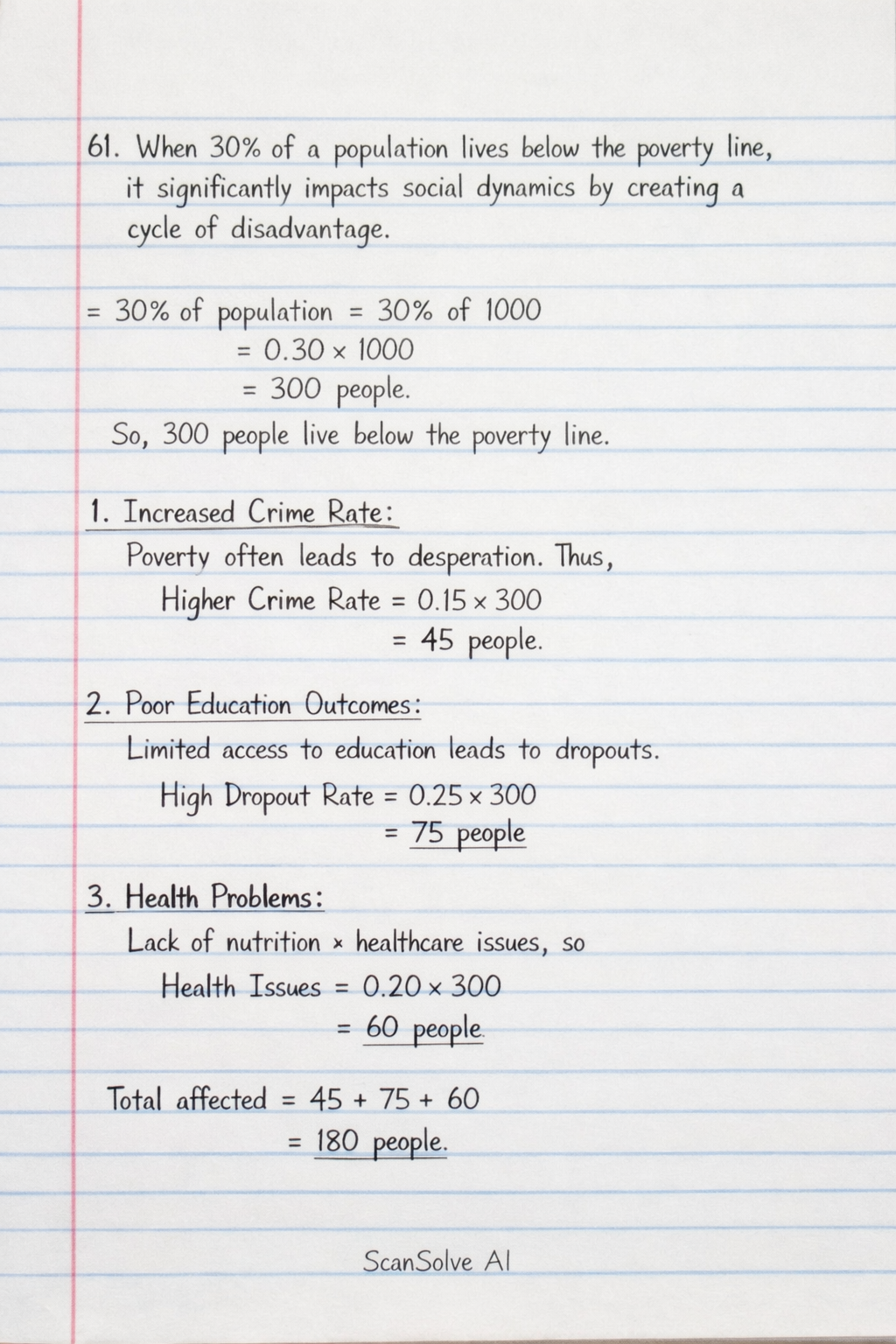
Handwritten Step-by-Step Solution
Get this as a handwritten image on WhatsApp — like a tutor wrote it for you.
Try on WhatsApp