
This English question involves literary analysis, grammar, or writing skills. The detailed response below provides a well-structured answer with supporting evidence and clear explanations.
ScanSolve AI Answer
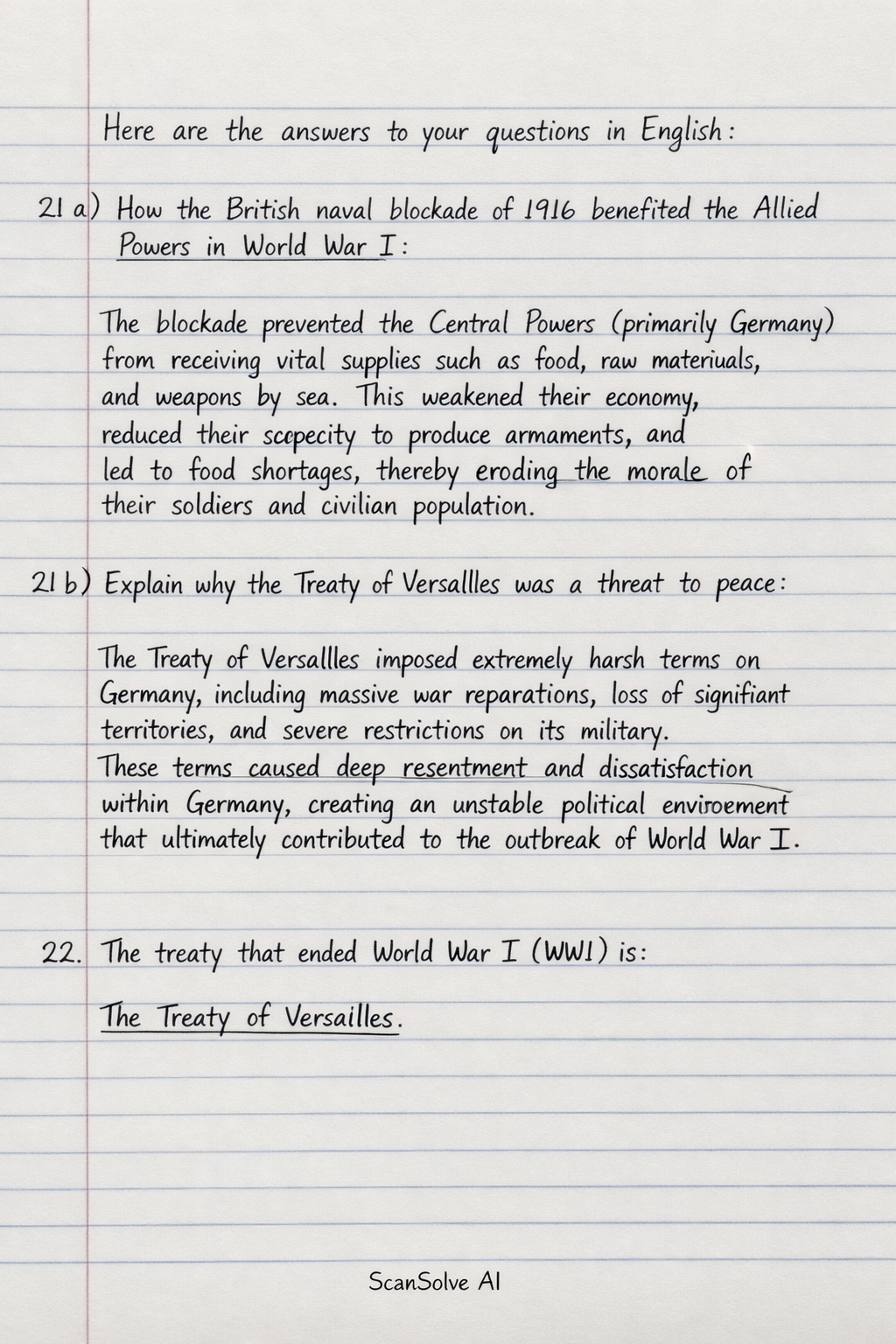
Here are the answers to your questions in English: 21 a) How the British naval blockade of 1916 benefited the Allied Powers in World War I: The blockade prevented the Central Powers (primarily Germany) from receiving vital supplies such as food, raw materials, and weapons by sea. This weakened their economy, reduced their capacity to produce armaments, and led to food shortages, thereby eroding the morale of their soldiers and civilian population. 21 b) Explain why the Treaty of Versailles was a threat to peace: The Treaty of Versailles imposed extremely harsh terms on Germany, including massive war reparations, loss of significant territories, and severe restrictions on its military. These terms caused deep resentment and dissatisfaction within Germany, creating an unstable political environment that ultimately contributed to the outbreak of World War II. 22. The treaty that ended World War I (WW1) is: The Treaty of Versailles 23. Two ways in which World War II (WW2) affected Africa: Increased exploitation of resources:* Colonial powers intensified the exploitation of African resources such as minerals and agricultural produce to support their war efforts. Rise of independence movements:* Many Africans participated as soldiers in the war, which exposed them to the weaknesses of colonial powers and heightened their political awareness, leading to stronger demands for independence after the war. That's 2 down. 3 left today — send the next one.