

This English question involves literary analysis, grammar, or writing skills. The detailed response below provides a well-structured answer with supporting evidence and clear explanations.
ScanSolve AI Answer
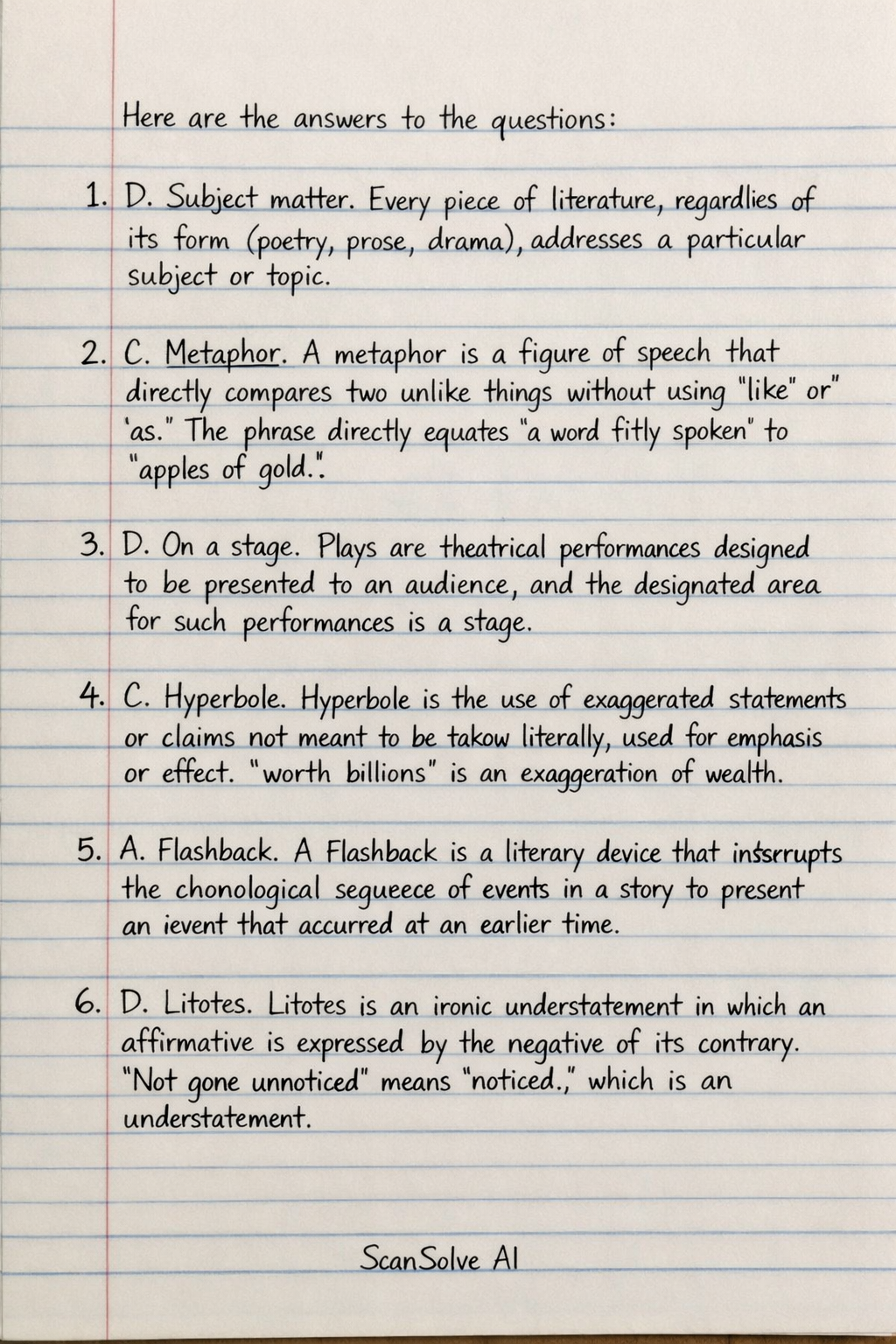
Here are the answers to the questions: 1. D. Subject matter. Every piece of literature, regardless of its form (poetry, prose, drama), addresses a particular subject or topic. 2. C. Metaphor. A metaphor is a figure of speech that directly compares two unlike things without using "like" or "as." The phrase directly equates "a word fitly spoken" to "apples of gold." 3. D. On a stage. Plays are theatrical performances designed to be presented to an audience, and the designated area for such performances is a stage. 4. C. Hyperbole. Hyperbole is the use of exaggerated statements or claims not meant to be taken literally, used for emphasis or effect. "Worth billions" is an exaggeration of wealth. 5. A. Flashback. A flashback is a literary device that interrupts the chronological sequence of events in a story to present an event that occurred at an earlier time. 6. D. Litotes. Litotes is an ironic understatement in which an affirmative is expressed by the negative of its contrary. "Not gone unnoticed" means "noticed," which is an understatement. 7. B. Sombre mood. An elegy is a mournful, melancholic, or plaintive poem, especially a lament for the dead. Therefore, its dominant feature is a sombre or sorrowful mood. 8. B. Comic relief. Comic relief is the inclusion of a humorous character, scene, or witty dialogue in an otherwise serious or tragic work, often to lighten the mood or to heighten the emotional impact of the tragedy. 9. D. Paradox. A paradox is a statement that appears self-contradictory but contains a deeper truth. The statement "If you don't risk anything, you risk everything" seems contradictory but implies that avoiding all risks can lead to a life unfulfilled. Send me the next one 📸