This English question involves literary analysis, grammar, or writing skills. The detailed response below provides a well-structured answer with supporting evidence and clear explanations.
Answer this question.Analyse the concept of an oral narrative and determine its key characteristics in relation to other forms of storytelling, Evaluate the roles of songs in oral narrative and explain how they enhance meaning, performance,or audience engagement, critically examine the use of animals characters in oral narrative and explain their symbolic or cultural significance, Investigate and interpret how contemporary community issues are represented in oral narrative, giving relevant examples,Propose and justify ways in which oral narrative can be used as tool to address or reduce social vices in your community, Examine how oral narrative can be used as instrument for protecing and advancing the interests of the vulnerable in society.all answers in English.
English
ScanSolve AI Answer
6 steps-
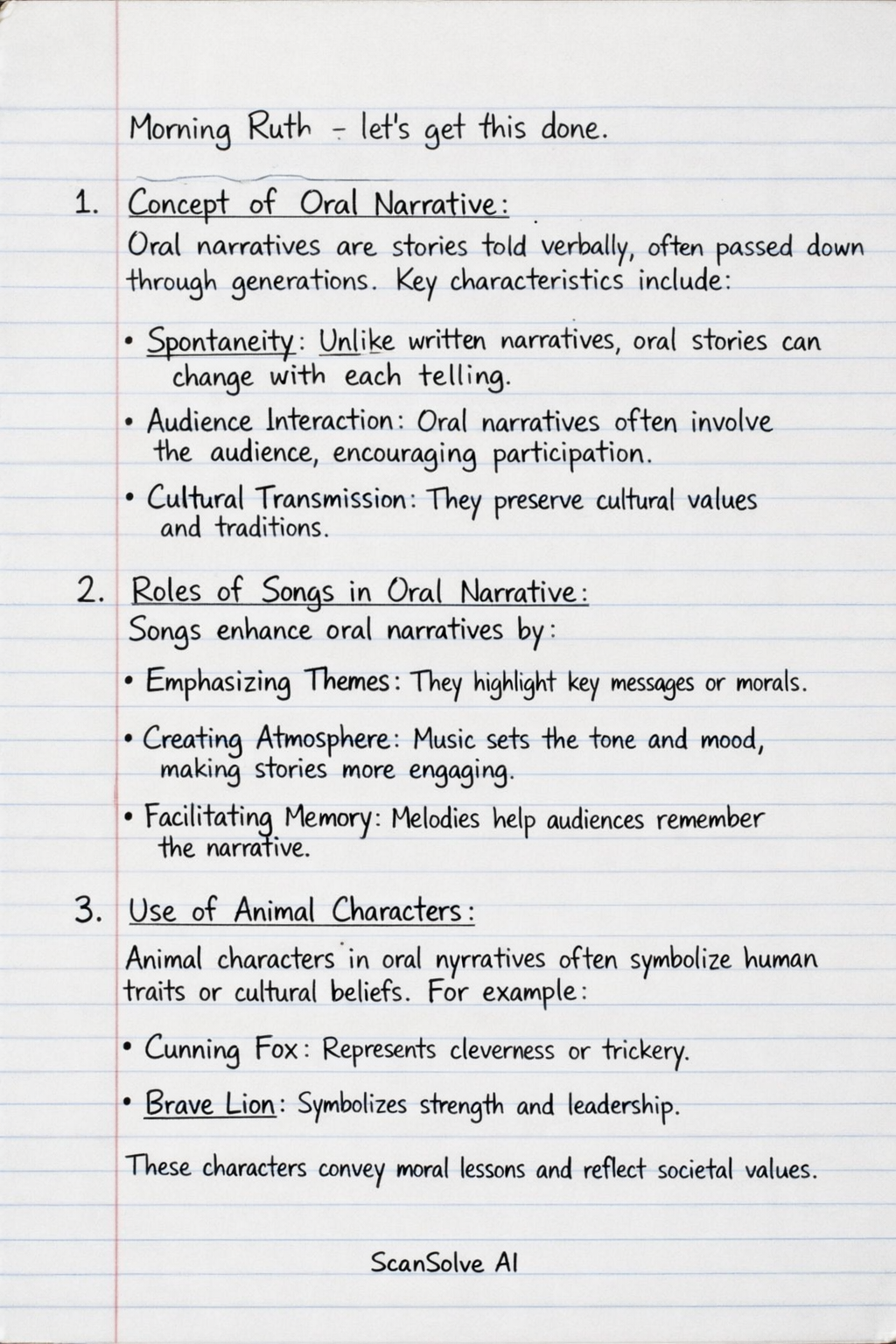
Concept of Oral Narrative: Oral narratives are stories told verbally, often passed down through generations. Key characteristics include:
- Spontaneity: Unlike written narratives, oral stories can change with each telling.
- Audience Interaction: Oral narratives often involve the audience, encouraging participation.
- Cultural Transmission: They preserve cultural values and traditions.
-
Roles of Songs in Oral Narrative: Songs enhance oral narratives by:
- Emphasizing Themes: They highlight key messages or morals.
- Creating Atmosphere: Music sets the tone and mood, making stories more engaging.
- Facilitating Memory: Melodies help audiences remember the narrative.
-
Use of Animal Characters: Animal characters in oral narratives often symbolize human traits or cultural beliefs. For example:
- Cunning Fox: Represents cleverness or trickery.
- Brave Lion: Symbolizes strength and leadership. These characters convey moral lessons and reflect societal values.
-
Contemporary Community Issues: Oral narratives can address issues like:
- Climate Change: Stories can illustrate the impact of environmental degradation.
- Social Cohesion: Narratives can promote unity and understanding among diverse groups. Example: A story about a community coming together to protect a local forest.
-
Using Oral Narrative to Address Social Vices: Oral narratives can:
- Educate: Teach about the consequences of vices like drug abuse.
- Promote Positive Behavior: Share stories of redemption and community support. Justification: They resonate with audiences, making messages more relatable.
-
Protecting Vulnerable Interests: Oral narratives can advocate for vulnerable groups by:
- Raising Awareness: Highlighting their struggles and needs.
- Empowering Voices: Giving a platform for their stories to be heard. This can lead to community action and support.
Was this helpful?
Still stuck on this one?
Ask a follow-up, and the answer starts from this question.
Got a different question?Ask your own question
More English Questions
Qpropose and justify ways in which oral narrative can be used as tools to address or reduse social vi…QAn oral narrative is a story or account of events communicated verbally, often passed down through g…Qexamine how oral narrative can be used as instrument for protecting and advancing the interest of vu…QIdentify and explain features, genres, and functions of oral literature.QIn not more than three sentences explain what this narrative is about 2. Identify one instance of ir…

Handwritten Step-by-Step Solution
Get this as a handwritten image on WhatsApp — like a tutor wrote it for you.
Try on WhatsAppScanSolve AI Answer
1. Concept of Oral Narrative: Oral narratives are stories told verbally, often passed down through generations. Key characteristics include: Spontaneity: Unlike written narratives, oral stories can change with each telling. Audience Interaction: Oral narratives often involve the audience, encouraging participation. Cultural Transmission: They preserve cultural values and traditions. 2. Roles of Songs in Oral Narrative: Songs enhance oral narratives by: Emphasizing Themes: They highlight key messages or morals. Creating Atmosphere: Music sets the tone and mood, making stories more engaging. Facilitating Memory: Melodies help audiences remember the narrative. 3. Use of Animal Characters: Animal characters in oral narratives often symbolize human traits or cultural beliefs. For example: Cunning Fox: Represents cleverness or trickery. Brave Lion: Symbolizes strength and leadership. These characters convey moral lessons and reflect societal values. 4. Contemporary Community Issues: Oral narratives can address issues like: Climate Change: Stories can illustrate the impact of environmental degradation. Social Cohesion: Narratives can promote unity and understanding among diverse groups. Example: A story about a community coming together to protect a local forest. 5. Using Oral Narrative to Address Social Vices: Oral narratives can: Educate: Teach about the consequences of vices like drug abuse. Promote Positive Behavior: Share stories of redemption and community support. Justification: They resonate with audiences, making messages more relatable. 6. Protecting Vulnerable Interests: Oral narratives can advocate for vulnerable groups by: Raising Awareness: Highlighting their struggles and needs. Empowering Voices: Giving a platform for their stories to be heard. This can lead to community action and support.