
We read your photo as:
Describe drawing and list its three main importance in art.
ScanSolve AI Answer
Here are the answers to your questions:
Question 4:
a) What is drawing?
Drawing is a visual art form that involves making marks on a surface using tools such as pencils, charcoal, ink, or pastels. It is a fundamental skill in art, used to create images, express ideas, and record observations, often serving as a preliminary step for other art forms like painting or sculpture.
b) State and explain three importance of drawing.
- Communication: Drawing serves as a universal language, allowing artists to convey complex ideas, emotions, and narratives visually without words. It can communicate designs, plans, or concepts effectively across different cultures.
- Observation and Skill Development: The act of drawing enhances observational skills, training the eye to perceive details, proportions, and perspectives accurately. Regular practice improves hand-eye coordination and fine motor skills, which are transferable to many other disciplines.
- Problem-Solving and Creativity: Drawing is a powerful tool for brainstorming and problem-solving. Artists use sketches to explore different solutions, develop compositions, and visualize ideas before committing to a final piece, fostering creative thinking and innovation.
Question 5: List five tools and materials suitable for making a drawing.
- Pencils: Graphite pencils (various hardnesses like 2H, HB, 2B, 6B) for different tones and lines.
- Drawing Paper: Various types like cartridge paper, Bristol board, or sketch paper, suitable for different media.
- Erasers: Kneaded erasers for lifting graphite without damaging paper, and plastic erasers for precise removal.
- Charcoal: Sticks or pencils for rich, dark tones and expressive marks.
- Fixative Spray: Used to protect charcoal or pastel drawings from smudging.
Question 6: Outline five ways of caring and maintaining the above listed tools and materials.
- Store Pencils and Charcoal Properly: Keep them in a pencil case or box to prevent breakage, dulling of tips, and smudging other materials.
- Keep Paper Flat and Dry: Store drawing paper in a portfolio or flat drawer to prevent creasing, bending, or exposure to moisture, which can warp or damage it.
- Clean Erasers Regularly: Kneaded erasers should be kneaded to absorb graphite, and plastic erasers should be wiped clean to prevent transferring dirt to new drawings.
- Use Fixative in a Ventilated Area: Apply fixative spray in a well-ventilated space and allow drawings to dry completely before stacking to prevent sticking or smudging.
- Sharpen Tools Carefully: Use a good quality sharpener for pencils to avoid excessive waste and breakage, and keep blades clean if using a craft knife for sharpening.
Still stuck on this one?
Ask a follow-up, and the answer starts from this question.
More English Questions
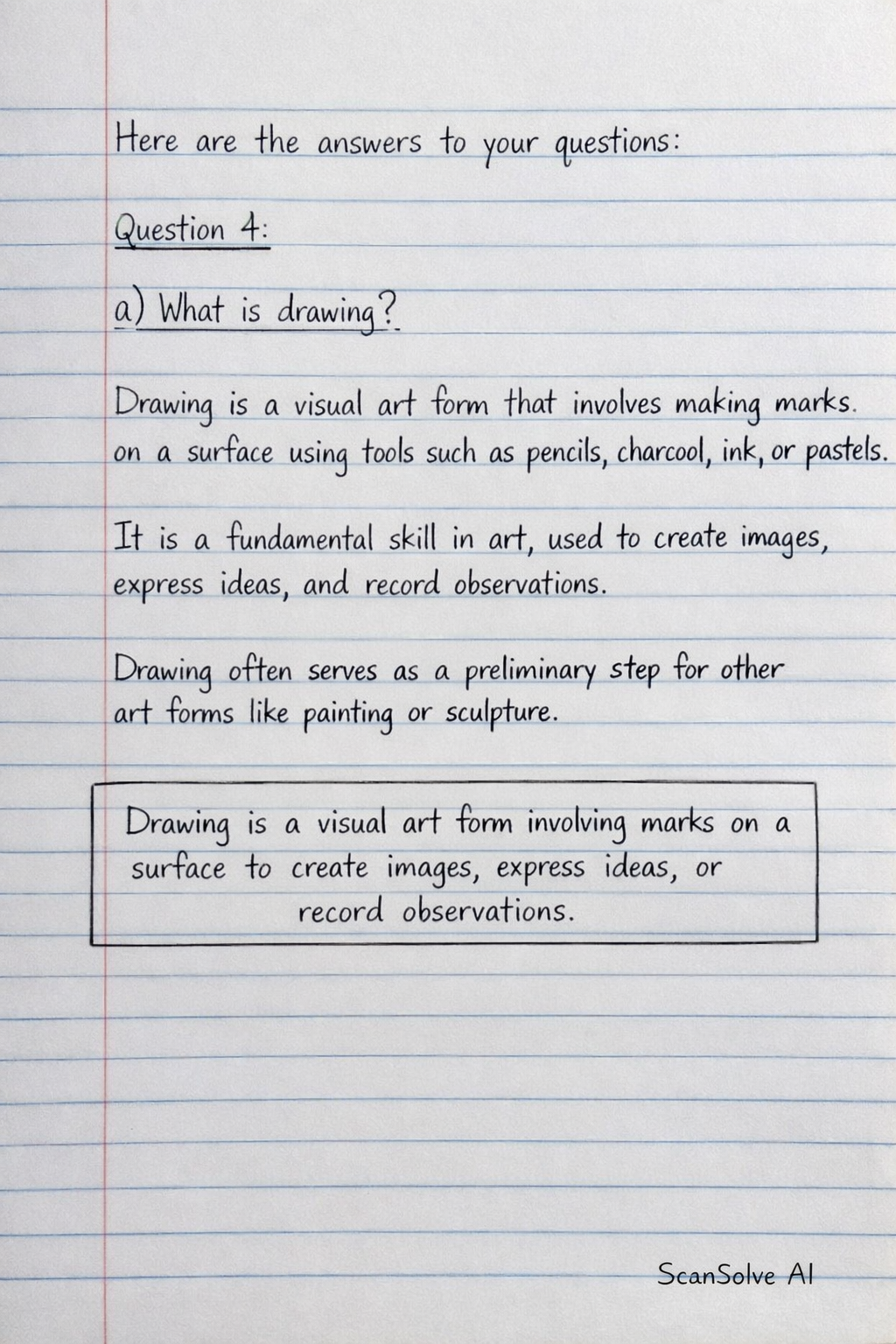
Handwritten Step-by-Step Solution
Get this as a handwritten image on WhatsApp — like a tutor wrote it for you.
Try on WhatsApp