
Write a literature review on the topic of turning waste to fuel specifically plastics to Petro and diesel
ScanSolve AI Answer
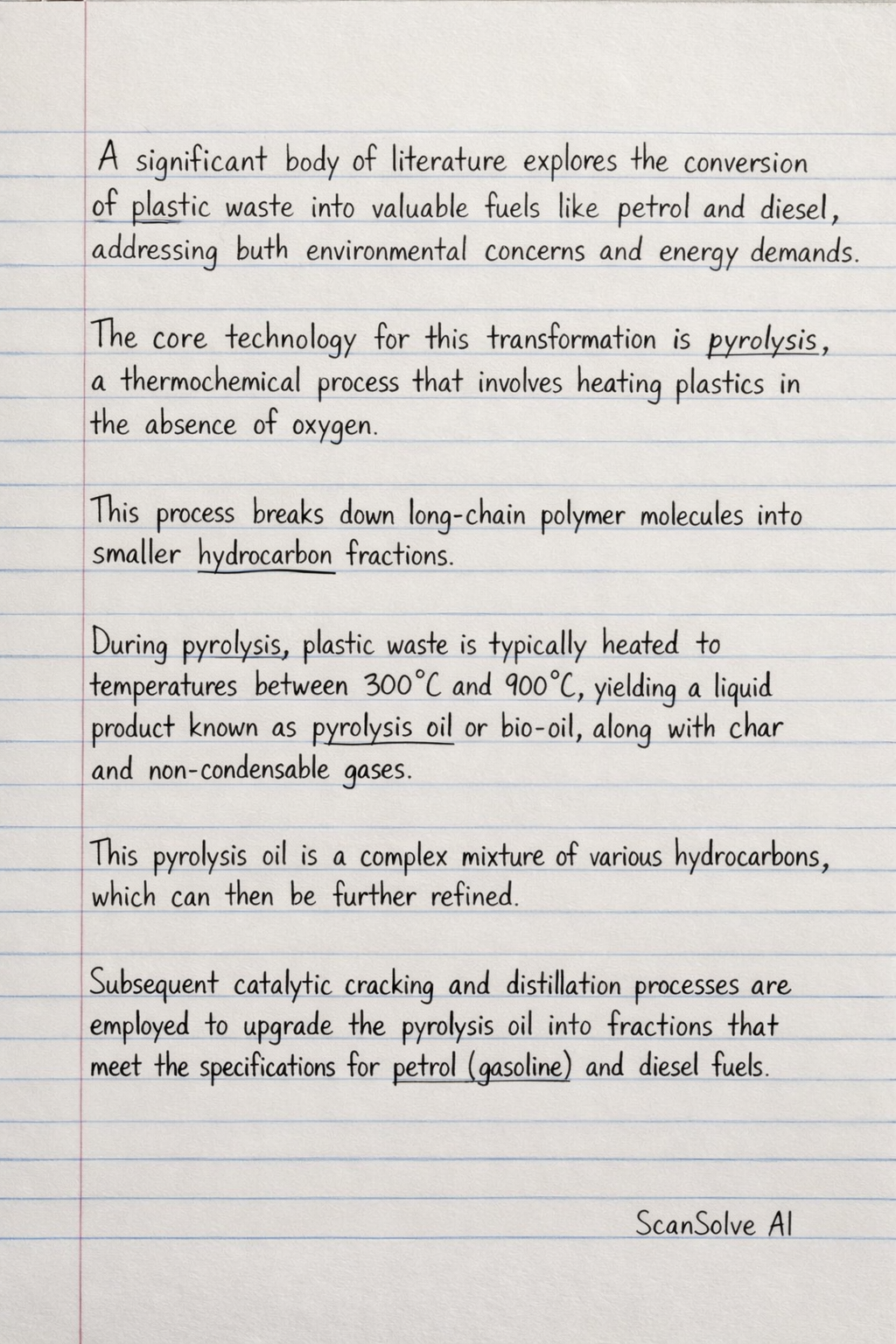
A significant body of literature explores the conversion of plastic waste into valuable fuels like petrol and diesel, addressing both environmental concerns and energy demands. The core technology for this transformation is pyrolysis, a thermochemical process that involves heating plastics in the absence of oxygen. This process breaks down long-chain polymer molecules into smaller hydrocarbon fractions.
During pyrolysis, plastic waste is typically heated to temperatures between 300°C and 900°C, yielding a liquid product known as pyrolysis oil or bio-oil, along with char and non-condensable gases. This pyrolysis oil is a complex mixture of various hydrocarbons, which can then be further refined. Subsequent catalytic cracking and distillation processes are employed to upgrade the pyrolysis oil into fractions that meet the specifications for petrol (gasoline) and diesel fuels.
Research focuses on optimizing pyrolysis conditions, such as temperature, heating rate, and the use of catalysts, to maximize the yield and quality of the liquid fuel product. While the conversion of plastics to petrol and diesel offers a promising solution for waste management and energy recovery, challenges remain in achieving consistent fuel quality, managing impurities, and scaling up the technology for industrial application.
Still stuck on this one?
Ask a follow-up, and the answer starts from this question.
More English Questions
Handwritten Step-by-Step Solution
Get this as a handwritten image on WhatsApp — like a tutor wrote it for you.
Try on WhatsApp