
We read your photo as:
Part A: Report Writing
English
ScanSolve AI Answer
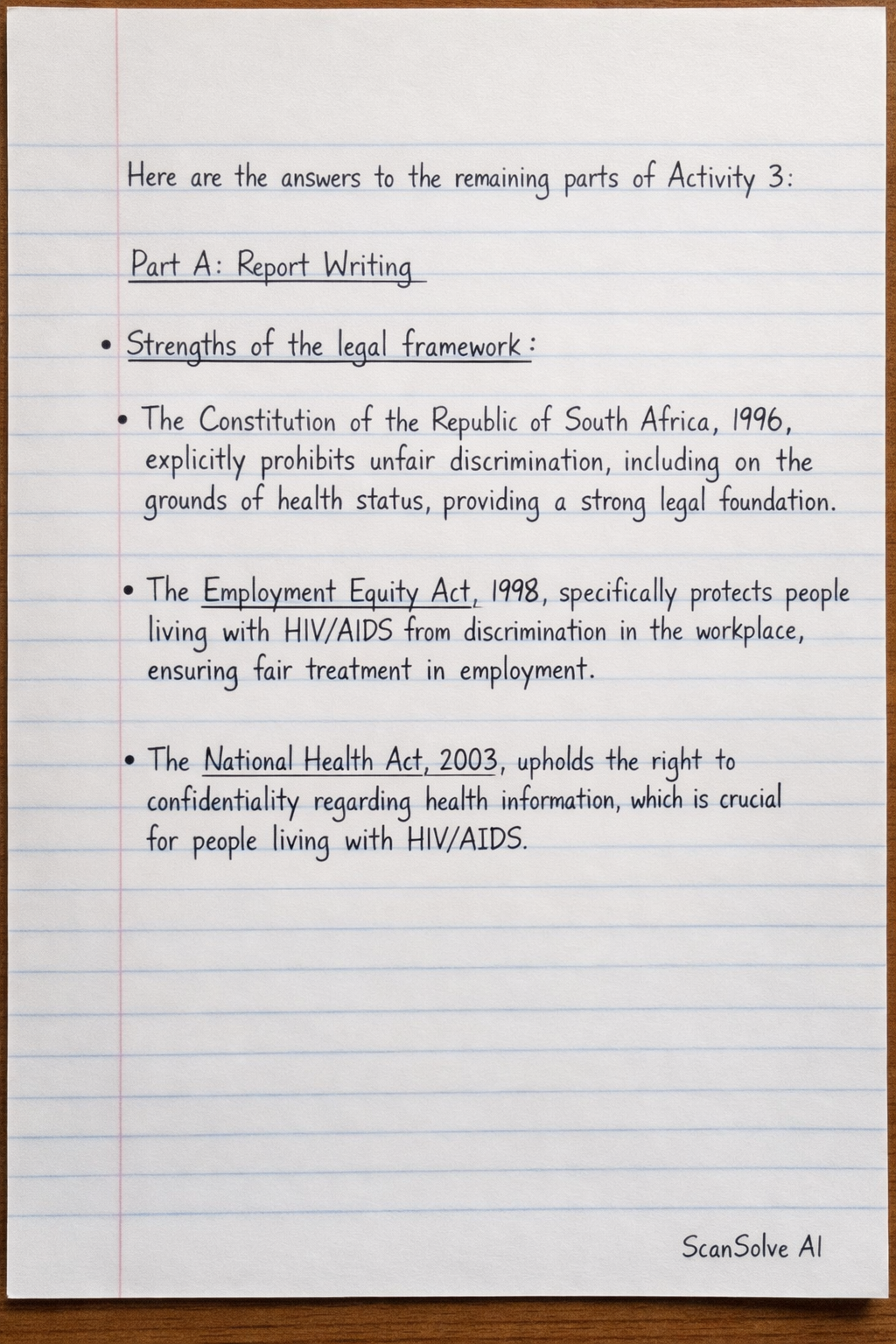
Here are the answers to the remaining parts of Activity 3:
Part A: Report Writing
-
Strengths of the legal framework:
- The Constitution of the Republic of South Africa, 1996, explicitly prohibits unfair discrimination, including on the grounds of health status, providing a strong legal foundation.
- The Employment Equity Act, 1998, specifically protects people living with HIV/AIDS from discrimination in the workplace, ensuring fair treatment in employment.
- The National Health Act, 2003, upholds the right to confidentiality regarding health information, which is crucial for people living with HIV/AIDS.
-
Weaknesses or challenges:
- Despite strong laws, implementation and enforcement remain inconsistent, leading to continued discrimination in practice.
- Lack of public awareness about these legal protections means many people living with HIV/AIDS do not know their rights or how to seek recourse.
- Persistent social stigma often overrides legal protections, making it difficult for individuals to report discrimination or access justice without fear of further prejudice.
-
Recommendations for improvement:
- Launch widespread public education campaigns to inform both the general population and people living with HIV/AIDS about existing legal protections and their rights.
- Strengthen enforcement mechanisms and provide accessible legal aid services to ensure that victims of discrimination can effectively pursue justice.
- Integrate comprehensive anti-discrimination training for employers, healthcare providers, and legal professionals to foster a more inclusive and compliant environment.
Part B: School-based Initiative
-
Name for the initiative:
- Youth for Zero Stigma
-
Outline specific activities and events:
- Peer Education Workshops: Regular sessions led by trained student peer educators to provide accurate information about HIV transmission, prevention, and living with HIV, debunking myths.
- "Red Ribbon Week" Campaign: An annual event culminating on World AIDS Day, featuring educational stalls, guest speakers (PLHIV sharing their stories voluntarily), and a pledge wall against stigma.
- Creative Arts Competition: A school-wide competition (e.g., poster design, poetry, short story) focusing on themes of empathy, acceptance, and fighting HIV/AIDS stigma.
-
Methods of promoting inclusivity and support:
- Confidential Support Group: Establish a discreet, counselor-led support group for students directly or indirectly affected by HIV, providing a safe space for sharing and emotional support.
- Teacher and Staff Training: Conduct mandatory training for all school staff on HIV/AIDS awareness, anti-discrimination policies, and how to create an inclusive and supportive classroom environment.
- Partnerships with NGOs: Collaborate with local HIV/AIDS organizations to bring in external expertise, resources, and counseling services, ensuring comprehensive support for students.
Was this helpful?
Still stuck on this one?
Ask a follow-up, and the answer starts from this question.
Got a different question?Ask your own question
More English Questions
QThe format on writing a report in computer scienceQCreate a detailed report structure for a business analysis, including sections for Analysis…QWrite a biology test reportQWhat are the requirements for the Analysis, Conclusion, Recommendations, and Submission Guidelines…QWhat are the key components and structure of a professional report based on team observations?
Handwritten Step-by-Step Solution
Get this as a handwritten image on WhatsApp — like a tutor wrote it for you.
Try on WhatsApp