

This English question involves literary analysis, grammar, or writing skills. The detailed response below provides a well-structured answer with supporting evidence and clear explanations.
ScanSolve AI Answer
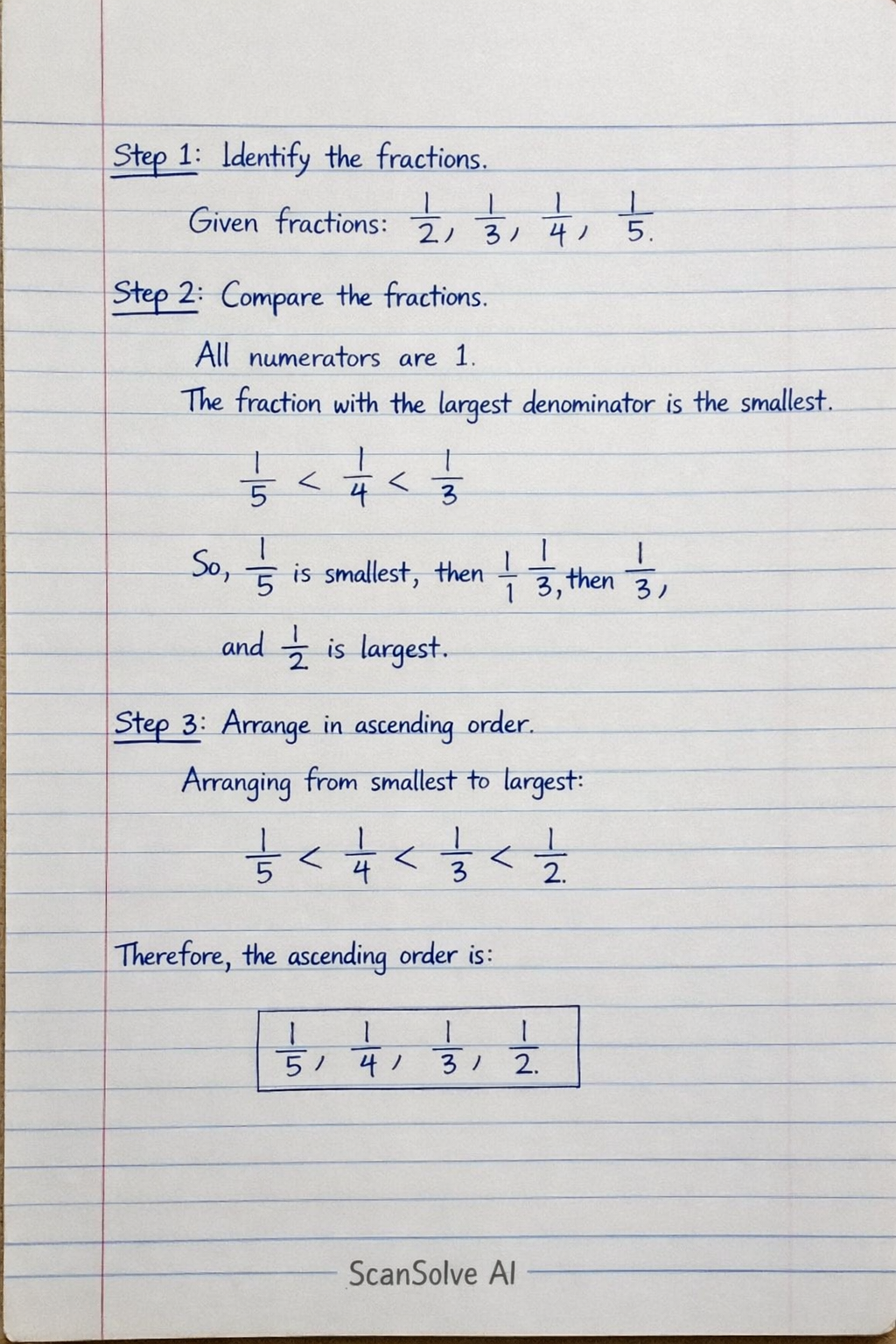
प्रश्न है: निम्नलिखित को आरोही क्रम में व्यवस्थित करें: (1)/(2), (1)/(3), (1)/(4), (1)/(5) Step 1: भिन्नों को पहचानें। दिए गए भिन्न हैं: (1)/(2), (1)/(3), (1)/(4), (1)/(5)। Step 2: भिन्नों की तुलना करें। जब सभी भिन्नों का अंश (न्यूमरेटर) समान होता है (यहाँ 1 है), तो जिस भिन्न का हर (डिनोमिनेटर) सबसे बड़ा होता है, वह भिन्न सबसे छोटा होता है। इसलिए, (1)/(5) सबसे छोटा है, उसके बाद (1)/(4), फिर (1)/(3), और (1)/(2) सबसे बड़ा है। Step 3: आरोही क्रम में व्यवस्थित करें। आरोही क्रम (सबसे छोटे से सबसे बड़े तक) होगा: (1)/(5) < (1)/(4) < (1)/(3) < (1)/(2) अतः, आरोही क्रम है: (1)/(5), (1)/(4), (1)/(3), (1)/(2)