Choose from the alternatives A to D the one which best explains the underlined group of words.

English
Choose from the alternatives A to D the one which best explains the underlined group of words.

ScanSolve AI Answer

3 steps

Answer

A

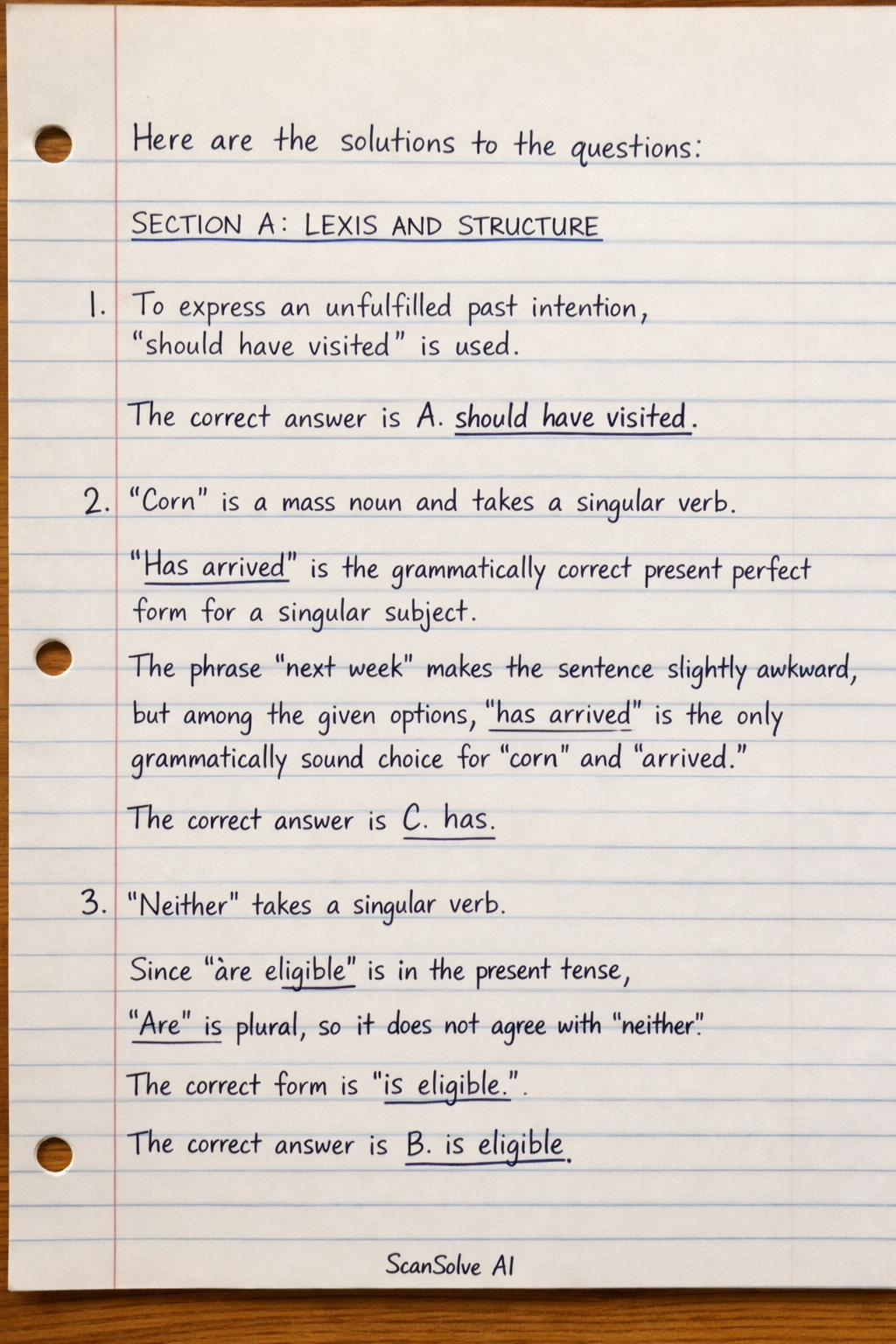
Here are the solutions to the questions:

SECTION A: LEXIS AND STRUCTURE

  1. To express an unfulfilled past intention, "should have visited" is used.

    • The correct answer is A. should have visited.
  2. "Corn" is a mass noun and takes a singular verb. "Has arrived" is the grammatically correct present perfect form for a singular subject. The phrase "next week" makes the sentence slightly awkward, but among the given options, "has arrived" is the only grammatically sound choice for "corn" and "arrived".

    • The correct answer is C. has.
  3. "Neither" takes a singular verb. Since "are eligible" is in the present tense,

Was this helpful?

Need help with your own homework?

Get instant step-by-step solutions to any question. Free to start.

Ask Your Question
Handwritten step-by-step solution preview

Handwritten Step-by-Step Solution

Get this as a handwritten image on WhatsApp — like a tutor wrote it for you.

Try on WhatsApp

Still have questions?

Quick Answer

SECTION A: LEXIS AND STRUCTURE 1. To express an unfulfilled past intention, "should have visited" is used.

Choose from the alternatives A to D the one which best explains the underlined group of words.
English

This English question involves literary analysis, grammar, or writing skills. The detailed response below provides a well-structured answer with supporting evidence and clear explanations.

ScanSolve AI Answer
Here are the solutions to the questions: SECTION A: LEXIS AND STRUCTURE 1. To express an unfulfilled past intention, "should have visited" is used. The correct answer is A. should have visited. 2. "Corn" is a mass noun and takes a singular verb. "Has arrived" is the grammatically correct present perfect form for a singular subject. The phrase "next week" makes the sentence slightly awkward, but among the given options, "has arrived" is the only grammatically sound choice for "corn" and "arrived". The correct answer is C. has. 3. "Neither" takes a singular verb. Since "are eligible" is in the present tense,