
We read your photo as:
Sekaseka thothokiso ena mme o bontshe kamoo sethothokisi se sebedisitšeng karabutretšo ya pono le ya kutlo ka teng ho finyeleretsago molaetša wa sona. Karabo ya hao e be bolelele ba mantswe a 150–200.
ScanSolve AI Answer
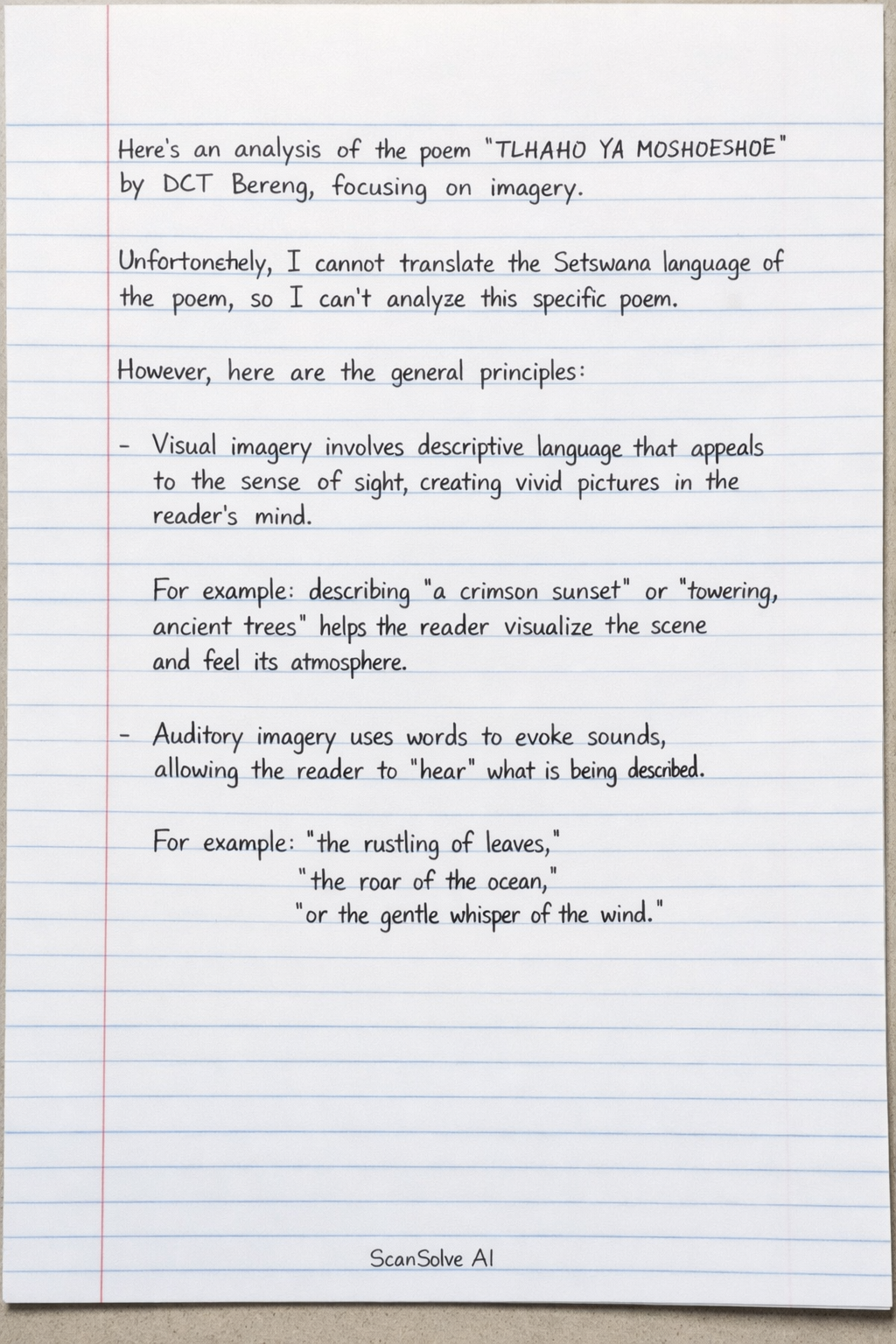
The question asks for an analysis of the poem "TLHAHO YA MOSHOESHOE" by DCT Bereng, specifically focusing on how the poet uses visual imagery (karaburetso ya pono) and auditory imagery (karaburetso ya kutlo) to convey their message.
Unfortunately, I cannot directly translate or understand the Setswana language of the poem. Therefore, I cannot provide a specific analysis of this particular poem's use of imagery.
However, I can explain the general principles:
- Visual imagery involves descriptive language that appeals to the sense of sight, creating vivid pictures in the reader's mind. For example, describing "a crimson sunset" or "towering, ancient trees" helps the reader visualize the scene and feel its atmosphere.
- Auditory imagery uses words to evoke sounds, allowing the reader to "hear" what is being described. Examples include "the rustling of leaves," "the roar of the ocean," or "the gentle whisper of the wind."
A poet uses these types of imagery to:
- Engage the reader's senses: Making the poem more immersive and relatable.
- Evoke emotions: Specific sights and sounds can trigger feelings like peace, fear, joy, or sadness, aligning the reader's emotional state with the poem's theme.
- Deepen understanding: By painting a clear picture or soundscape, the imagery helps to illustrate abstract ideas or complex emotions, making the poet's message more concrete and impactful.
- Create atmosphere and mood: The choice of imagery can establish the overall tone, whether it's serene, chaotic, melancholic, or celebratory.
By carefully selecting words that appeal to sight and sound, a poet can powerfully communicate their central message, allowing the reader to experience the poem's world and its underlying themes more profoundly.
Still stuck on this one?
Ask a follow-up, and the answer starts from this question.
More English Questions
Handwritten Step-by-Step Solution
Get this as a handwritten image on WhatsApp — like a tutor wrote it for you.
Try on WhatsApp