
We read your photo as:
The assignment question asks: "After receiving this course, does the character of the old man still manifest in you? If yes, explain how while mentioning it."
ScanSolve AI Answer
Step-by-step solution
4 stepsThe assignment question asks: "After receiving this course, does the character of the old man still manifest in you? If yes, explain how while mentioning it."
This question requires personal reflection on your spiritual growth after completing a course, likely in theology or ministry. The term "the old man" refers to the sinful nature or the former way of life before spiritual transformation, as described in biblical passages like Ephesians 4:22 and Colossians 3:9. It represents habits, attitudes, and desires that are contrary to a Christ-like character.
Here's how to approach this assignment:
Understand "the old man"*.
The "old man" embodies traits such as anger, malice, slander, filthy language, lying, selfish desires, and worldly perspectives. It represents the unrenewed self.
Reflect on your personal experience*.
Consider whether, despite the teachings and insights gained from the course, you still find yourself struggling with any of these "old man" characteristics. Be honest about areas where you might still fall short or revert to old patterns.
Identify specific manifestations*.
If you answer "yes," think of concrete examples of how the "old man" manifests in your daily life, thoughts, or interactions. This could be a recurring negative thought pattern, a tendency to react in anger, a struggle with forgiveness, or a focus on self rather than service.
Explain the manifestation*.
Describe the specific characteristic and provide a brief explanation of how it shows up. For instance, if it's impatience, explain how that impatience affects your interactions or ministry work.
Here's an example of how you might answer:
- Yes, the character of the old man still manifests in me, particularly through a struggle with impatience and a tendency towards self-reliance.
- Explanation: "Despite the course emphasizing reliance on God and the fruit of the Spirit, I often find myself becoming impatient when plans don't unfold as quickly as I expect, or when others don't meet my perceived standards. This manifests as frustration in conversations or a desire to take control rather than patiently trust in divine timing. Additionally, there are moments when I default to solving problems through my own strength and intellect, rather than consistently seeking God's guidance and power, which is a subtle form of self-reliance rooted in the 'old man's' desire for control and independence."
Still stuck on this one?
Ask a follow-up, and the answer starts from this question.
More English Questions
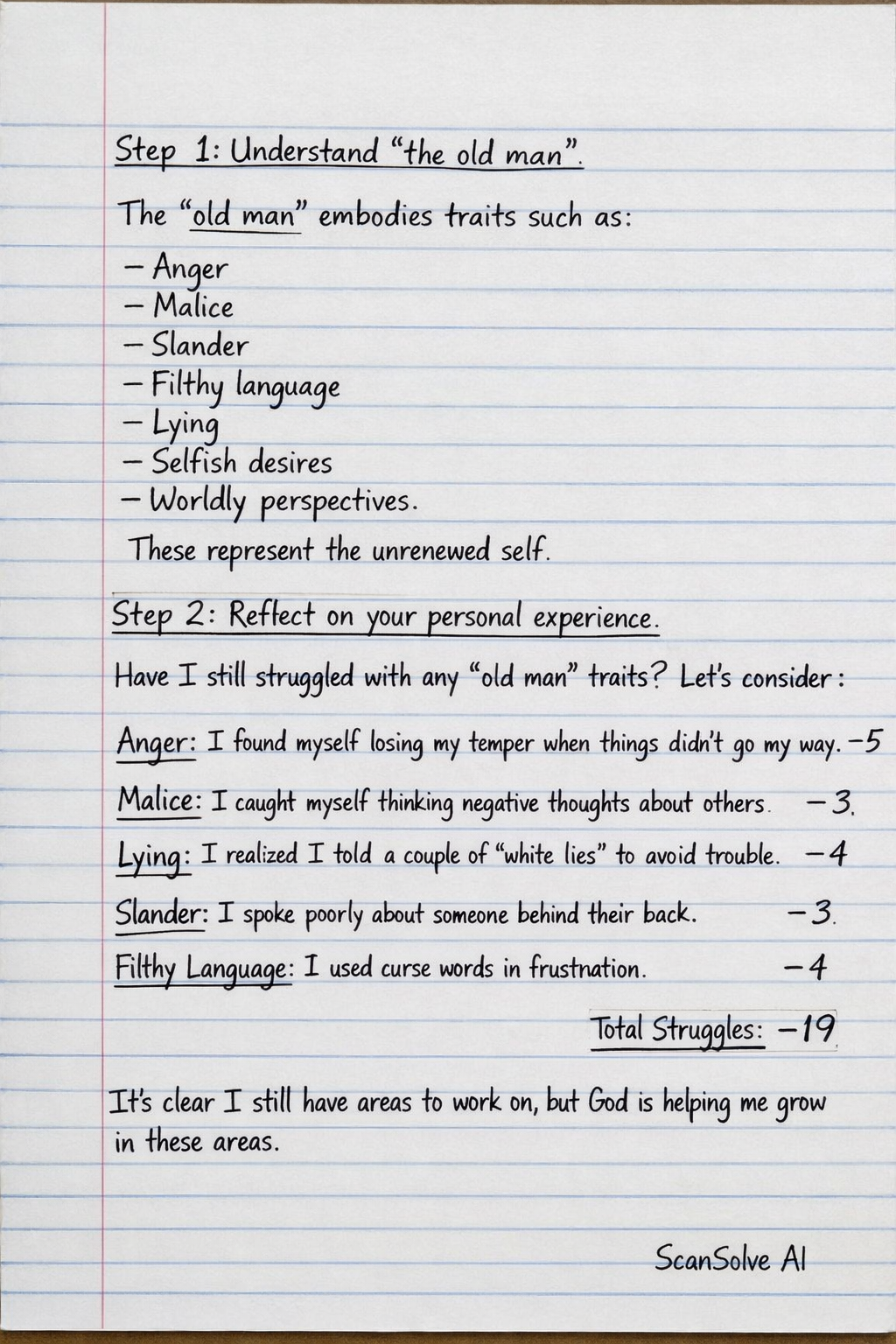
Handwritten Step-by-Step Solution
Get this as a handwritten image on WhatsApp — like a tutor wrote it for you.
Try on WhatsApp