
We read your photo as:
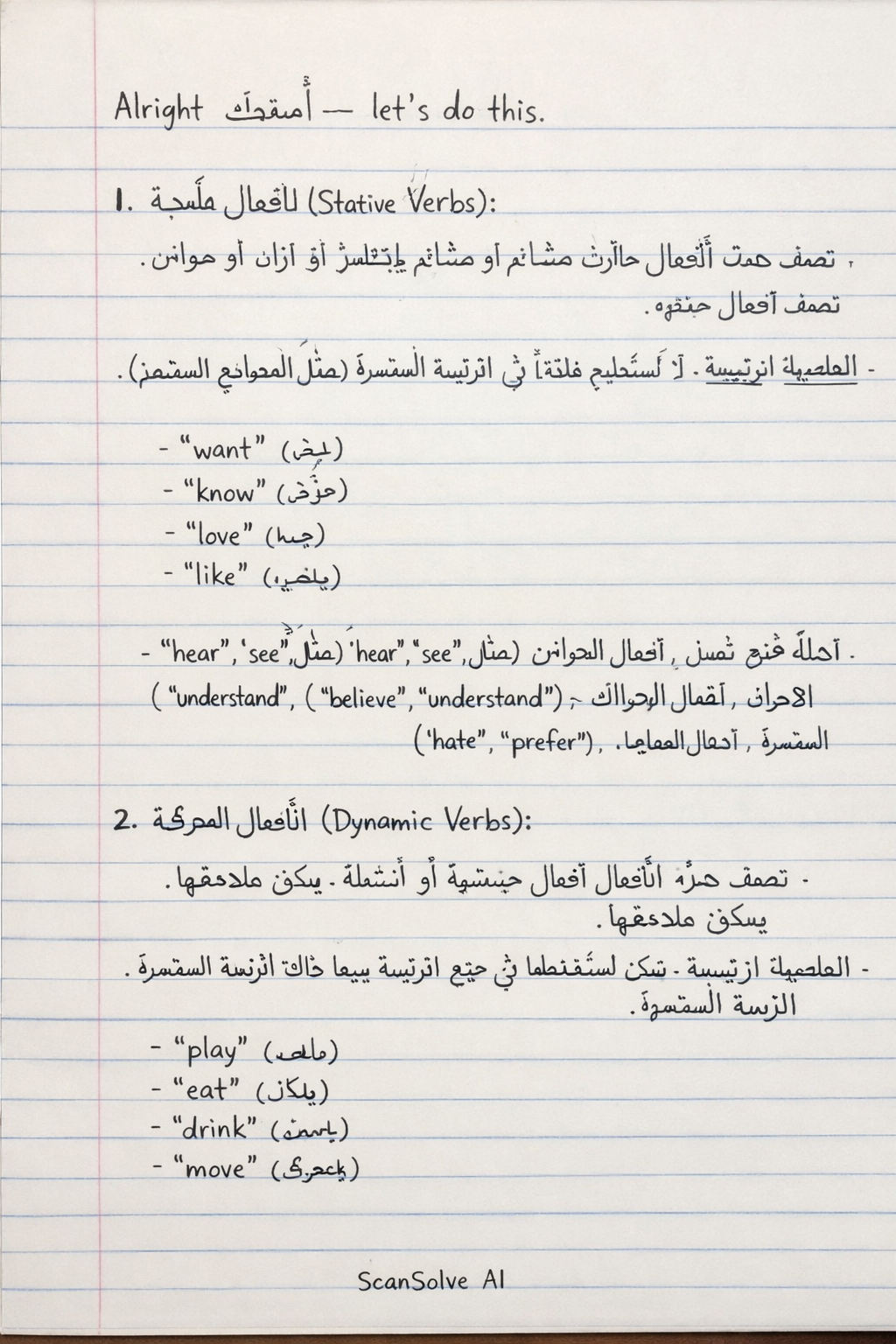
There are no explicit questions in this image, it is a diagram about verb types.
English
ScanSolve AI Answer
تُصنف الأفعال في اللغة الإنجليزية إلى ثلاثة أنواع رئيسية بناءً على ما إذا كانت تصف حالة أو حركة، أو كليهما:
-
الأفعال الجامدة (Stative Verbs):
- تصف هذه الأفعال حالات أو مشاعر أو آراء أو حواس، ولا تصف أفعالاً جسدية.
- الخاصية الرئيسية: لا تُستخدم عادةً في الأزمنة المستمرة (مثل المضارع المستمر).
- أمثلة من الصورة:
- "want" (يريد)
- "know" (يعرف)
- "love" (يحب)
- "like" (يعجب)
- أمثلة أخرى تشمل: أفعال الحواس (مثل "hear", "see" بالمعنى الحرفي)، أفعال الإدراك (مثل "believe", "understand")، أفعال الشعور (مثل "hate", "prefer")، وأفعال الملكية (مثل "have", "own").
-
الأفعال الحركية (Dynamic Verbs):
- تصف هذه الأفعال أفعالاً جسدية أو أنشطة يمكن ملاحظتها.
- الخاصية الرئيسية: يمكن استخدامها في جميع الأزمنة، بما في ذلك الأزمنة المستمرة.
- أمثلة من الصورة:
- "play" (يلعب)
- "eat" (يأكل)
- "drink" (يشرب)
- "move" (يتحرك)
-
الأفعال الجامدة والحركية (Stative/Dynamic Verbs):
- هذه الأفعال يمكن أن تكون جامدة أو حركية اعتمادًا على معناها في الجملة.
- أمثلة من الصورة:
- "think":
- جامد (يعتقد): "I think it's a good idea." (أعتقد أنها فكرة جيدة).
- حركي (يفكر): "I am thinking about my plans." (أنا أفكر في خططي).
- "see":
- جامد (يرى): "I see a bird." (أرى طائرًا).
- حركي (يزور/يقابل): "I am seeing my friend tomorrow." (سأقابل صديقي غدًا).
- "taste":
- جامد (له مذاق): "The food tastes good." (الطعام مذاقه جيد).
- حركي (يتذوق): "I am tasting the food." (أنا أتذوق الطعام).
- "be":
- جامد (يكون/حالة دائمة): "He is crazy." (هو مجنون - صفة دائمة).
- حركي (يتصرف مؤقتًا): "He is being impolite." (إنه يتصرف بوقاحة - سلوك مؤقت). "He is being crazy." (إنه يتصرف بجنون - سلوك مؤقت).
- "think":
Was this helpful?
Still stuck on this one?
Ask a follow-up, and the answer starts from this question.
Got a different question?Ask your own question
More English Questions
QAll the questions visible in the image (1-10) have been answered in the previous responses. There…QThe image contains a geometric diagram with points labeled A, F, E, and C, and the number "81"…QWhat are the answers to the French grammar questions in the image?QThis image does not contain a question.QIdentify verbs as transitive or intransitive, and fill in blanks with appropriate verb forms.
Handwritten Step-by-Step Solution
Get this as a handwritten image on WhatsApp — like a tutor wrote it for you.
Try on WhatsApp