
We read your photo as:
Use English plz when answering
ScanSolve AI Answer
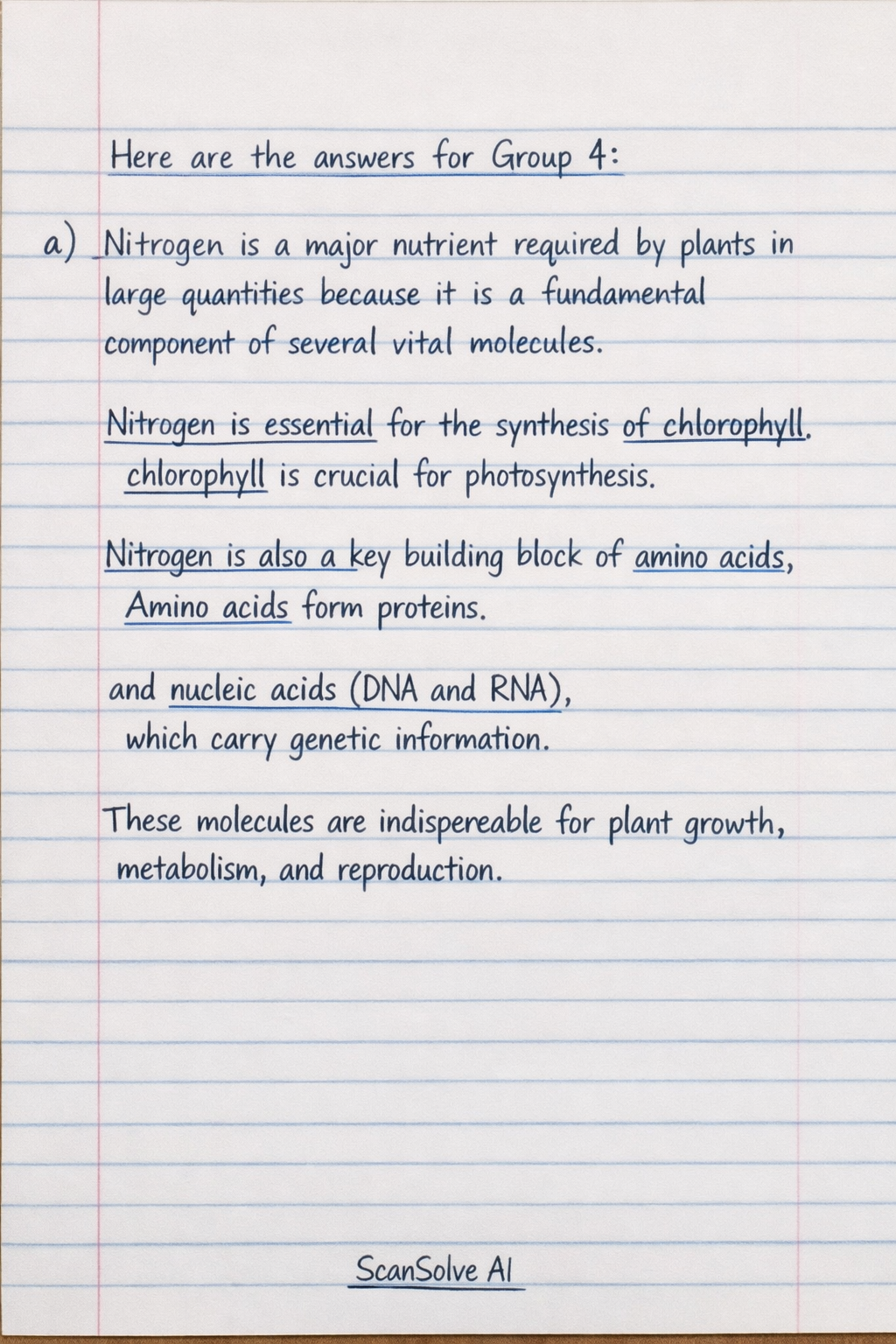
Here are the answers for Group 4:
a) Nitrogen is a major nutrient required by plants in large quantities because it is a fundamental component of several vital molecules. It is essential for the synthesis of chlorophyll, which is crucial for photosynthesis. Nitrogen is also a key building block of amino acids, which form proteins, and nucleic acids (DNA and RNA), which carry genetic information. These molecules are indispensable for plant growth, metabolism, and reproduction.
b) Different sources of nitrogen for plants include:
- Atmospheric Nitrogen: Nitrogen gas (N₂) from the atmosphere is converted into usable forms (like ammonia) by nitrogen-fixing bacteria in the soil or in root nodules of legumes, and also by lightning.
- Organic Matter: Decomposing plant and animal residues in the soil release nitrogen through a process called mineralization.
- Synthetic Fertilizers: Industrially produced fertilizers such as urea, ammonium nitrate, and ammonium sulfate provide readily available nitrogen.
- Animal Manure and Compost: These organic amendments add nitrogen to the soil as they decompose.
c) Factors that contribute to the loss of nitrogen from the soil include:
- Leaching: Nitrate (NO₃⁻), a highly soluble form of nitrogen, can be washed away from the root zone by excessive rainfall or irrigation, especially in sandy soils.
- Denitrification: Under waterlogged (anaerobic) conditions, certain soil bacteria convert nitrates back into nitrogen gas (N₂ or N₂O), which then escapes into the atmosphere.
- Volatilization: Ammonia gas (NH₃) can be lost to the atmosphere from the surface application of urea or ammonium-based fertilizers, particularly in warm, alkaline soils.
- Crop Removal: When crops are harvested, the nitrogen absorbed by the plants is removed from the field, depleting soil nitrogen.
- Erosion: Wind and water erosion can remove topsoil, which is rich in organic matter and nitrogen.
d) The effects of nitrogen deficiency on plants include:
- Chlorosis: The most common symptom is the yellowing of older leaves, starting from the tips and margins, due to reduced chlorophyll production.
- Stunted Growth: Plants exhibit overall reduced size, thin stems, and poor branching.
- Reduced Yield: There is a significant decrease in the production of fruits, seeds, or biomass.
- Premature Senescence: Older leaves may die and drop off earlier than usual.
- Pale Green Color: The entire plant may appear pale green instead of a healthy dark green.
Still stuck on this one?
Ask a follow-up, and the answer starts from this question.
More English Questions
Handwritten Step-by-Step Solution
Get this as a handwritten image on WhatsApp — like a tutor wrote it for you.
Try on WhatsApp