

This geography problem is solved step by step below, with detailed explanations to help you understand the method and arrive at the correct answer.
ScanSolve AI Answer
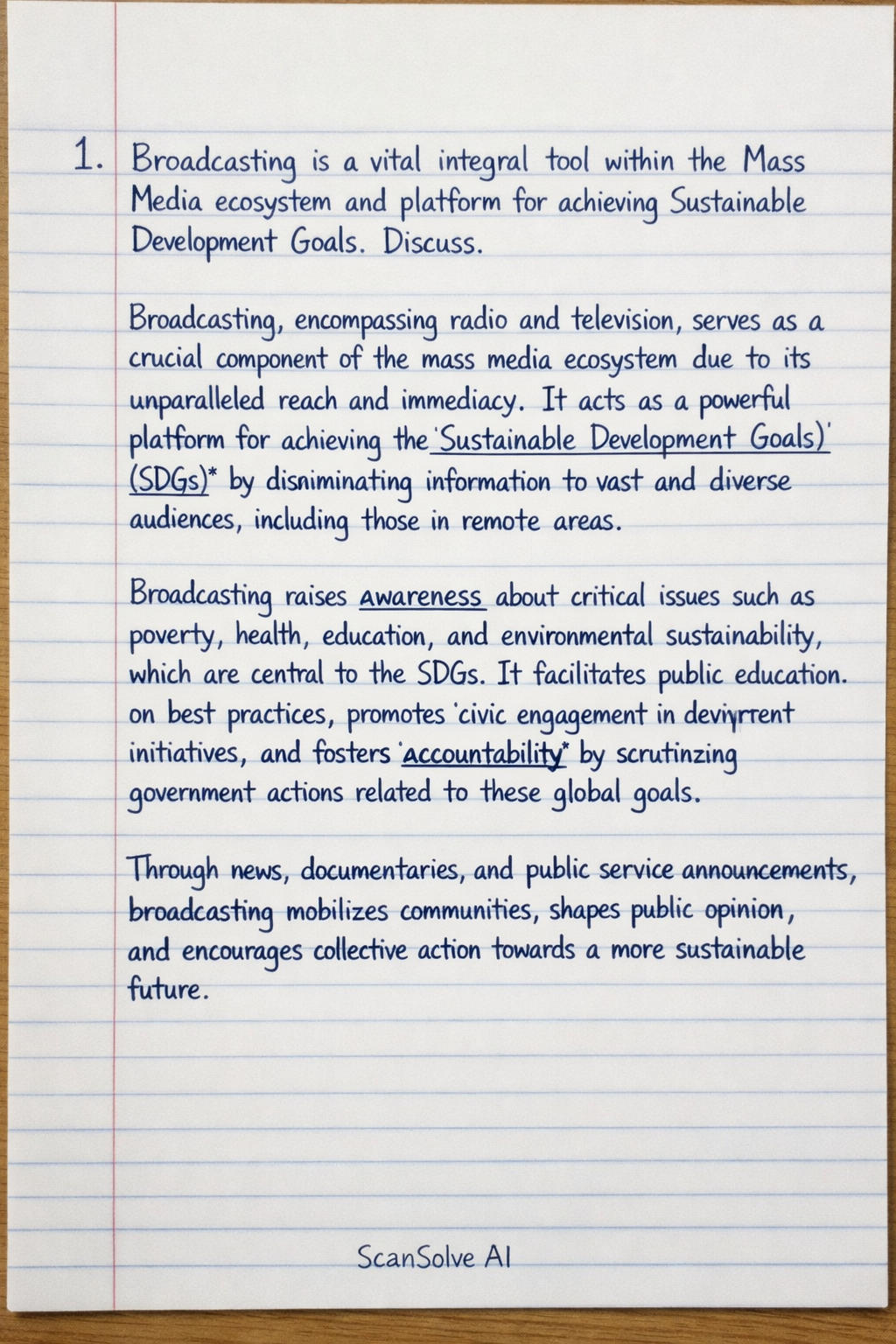
1. Broadcasting is a vital integral tool within the Mass Media ecosystem and platform for achieving Sustainable Development Goals. Discuss. Broadcasting, encompassing radio and television, serves as a crucial component of the mass media ecosystem due to its unparalleled reach and immediacy. It acts as a powerful platform for achieving the Sustainable Development Goals (SDGs) by disseminating information to vast and diverse audiences, including those in remote areas. Broadcasting raises awareness about critical issues such as poverty, health, education, and environmental sustainability, which are central to the SDGs. It facilitates public education on best practices, promotes civic engagement in development initiatives, and fosters accountability by scrutinizing government actions related to these global goals. Through news, documentaries, and public service announcements, broadcasting mobilizes communities, shapes public opinion, and encourages collective action towards a more sustainable future. 2. Explain the decision-making choices and factors of selecting News headlines for print, radio and television. The selection of news headlines is a critical decision-making process influenced by several factors, primarily news value, audience relevance, and medium specificity. Editors prioritize stories based on news values such as timeliness, impact, prominence, proximity, conflict, and human interest. The more of these values a story possesses, the higher its likelihood of becoming a headline. Audience relevance dictates that headlines should appeal to the target demographic, addressing their concerns and interests. For print media*, headlines are concise, attention-grabbing summaries of the main story, often accompanied by sub-headlines, and must fit within strict space constraints. Radio headlines* are brief, clear, and designed to immediately hook listeners, relying on strong verbal delivery to convey urgency and importance. Television headlines* are short, visually driven, and often paired with compelling footage or graphics to entice viewers to watch the full report, with time being a significant constraint. Additionally, the editorial policy and agenda of the media organization can influence which stories are highlighted and how they are framed. 3. How does Broadcasting contribute to National development especially as indicated in Section 2 of the 1999 Constitution (as amended). Broadcasting significantly contributes to national development by fulfilling its role as an information provider, educator, and watchdog. While Section 2 of the 1999 Constitution (as amended) primarily defines Nigeria's territory and sovereignty, the question likely refers to Chapter II, Section 22, which mandates the mass media, including broadcasting, to uphold the fundamental objectives and directive principles of state policy and the accountability of the Government to the people. In this context, broadcasting fosters national development by: Informing citizens* about government policies, development projects, and public health campaigns, thereby promoting an informed citizenry. Educating the populace* on civic duties, democratic processes, and social issues, which is vital for national cohesion and progress. Ensuring accountability and transparency* by reporting on government activities, successes, and failures, thus holding leaders responsible and promoting good governance. Promoting national unity and cultural identity* through programs that celebrate diverse cultures, languages, and values. Facilitating economic growth* by providing market information, promoting local businesses, and encouraging investment. Through these functions, broadcasting serves as a cornerstone for a well-informed, engaged, and progressive society, aligning with the developmental aspirations outlined in the Constitution.