What is Respiratory system?

Biology
What is Respiratory system?

ScanSolve AI Answer

2 steps

Here are the answers to your questions:

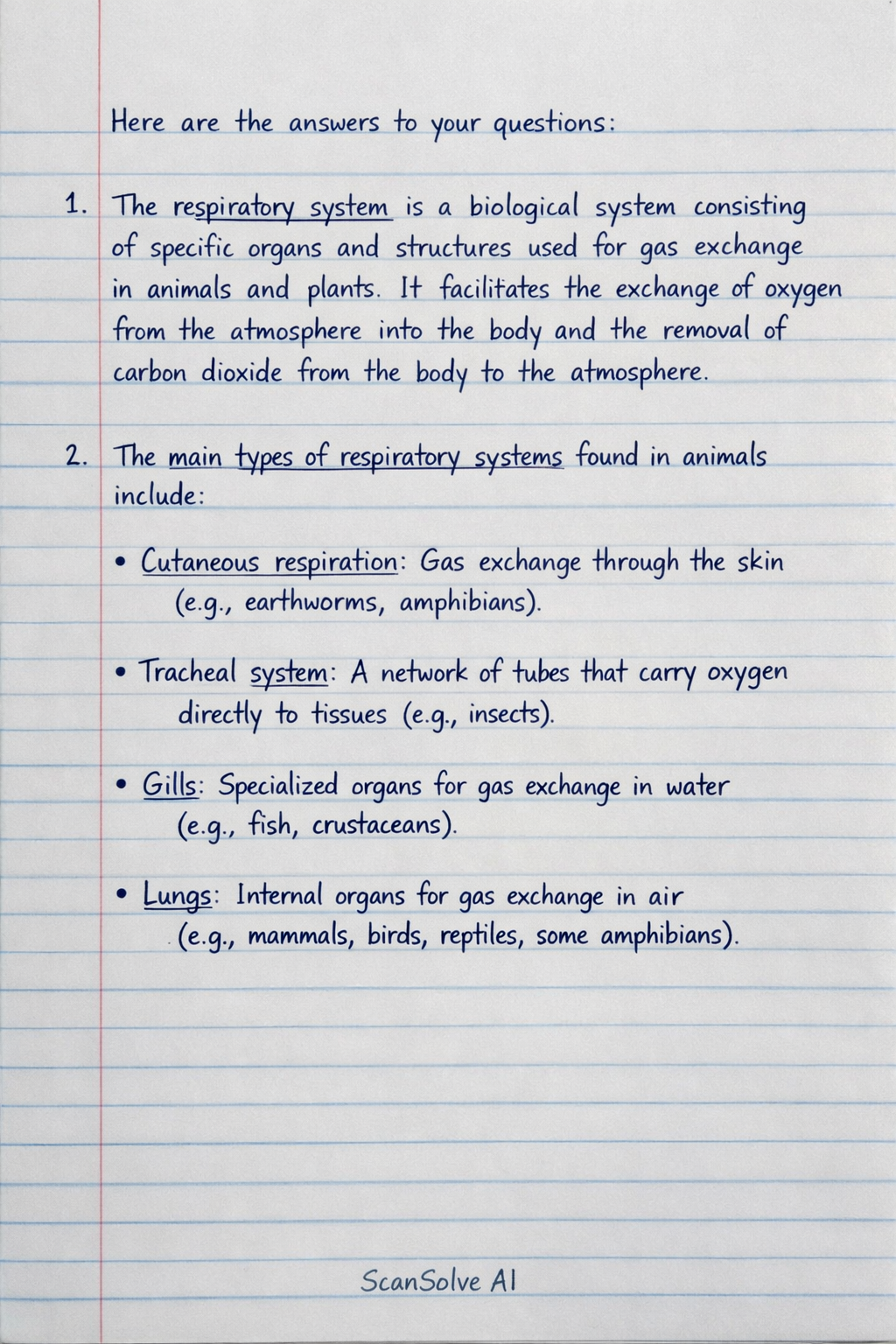
  1. The respiratory system is a biological system consisting of specific organs and structures used for gas exchange in animals and plants. It facilitates the exchange of oxygen from the atmosphere into the body and the removal of carbon dioxide from the body to the atmosphere.

  2. The main types of respiratory systems found in animals include:

    • Cutaneous respiration: Gas exchange through the skin (e.g., earthworms, amphibians).
    • Tracheal system: A network of tubes that carry oxygen directly to tissues (e.g., insects).
    • Gills: Specialized organs for gas exchange in water (e.g., fish, crustaceans).
    • Lungs: Internal organs for gas exchange in air (e.g., mammals, birds, reptiles, some amphibians).
Was this helpful?

Need help with your own homework?

Get instant step-by-step solutions to any question. Free to start.

Ask Your Question
Handwritten step-by-step solution preview

Handwritten Step-by-Step Solution

Get this as a handwritten image on WhatsApp — like a tutor wrote it for you.

Try on WhatsApp

Still have questions?

Quick Answer

1. The respiratory system is a biological system consisting of specific organs and structures used for gas exchange in animals and plants.

What is Respiratory system?
Biology

This biology question covers important biological concepts and processes. The step-by-step explanation below helps you understand the underlying mechanisms and reasoning.

ScanSolve AI Answer
Here are the answers to your questions: 1. The respiratory system is a biological system consisting of specific organs and structures used for gas exchange in animals and plants. It facilitates the exchange of oxygen from the atmosphere into the body and the removal of carbon dioxide from the body to the atmosphere. 2. The main types of respiratory systems found in animals include: Cutaneous respiration: Gas exchange through the skin (e.g., earthworms, amphibians). Tracheal system: A network of tubes that carry oxygen directly to tissues (e.g., insects). Gills: Specialized organs for gas exchange in water (e.g., fish, crustaceans). Lungs: Internal organs for gas exchange in air (e.g., mammals, birds, reptiles, some amphibians).