
We read your photo as:
Explain what is meant by the environment and describe four ways human beings depend on it for survival.
ScanSolve AI Answer
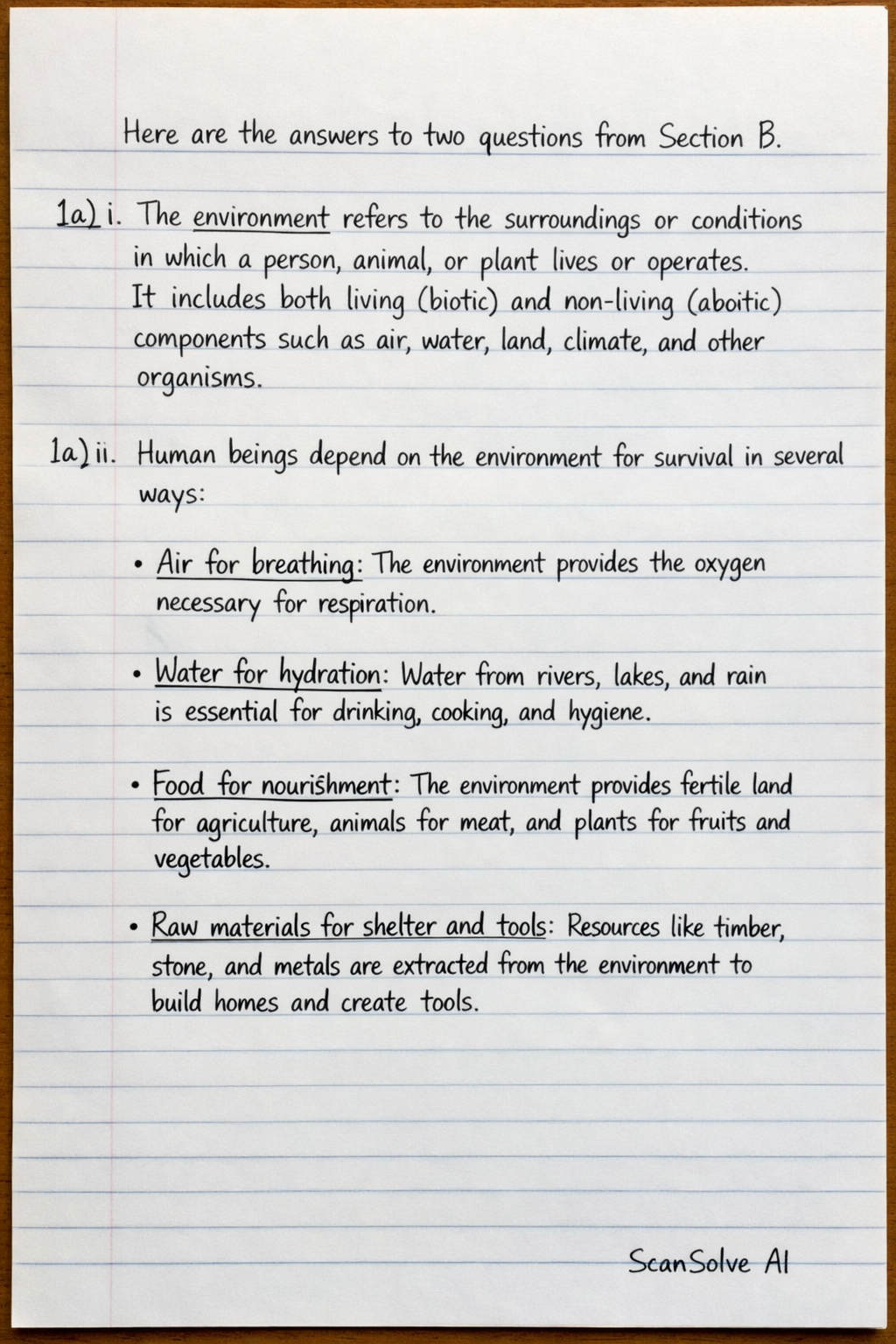
Here are the answers to two questions from Section B.
1a) i. The environment refers to the surroundings or conditions in which a person, animal, or plant lives or operates. It includes both living (biotic) and non-living (abiotic) components such as air, water, land, climate, and other organisms.
1a) ii. Human beings depend on the environment for survival in several ways:
- Air for breathing: The environment provides the oxygen necessary for respiration.
- Water for hydration: Water from rivers, lakes, and rain is essential for drinking, cooking, and hygiene.
- Food for nourishment: The environment provides fertile land for agriculture, animals for meat, and plants for fruits and vegetables.
- Raw materials for shelter and tools: Resources like timber, stone, and metals are extracted from the environment to build homes and create tools.
1b) i. Human beings are described as unique among God's creation because they are believed to be created in God's image (imago Dei). This implies they possess qualities such as reason, morality, free will, and the capacity for spiritual relationship with God, which are not attributed to other creatures. They are also given dominion over the rest of creation.
1b) ii. If a community cuts down trees without replacing them, two effects it may have on the people are:
- Soil erosion: Trees help to hold soil in place with their roots. Without them, heavy rains can wash away topsoil, making the land infertile for farming and potentially leading to landslides.
- Climate change and reduced rainfall: Forests play a crucial role in regulating local climate and contributing to rainfall patterns. Deforestation can lead to hotter temperatures, reduced precipitation, and increased drought, affecting agriculture and water availability.
1b) iii. Two responsible actions the community should take are:
- Afforestation/Reforestation: Actively plant new trees to replace those that have been cut down, ensuring sustainable forest management.
- Implement sustainable logging practices: Adopt selective logging, where only mature trees are harvested, and ensure that logging is done at a rate that allows forests to regenerate naturally.
2a) As a child, Lordina can help promote harmony among her family members in four ways:
- Respecting elders: Showing deference and obedience to her parents and uncle.
- Helping with chores: Contributing to household tasks to ease burdens and show responsibility.
- Mediating disputes: Encouraging family members to talk through their disagreements calmly and suggesting compromises.
- Showing love and kindness: Expressing affection, being polite, and avoiding arguments with her siblings.
2b) It is important for family members to have a cordial relationship for several reasons:
- Emotional support: A cordial relationship provides a strong support system where members can share their joys and sorrows, offering comfort and encouragement during difficult times.
- Peaceful home environment: Harmony reduces stress and conflict, creating a calm and stable atmosphere conducive to growth and well-being for all members, especially children.
- Effective communication: Good relationships foster open and honest communication, allowing family members to discuss issues, resolve conflicts constructively, and make decisions together.
Still stuck on this one?
Ask a follow-up, and the answer starts from this question.
More Geography Questions
Handwritten Step-by-Step Solution
Get this as a handwritten image on WhatsApp — like a tutor wrote it for you.
Try on WhatsApp