
We read your photo as:
A volcano is a vent in the Earth's crust through which molten rock (magma), ash, and gases erupt from beneath the surface.
ScanSolve AI Answer
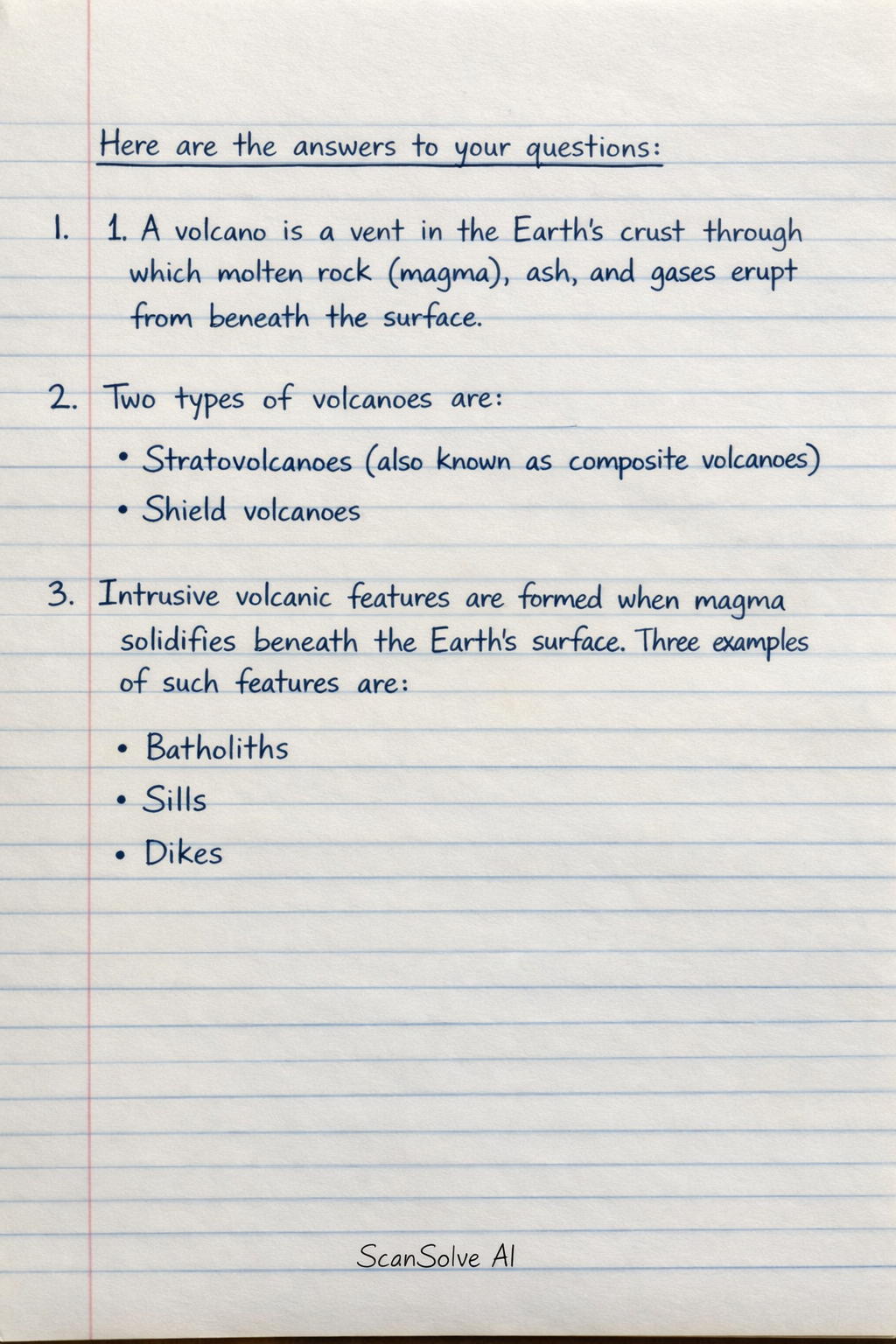
Here are the answers to your questions:
-
A volcano is a vent in the Earth's crust through which molten rock (magma), ash, and gases erupt from beneath the surface.
-
Two types of volcanoes are:
- Stratovolcanoes (also known as composite volcanoes)
- Shield volcanoes
-
Intrusive volcanic features are formed when magma solidifies beneath the Earth's surface. Three examples of such features are:
- Batholiths
- Sills
- Dikes
-
Volcanoes have significant impacts on both people and the environment. For people, eruptions pose immediate dangers such as pyroclastic flows, lava flows, and ashfall, which can cause fatalities, destroy homes, infrastructure, and agricultural land. Long-term effects include respiratory illnesses from ash, displacement of communities, and economic disruption. Environmentally, ashfall can smother vegetation, contaminate water supplies, and disrupt ecosystems. Volcanic gases contribute to acid rain and can influence global climate. However, volcanic activity also creates fertile soils over time and forms new land, contributing to biodiversity and geological diversity.
Still stuck on this one?
Ask a follow-up, and the answer starts from this question.
More Geography Questions
Handwritten Step-by-Step Solution
Get this as a handwritten image on WhatsApp — like a tutor wrote it for you.
Try on WhatsApp