
We read your photo as:
Explain what a volcanologist is, the positive impacts of volcanoes, the difference between magma and lava, and the dangers they pose to the environment.
ScanSolve AI Answer
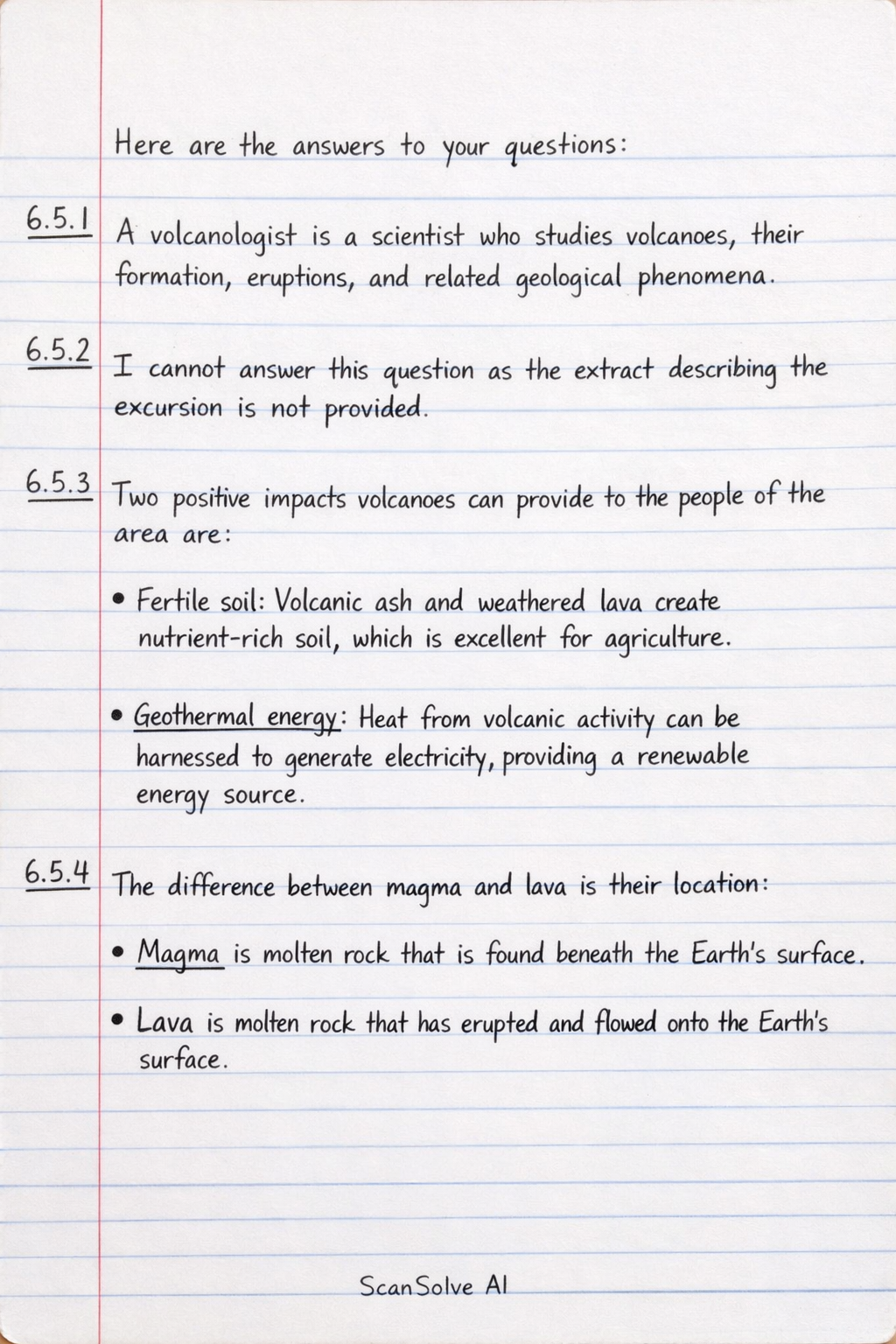
Here are the answers to your questions:
6.5.1
A volcanologist is a scientist who studies volcanoes, their formation, eruptions, and related geological phenomena.
6.5.2
I cannot answer this question as the extract describing the excursion is not provided.
6.5.3
Two positive impacts volcanoes can provide to the people of the area are:
- Fertile soil: Volcanic ash and weathered lava create nutrient-rich soil, which is excellent for agriculture.
- Geothermal energy: Heat from volcanic activity can be harnessed to generate electricity, providing a renewable energy source.
6.5.4
The difference between magma and lava is their location:
- Magma is molten rock that is found beneath the Earth's surface.
- Lava is molten rock that has erupted and flowed onto the Earth's surface.
6.5.5
Dangers volcanoes can bring to the environment of an area include:
- Ashfall: Volcanic ash can cover vegetation, destroy crops, contaminate water sources, and cause respiratory issues for wildlife.
- Pyroclastic flows: These are fast-moving currents of hot gas and volcanic debris that can incinerate everything in their path, devastating ecosystems.
- Lava flows: Streams of molten rock can destroy habitats, forests, and agricultural land, altering the landscape permanently.
- Volcanic gases: The release of toxic gases like sulfur dioxide and carbon dioxide can harm plants, animals, and contribute to acid rain.
6.5.6
I cannot answer this question as the article referring to eco-tourist destinations is not provided.
Still stuck on this one?
Ask a follow-up, and the answer starts from this question.
More Geography Questions
Handwritten Step-by-Step Solution
Get this as a handwritten image on WhatsApp — like a tutor wrote it for you.
Try on WhatsApp