
We read your photo as:
Describe the differences between magma and lava, identify intrusive volcanic features, and explain the formation of composite volcanoes and lava plateaus.
ScanSolve AI Answer
Here's the solution to question 8:
8. (a)
Magma is molten rock found beneath the Earth's surface, within the crust or mantle. Lava is molten rock that has erupted onto the Earth's surface.
8. (b) (i)
- C: Volcanic plug (or neck)
- D: Laccolith
- E: Sill
8. (b) (ii)
Three characteristics of a Composite Volcano:
- They have a conical shape with steep sides.
- They are built up of alternating layers of lava flows and pyroclastic material (ash, cinders, bombs).
- They typically have explosive eruptions due to viscous lava and high gas content.
8. (c)
A lava plateau is formed by effusive eruptions of highly fluid, low-viscosity basaltic lava. This lava erupts from long fissures or cracks in the Earth's crust, rather than from a central vent. The fluid lava spreads out over vast areas, covering the existing topography. Repeated eruptions over extended periods, sometimes millions of years, build up thick, extensive layers of solidified lava. These successive layers accumulate to form a broad, flat, or gently sloping elevated landform known as a lava plateau.
8. (d)
Positive effects of vulcanicity to man include:
- Fertile Soils: Volcanic ash and weathered volcanic rocks produce very rich and fertile soils, which are excellent for agriculture. These soils are high in minerals and support the growth of various crops like coffee, tea, and vegetables.
- Geothermal Energy: The heat from magma chambers close to the Earth's surface can be harnessed to generate electricity. Geothermal power plants utilize steam produced by this heat to drive turbines, providing a renewable energy source.
- Mineral Deposits: Volcanic activity often brings valuable minerals to the surface, forming significant ore deposits. These minerals can include gold, silver, copper, lead, zinc, and sulfur, which are economically important for mining.
- Building Materials: Volcanic rocks such as basalt, pumice, and tuffs are widely used as construction materials. Basalt is used for road construction, while pumice is a lightweight aggregate, and tuffs are used as building stones.
- Tourism: Volcanic landscapes, including volcanoes, hot springs, geysers, and crater lakes, are major tourist attractions. These unique geological features draw visitors, boosting local economies through tourism-related services and employment.
- Hot Springs and Spas: Geothermally heated water from volcanic areas can form hot springs, which are used for therapeutic purposes, relaxation, and recreation. Many resorts and spas are developed around these natural hot springs.
Still stuck on this one?
Ask a follow-up, and the answer starts from this question.
More Geography Questions
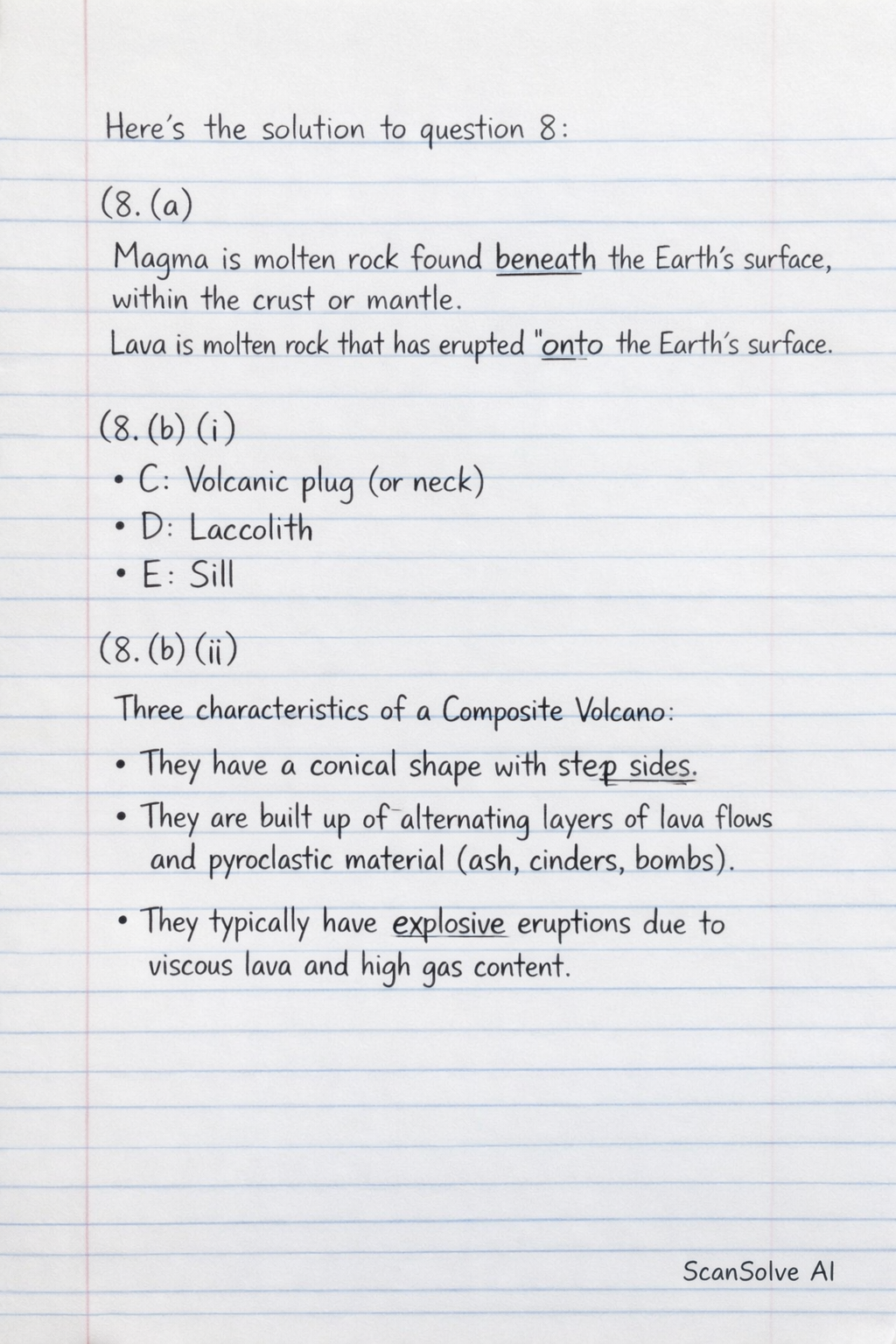
Handwritten Step-by-Step Solution
Get this as a handwritten image on WhatsApp — like a tutor wrote it for you.
Try on WhatsApp