
We read your photo as:
By citing relevant examples, explain the effects of urbanization on society and environment.
Geography
ScanSolve AI Answer
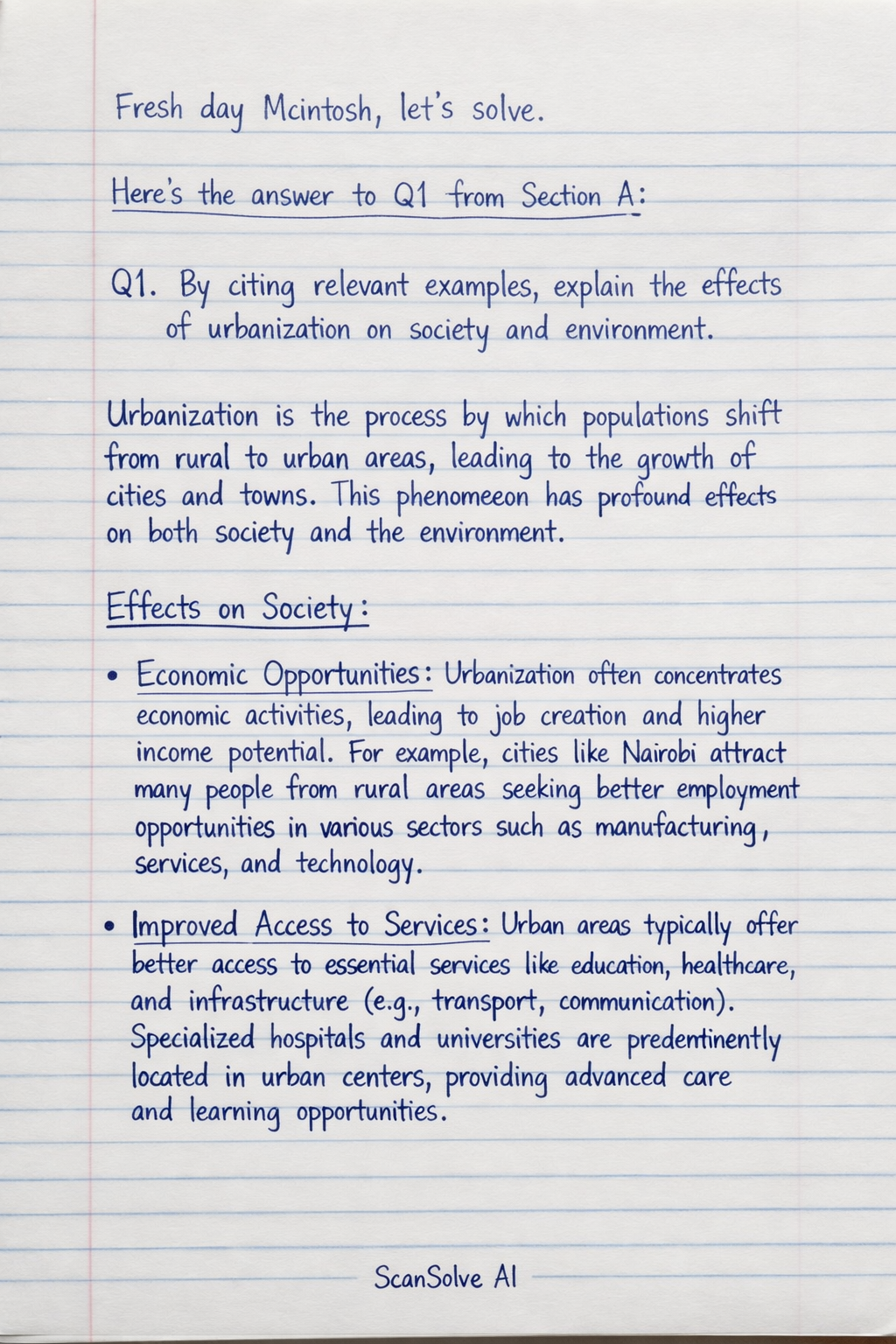
Here's the answer to Q1 from Section A:
Q1. By citing relevant examples, explain the effects of urbanization on society and environment.
Urbanization is the process by which populations shift from rural to urban areas, leading to the growth of cities and towns. This phenomenon has profound effects on both society and the environment.
Effects on Society:
- Economic Opportunities: Urbanization often concentrates economic activities, leading to job creation and higher income potential. For example, cities like Nairobi attract many people from rural areas seeking better employment opportunities in various sectors such as manufacturing, services, and technology.
- Improved Access to Services: Urban areas typically offer better access to essential services like education, healthcare, and infrastructure (e.g., transport, communication). Specialized hospitals and universities are predominantly located in urban centers, providing advanced care and learning opportunities.
- Overcrowding and Informal Settlements: Rapid urbanization, especially without adequate planning, can lead to overcrowding and the proliferation of informal settlements (slums). For instance, Kibera in Nairobi is one of Africa's largest informal settlements, characterized by high population density, poor housing, and inadequate sanitation.
- Strain on Infrastructure: The influx of people can overwhelm existing urban infrastructure, leading to challenges such as traffic congestion, water shortages, and inadequate waste management. Many Kenyan cities experience frequent water rationing and traffic jams due to increased demand.
Effects on Environment:
- Habitat Loss and Biodiversity Reduction: Urban expansion often involves converting natural habitats (forests, wetlands, agricultural land) into built-up areas. This leads to the destruction of ecosystems and a significant loss of biodiversity, as seen in the encroachment of urban development into green spaces around major cities.
- Increased Pollution: Urban areas are major sources of pollution. Air pollution results from vehicle emissions and industrial activities, while water pollution arises from untreated sewage and industrial discharge. For example, industrial zones contribute to air pollution, and poor sanitation in informal settlements often contaminates rivers and streams.
- Increased Waste Generation: Densely populated urban areas generate vast amounts of solid waste. Managing this waste becomes a significant challenge, often leading to large landfills (e.g., Dandora dumpsite in Nairobi) that pose environmental and health risks if not properly managed.
- Urban Heat Island Effect: Concrete, asphalt, and buildings in urban areas absorb and retain more heat than natural landscapes, leading to higher temperatures in cities compared to surrounding rural areas. This "urban heat island" effect increases energy consumption for cooling and can exacerbate heat-related health issues.
Was this helpful?
Still stuck on this one?
Ask a follow-up, and the answer starts from this question.
Got a different question?Ask your own question
More Geography Questions
QDescribe one environmental impact of rapid urbanization and explain why it occurs.QName two challenges faced by cities with very high population density and briefly explain each…QWrite me a story of the effect of rapid population growth in world cities. In the story must include…QUrbanisation involves rural - urban movement. DiscussQWhat are the primary drivers and consequences of population growth and urbanization, as detailed in…
Handwritten Step-by-Step Solution
Get this as a handwritten image on WhatsApp — like a tutor wrote it for you.
Try on WhatsApp