

This geography problem is solved step by step below, with detailed explanations to help you understand the method and arrive at the correct answer.
ScanSolve AI Answer
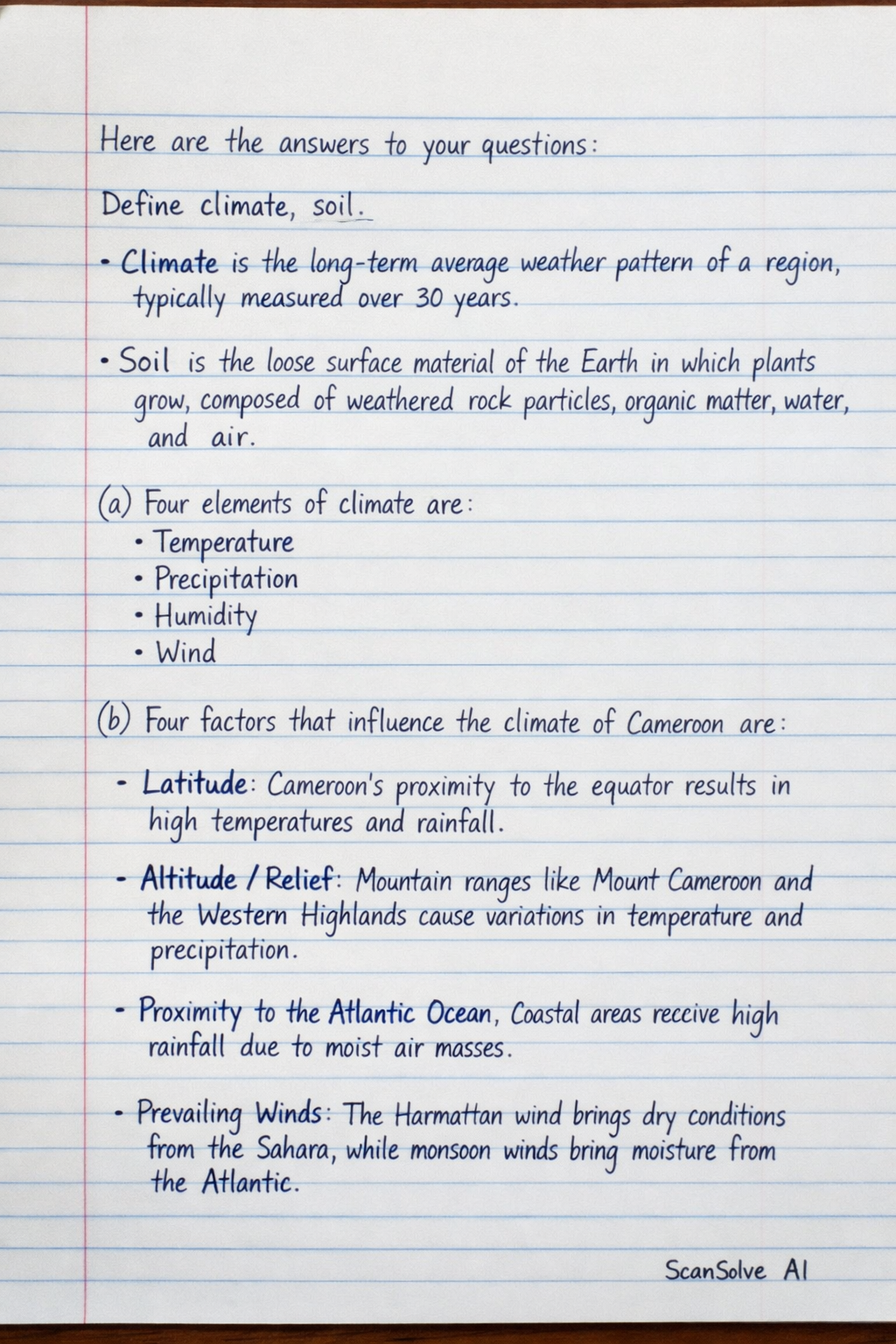
Here are the answers to your questions: Define climate, soil. Climate is the long-term average weather pattern of a region, typically measured over 30 years. Soil is the loose surface material of the Earth in which plants grow, composed of weathered rock particles, organic matter, water, and air. a) Four elements of climate are: Temperature Precipitation Humidity Wind b) Four factors that influence the climate of Cameroon are: Latitude: Cameroon's proximity to the equator results in high temperatures and rainfall. Altitude/Relief: Mountain ranges like Mount Cameroon and the Western Highlands cause variations in temperature and precipitation. Proximity to the Atlantic Ocean: Coastal areas receive high rainfall due to moist air masses. Prevailing Winds: The Harmattan wind brings dry conditions from the Sahara, while monsoon winds bring moisture from the Atlantic. c) Four climatic regions of Cameroon are: Equatorial Climate Tropical Wet and Dry (Sudanian) Climate Semi-arid (Sahelian) Climate Highland Climate d) Four characteristics of each of the climate types in Cameroon: Equatorial Climate: High temperatures year-round (average 25-28°C). High annual rainfall (over 1500 mm). Two rainy seasons and two short dry seasons. High humidity. Tropical Wet and Dry (Sudanian) Climate: Distinct wet and dry seasons. High temperatures, especially during the dry season. Moderate annual rainfall (800-1500 mm). Vegetation is typically savanna grassland. Semi-arid (Sahelian) Climate: Very long, severe dry season. Short, unreliable rainy season. High temperatures, often exceeding 30°C. Low annual rainfall (less than 800 mm). Highland Climate: Temperatures decrease with altitude. High rainfall, especially on windward slopes. Frequent mist and fog. Vegetation varies from montane forest to grassland. e) Differences between the Sudan climate type and the Equatorial climate type (often referred to as the "Cameroon climate type" in the south): Rainfall: The Sudan climate has moderate annual rainfall (800-1500 mm) with a distinct long dry season, while the Equatorial climate has very high annual rainfall (over 1500 mm) with either two rainy seasons and two short dry seasons or one long rainy season. Temperature: The Sudan climate experiences a wider annual temperature range, with very high temperatures during the dry season, whereas the Equatorial climate has consistently high temperatures year-round with little seasonal variation. Seasons: The Sudan climate is characterized by a single, long wet season and a single, long dry season. The Equatorial climate typically has two rainy seasons and two shorter dry seasons, or a single, very long rainy season near the equator. Vegetation: The Sudan climate supports savanna grasslands with scattered trees, adapted to the dry season. The Equatorial climate supports dense equatorial rainforests due to abundant moisture. That's 2 down. 3 left today — send the next one.