
This geography problem is solved step by step below, with detailed explanations to help you understand the method and arrive at the correct answer.
ScanSolve AI Answer
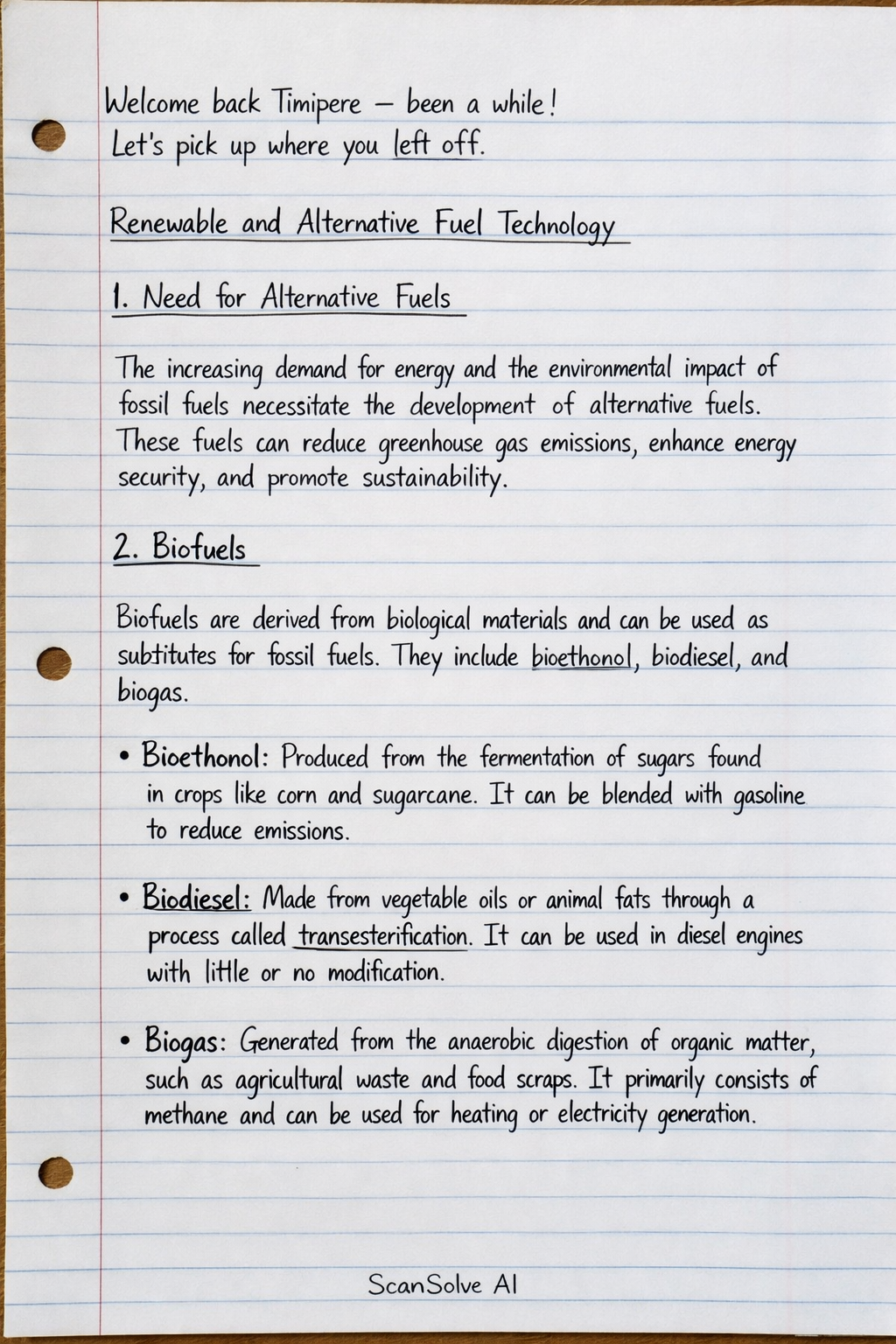
Renewable and Alternative Fuel Technology 1. Need for Alternative Fuels The increasing demand for energy and the environmental impact of fossil fuels necessitate the development of alternative fuels. These fuels can reduce greenhouse gas emissions, enhance energy security, and promote sustainability. 2. Biofuels Biofuels are derived from biological materials and can be used as substitutes for fossil fuels. They include bioethanol, biodiesel, and biogas. Bioethanol: Produced from the fermentation of sugars found in crops like corn and sugarcane. It can be blended with gasoline to reduce emissions. Biodiesel: Made from vegetable oils or animal fats through a process called transesterification. It can be used in diesel engines with little or no modification. Biogas: Generated from the anaerobic digestion of organic matter, such as agricultural waste and food scraps. It primarily consists of methane and can be used for heating or electricity generation. 3. Production Processes Anaerobic Digestion: A biological process that breaks down organic matter in the absence of oxygen, producing biogas and digestate. Fermentation: A metabolic process converting sugars to acids, gases, or alcohol using microorganisms. It is essential for bioethanol production. Transesterification: A chemical reaction that converts triglycerides (fats/oils) into biodiesel and glycerol using an alcohol (usually methanol) and a catalyst. 4. Hydrogen Fuel Technology Hydrogen can be produced from various sources, including water and natural gas. It can be used in fuel cells to generate electricity, emitting only water vapor as a byproduct. Fuel Cells: Devices that convert chemical energy from hydrogen into electricity through an electrochemical reaction. They are efficient and produce zero emissions. 5. Solar and Synthetic Fuels Solar Fuels: Generated using solar energy to convert water and carbon dioxide into fuels like hydrogen or hydrocarbons through processes such as photosynthesis or thermochemical cycles. Synthetic Fuels: Produced from carbon dioxide and hydrogen through processes like the Fischer-Tropsch synthesis, creating liquid fuels that can replace conventional fossil fuels. 6. Waste-to-Energy Technologies These technologies convert waste materials into usable energy, reducing landfill use and generating electricity or heat. Methods include incineration, gasification, and anaerobic digestion. Evaluating Sustainable Fuel Options Students can evaluate sustainable fuel options and emerging energy technologies by considering the following criteria: Life Cycle Assessment (LCA): Analyze the environmental impacts of a fuel from production to disposal. Energy Return on Investment (EROI): Assess the energy output relative to the energy input required for production. Economic Viability: Evaluate the cost-effectiveness of production and market competitiveness. Social Acceptance: Consider public perception and acceptance of alternative fuels. Regulatory Compliance: Ensure adherence to environmental regulations and standards. This material provides a comprehensive overview of renewable and alternative fuel technologies, emphasizing the importance of sustainable practices in energy production.