
We read your photo as:
Design a survey to assess community perceptions of the water crisis, including challenges and impacts. Summarize hypothetical findings and propose solutions.
ScanSolve AI Answer
Here's how to address the tasks:
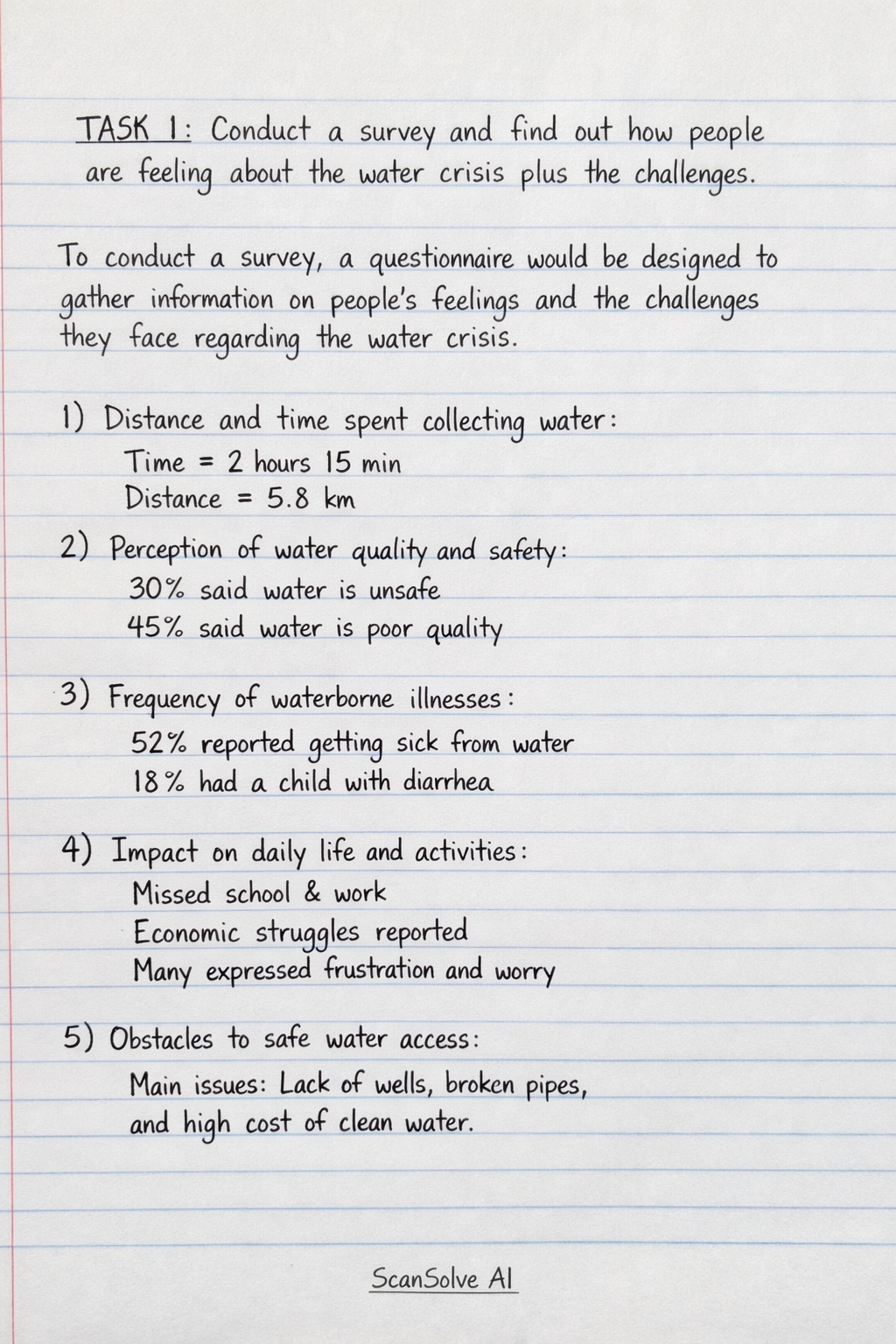
TASK 1: Conduct a survey and find out how people are feeling about the water crisis plus the challenges.
To conduct a survey, a questionnaire would be designed to gather information on people's feelings and the challenges they face regarding the water crisis. Questions would cover the distance and time spent collecting water, perceptions of water quality and safety, and the frequency of waterborne illnesses. The survey would also explore the emotional and practical impacts on daily life, education, and economic activities, allowing individuals to express their frustrations, hopes, or despair. Finally, it would identify the specific obstacles to accessing safe water within their community.
TASK 2: Write a summary and summarise your findings and list ways to help resolve the crisis.
Summary of Findings (Hypothetical):
The hypothetical survey would likely reveal widespread frustration due to the significant time and effort spent daily collecting water from distant, often unprotected sources. This burden frequently disrupts education and economic opportunities, particularly for women and girls. Respondents would report a high incidence of waterborne diseases, highlighting concerns about water quality and the lack of reliable infrastructure. The primary challenges would include inadequate access to safe water, poor sanitation, and the financial strain associated with water-related health issues.
Ways to Help Resolve the Crisis:
- Develop Sustainable Infrastructure: Construct and maintain boreholes, protected springs, and piped water systems in underserved areas.
- Promote Water Treatment: Distribute household water filters and educate communities on safe water handling practices like boiling or solar disinfection.
- Improve Sanitation: Implement community-led sanitation programs to promote latrine construction and handwashing, reducing water source contamination.
- Implement Rainwater Harvesting: Encourage and support the installation of rainwater collection systems for domestic use, especially in areas with seasonal water scarcity.
- Strengthen Community Management: Train local communities to manage and maintain their water points, ensuring long-term functionality and ownership.
- Advocate for Investment: Engage with local and national governments, as well as international donors, to prioritize funding for water and sanitation infrastructure and policies.
Still stuck on this one?
Ask a follow-up, and the answer starts from this question.
More Geography Questions
Handwritten Step-by-Step Solution
Get this as a handwritten image on WhatsApp — like a tutor wrote it for you.
Try on WhatsApp